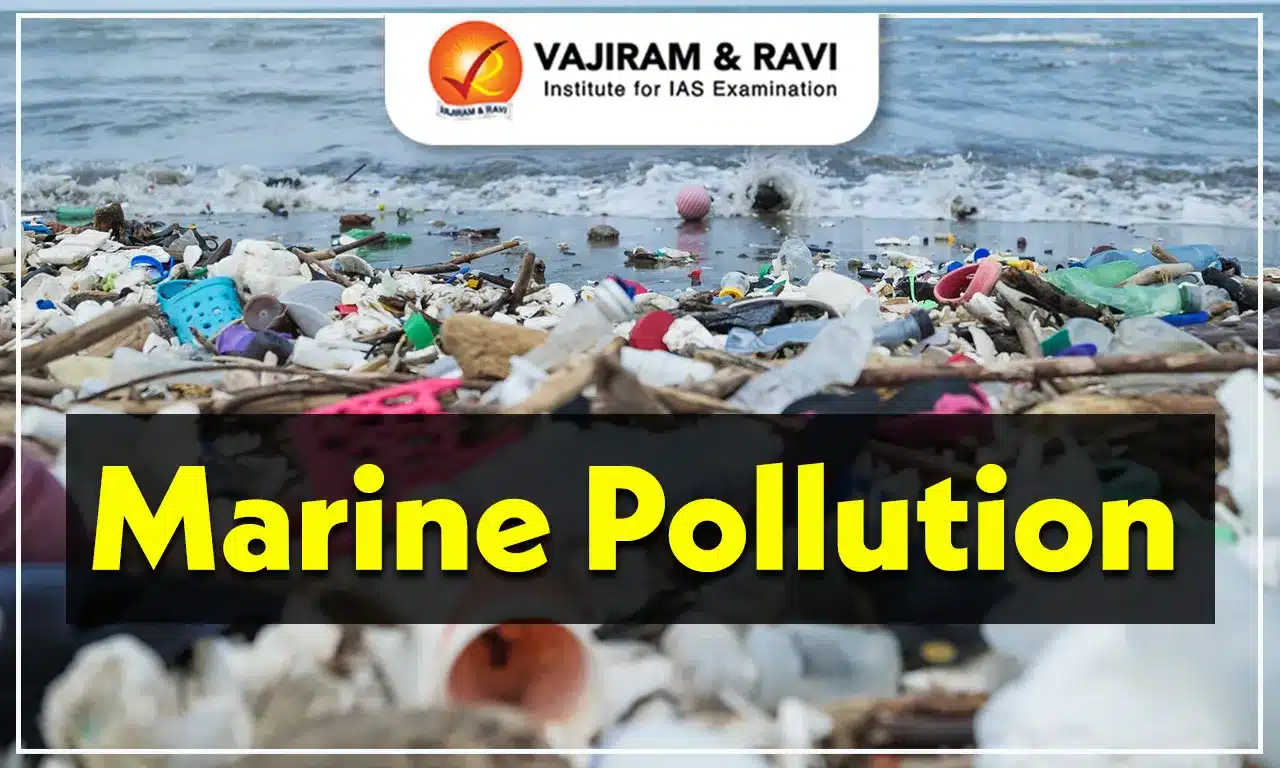
Marine Pollution is a serious environmental threat that endangers biodiversity, disrupts climate regulation and impacts the livelihoods of people who depend on it. With increasing human activity, the amount of pollutants that enter the marine ecosystems have seen rising sharply and affecting the seawater quality along with the estuaries, coral reefs, wetlands, mangroves and other coastal regions. In this article, we are going to cover all about marine pollution, its side effects, sources and control measures.
Marine Pollution
Marine Pollution is the introduction of harmful substances or energy into the marine environment by human activities, leading to hazards for marine life, risks to human health and obstruction of marine activities and deterioration of water quality.
Marine Pollution Types
Marine Pollution has many types impacting marine life and human life both at the same time. Marine Pollution can be sub-divided in the following types:
- Oil Spills : Serious leakage of petroleum into oceans, harming marine life and habitats.
- Plastic Pollution: Huge quantities of plastics enter the seas, choking marine animals and birds.
- Chemical Pollution: Industrial runoff, pesticides, and heavy metals create toxic conditions and dead zones.
- Sewage & Waste Disposal: Nutrient loading causes algal blooms and oxygen depletion.
- Noise Pollution: From ships, sonar, and drilling disrupts marine species’ communication.
- Thermal Pollution: Industrial discharge alters water temperature, affecting aquatic ecosystems.


Marine Pollution Sources
Marine Pollution can be traced from the following sources:
- Land-based sources : Urban sewage, industrial effluents, pesticides, and fertilizers carried by rivers into oceans.
- Maritime activities: Shipping, fishing, offshore drilling, and oil spills.
- Atmospheric deposition: Air pollutants like acid rain, heavy metals, and microplastics settling into seas.
Marine Pollution from Organic Waste
Marine Pollution due to organic waste is caused due to biodegradable accumulations in the ocean. Breakdown of the biodegradables in the ocean consumes oxygen, lowering water quality and forms toxic byproducts like hydrogen sulfide and ammonia. This leads to oxygen depleted “anoxic zones” where only some organisms can survive and make waters foul smelling and biologically unfit.
Oil Spills and Their Impact
Oil spills are among the most serious marine pollution incidents. Petroleum oil released from tankers, drilling rigs, or offshore platforms can take years to clean up. Being insoluble, oil floats on the surface, blocking sunlight and oxygen exchange.
Impacts include:
- Death of marine animals and birds due to toxicity.
- Destruction of coral reefs and fish breeding grounds.
- Entry of harmful chemicals into the food chain, eventually affecting humans.
- Reduced tourism and fishing activities in polluted coastal areas.
Marine Pollution Indicators
Marine Pollution can be measured using a number of indicators:
- Biochemical Oxygen Demand (BOD): Indicates organic pollution by measuring oxygen consumed by microbes.
- Chemical Oxygen Demand (COD): Measures oxygen needed to oxidize pollutants, showing pollution load.
- Biological Magnification: Pollutants like DDT concentrate as they move up the food chain.
- Eutrophication: Excess nutrients like nitrates and phosphates cause algal blooms, depleting oxygen.
- Dead Zones & Hypoxia: Low-oxygen areas where marine life cannot survive.
Marine Pollution Consequences
Marine Pollution has the following consequences on both human and marine life:
- Loss of biodiversity and fish populations.
- Coral reef destruction and habitat loss.
- Formation of oxygen-depleted dead zones.
- Long-term economic damage to fisheries and tourism.
- Bioaccumulation of toxins in human food chains.
Marine Pollution Control Measures
In order to control marine pollution, the following measures can be adopted:
- Wastewater treatment plants should be upgraded from time to time.
- Use of phosphates should be reduced in detergents and fertilizers.
- Sustainable agricultural practices should be promoted
- Oxygen levels should be restored in eutrophic waters.
- Removing phosphorus chemically using iron or calcium salts.
- Encouraging global cooperation for stricter maritime regulations.

 Last updated on Oct, 2026
→ UPSC 2027 Notification will be released on 13 January 2027 at upsconline.nic.in.
→ Asian Games 2026 are being held in Aichi-Nagoya, Japan, from 19 September to 4 October.
→ Check Nobel Prize 2026 Winners List here.
→ Download PIB PRiSM Monthly Magazine 2026 here.
→ Check UPSC Monthly Current Affairs Magazine The Recitals here.
→ Check out the latest UPSC Syllabus here.
→ Download UPSC Model Answers for Mains 2026
→ UPSC Mains Question Paper 2026 is out now for Essay & GS Paper 1, 2, 3 & 4.
→ UPSC Calendar 2027 has been released.
→ Enroll in Vajiram & Ravi’s UPSC Mains Test Series 2027 for structured answer writing practice, expert evaluation, and exam-oriented feedback.
→ Join Vajiram & Ravi’s UPSC Mentorship Program 2027 for personalized guidance, strategy planning, and one-to-one support from experienced mentors.
→ Go through the UPSC Mains Previous Year Papers to enhance your preparation.
→ UPSC has released UPSC Toppers List 2025 with the Civil Services final result on its official website.
→ Also check Best UPSC Coaching in India
Marine Pollution FAQs
Q1. What is marine pollution?+
Q2. What are the five causes of marine pollution?+
Q3. What are the five effects of marine pollution?+
Q4. How can marine pollution be controlled?+
Q5. What are the main causes of marine pollution?+
Tags: marine pollution