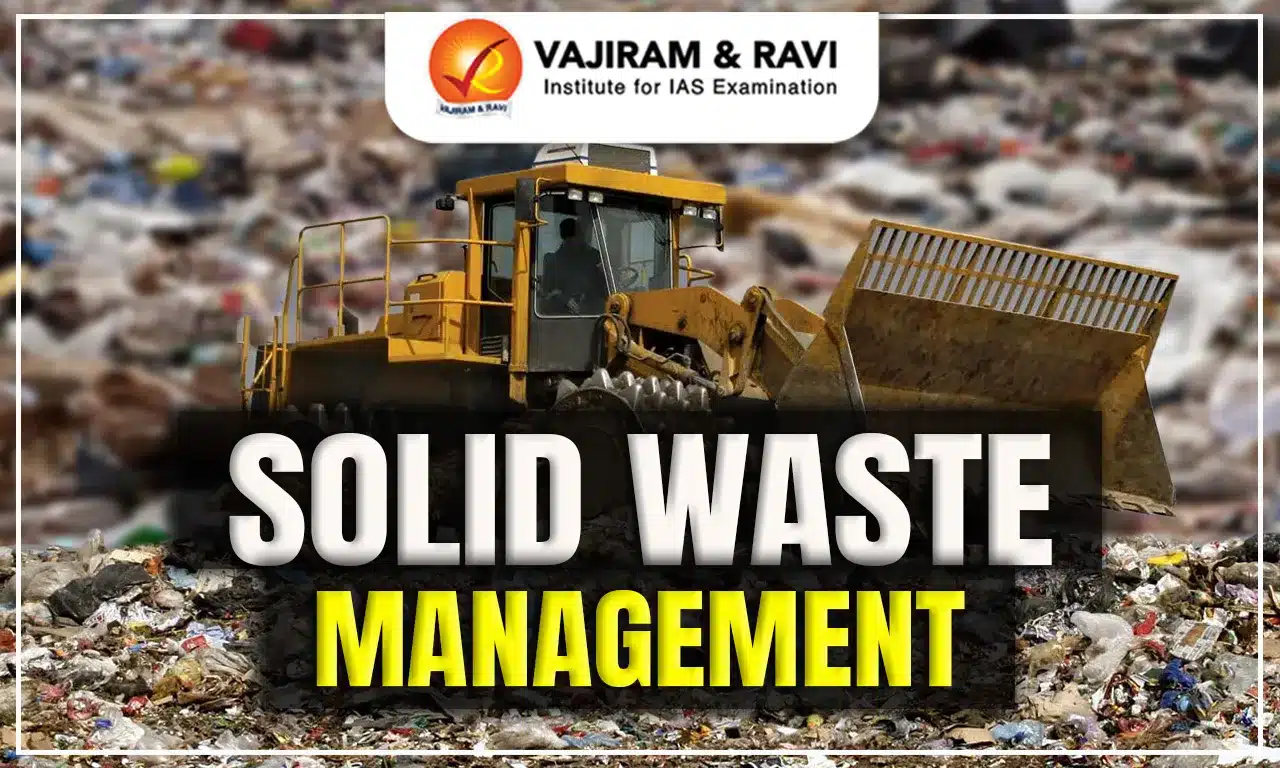
Solid Waste Management in India has increased due to increasing urbanisation, industrialisation and changing lifestyles all over the world. Wrong and improper management makes waste a source of environmental pollution, public health hazards and urban management challenges. In this article, we are going to cover solid waste management, its categories, its types and methods.
Solid Waste Management
Solid waste management is just the collection and dumping of waste but also adoption of a systematic approach that covers generation, segregation, transportation, processing, recycling and safe disposal.
What is Solid Waste?
Solid waste is the unwanted or useless solid material generated from human activities in residential, commercial, industrial, agricultural and institutional sectors. According to the US Environment Protection Agency, solid waste includes:
- Household garbage
- Industrial, commercial, and agricultural discards
- Residues from treatment plants and pollution control facilities


Solid Waste Management Categories
Solid waste can be classified into many categories:
- Based on Source:
- Residential waste: food leftovers, plastics, paper, etc.
- Commercial & industrial waste: metals, glass, packaging, chemicals.
- Agricultural waste: stubble, food grains, husk, litter.
- Based on Content:
- Organic waste: biodegradable, mainly from households & agriculture.
- Plastic waste: non-biodegradable, difficult to manage.
- Metallic waste: hazardous industrial by-products, often carcinogenic.
- Based on Hazard Potential:
- Toxic waste: dangerous to health (chemicals, radioactive substances).
- Flammable waste: prone to causing fire outbreaks in landfills.
Solid Waste Management Types
Solid waste has the following types:
- Municipal Solid Waste (MSW): Generated in daily life from homes, schools, shops, and hospitals (includes plastics, food waste, packaging).
- Hazardous Waste: Industrial by-products, e-waste, pesticides, paints, and chemicals that pose long-term health and environmental risks.
- Biomedical Waste: Waste from hospitals and labs (syringes, bandages, pharmaceutical residues). WHO classifies it into 8 categories including sharps, infectious, radioactive, and pharmaceutical wastes.
Harmful Effects of Solid Waste
Improper Solid Waste Management has serious consequences:
- Water Pollution: Leaching contaminates groundwater; run-off pollutes rivers/lakes.
- Air Pollution: Methane and toxic gases from landfills contribute to climate change.
- Health Hazards: Epidemics spread due to rodents, pests, and stray animals.
- Fire Risks: Frequent landfill fires (e.g., Bhalswa landfill in Delhi).
- Aviation Hazards: Bird menace near dumping sites causes threats to flights.
Methods of Solid Waste Disposal
- Open Dumping: Primitive method; causes foul smell, groundwater pollution, and spread of diseases.
- Landfills: Common disposal method; however, leaching and methane emissions are major issues.
- Sanitary Landfills: Engineered with liners to prevent contamination; more eco-friendly, often later converted into parks.
- Incineration: Burning waste; reduces volume, destroys pathogens, and can generate electricity. However, it releases toxic gases and carcinogenic heavy metals.
- Pyrolysis: Decomposition of organic waste at high temperatures in absence of oxygen; eco-friendly and energy-yielding.
- Composting: Decomposing organic matter into natural fertilizer, improving soil quality.
- Vermi-Composting: Using earthworms to produce nutrient-rich organic manure.
Solid Waste Management in India
India has been generating ~ 1,60,000 tonnes of municipal solid waste per day but only 20-25% of this waste gets scientifically processed. Many cities rely heavily on landfills, fire incidents, air pollution and groundwater contamination. These challenges included:
- Poor segregation at source
- Over-dependence on landfills
- Lack of modern waste treatment facilities
- Informal waste pickers not fully integrated into waste management systems
Solid Waste Management Rules, 2016
The SWM Rules, 2016 modernised India’s waste management framework:
- Source segregation: Mandatory division into biodegradable, non-biodegradable & domestic hazardous waste.
- Extended Producer Responsibility (EPR): Producers must take responsibility for managing packaging waste.
- Role of Municipalities: Ensure 100% door-to-door collection, transport, and treatment.
- Waste Processing: Composting, biomethanation, and waste-to-energy plants encouraged.
- Inclusion of Waste Pickers: Recognition of informal sector workers and their integration into formal waste management.

 Last updated on Sep, 2026
→ UPSC 2027 Notification will be released on 13 January 2027 at upsconline.nic.in.
→ Asian Games 2026 are being held in Aichi-Nagoya, Japan, from 19 September to 4 October.
→ Check out the latest UPSC Syllabus here.
→ Download UPSC Model Answers for Mains 2026
→ UPSC Mains Question Paper 2026 is out now for Essay & GS Paper 1, 2, 3 & 4.
→ UPSC Calendar 2027 has been released.
→ Enroll in Vajiram & Ravi’s UPSC Mains Test Series 2027 for structured answer writing practice, expert evaluation, and exam-oriented feedback.
→ Join Vajiram & Ravi’s UPSC Mentorship Program 2027 for personalized guidance, strategy planning, and one-to-one support from experienced mentors.
→ Go through the UPSC Mains Previous Year Papers to enhance your preparation.
→ UPSC has released UPSC Toppers List 2025 with the Civil Services final result on its official website.
→ Also check Best UPSC Coaching in India
Solid Waste Management FAQs
Q1. What is solid waste management?+
Q2. What are the 4 types of solid waste management?+
Q3. What are 7 types of solid wastes?+
Q4. What are the objectives of solid waste management?+
Q5. What are rules to control solid waste management?+
Tags: solid waste management