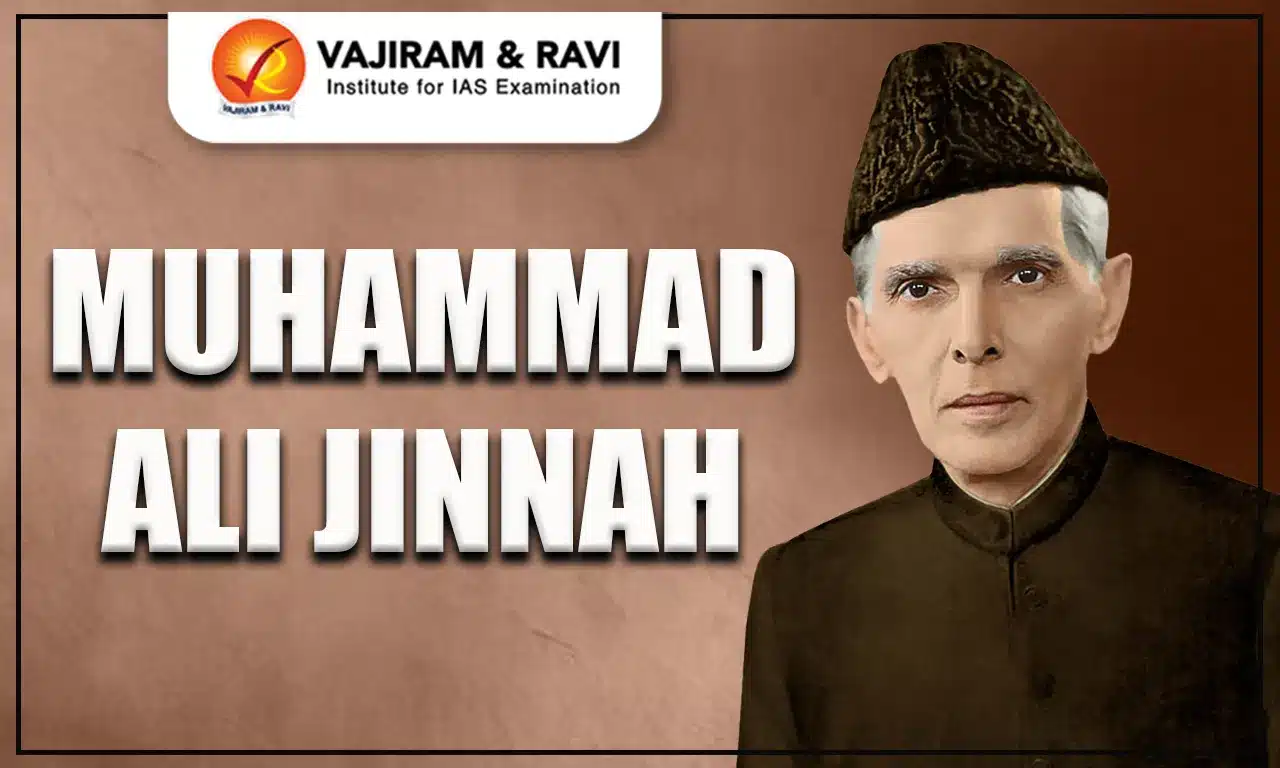
Muhammad Ali Jinnah, referred to as Quaid-e-Azam (Great Leader), was the architect of Pakistan and a defining figure in South Asian history. His vision, determination, and political strategy were central to the creation of a separate homeland for Muslims, earning him enduring respect across generations. Born on December 25, 1876, in Karachi (then part of British India, now Pakistan), his birthday is observed as a national holiday in Pakistan.
Trained as a barrister at London’s Lincoln’s Inn, Jinnah built a flourishing legal career at the Bombay High Court before dedicating himself fully to politics. Over time, his understanding of India’s political landscape and his commitment to safeguarding Muslim identity reshaped his path, marking the beginning of a transformative journey in public life.
Muhammad Ali Jinnah Political Strategy
- Muhammad Ali Jinnah’s political journey was marked by a gradual but decisive transformation in ideology and strategy. In his early years, he championed Hindu-Muslim unity as a member of the Indian National Congress (INC).
- His role in the 1916 Lucknow Pact between the INC and the All-India Muslim League reflected his belief that cooperation could secure India greater autonomy while safeguarding Muslim rights.
- This stance shifted in the 1920s, when Jinnah grew disappointed with Gandhi’s Non-Cooperation Movement, which he considered disorderly and impractical.
- He distanced himself from the Congress, and the 1937 provincial elections further widened the divide when the Congress refused to share power with the Muslim League, increasing communal tensions.
- By 1940, Jinnah had become the chief spokesperson for Muslim aspirations. At the Lahore Session of the Muslim League, he declared that Hindus and Muslims were two distinct nations and demanded a separate homeland. This vision resulted in the creation of Pakistan on August 14, 1947.
- As First Governor-General of Pakistan, Muhammad Ali Jinnah guided the fledgling state through its earliest challenges, laying the foundations of governance and national identity.
- His leadership lasted only a year, as he succumbed to tuberculosis on September 11, 1948, but his legacy as the founder of Pakistan endures.
Muhammad Ali Jinnah Key Contribution
- Muhammad Ali Jinnah strongly opposed the exploitative Salt Tax, calling it unjust and oppressive. His stance highlighted his concern for India’s economic hardships under colonial rule.
- He played a central role in drafting the Lucknow Pact, which brought the Congress and Muslim League together. This pact symbolized Hindu-Muslim unity and aimed at securing political rights for both groups.
- Through the All-India Home Rule League, Jinnah presented his famous 14 points, demanding constitutional reforms that ensured fair Muslim representation and safeguarded their interests in a united India.
- Throughout his career, he consistently raised the issue of Muslim marginalization. He pushed for systemic changes to address economic inequality and provide opportunities for the upliftment of the community.


Muhammad Ali Jinnah Vision of Nationalism
- Two-Nation Theory: At the core of Muhammad Ali Jinnah political thought was the Two-Nation Theory. He argued that Hindus and Muslims were not just communities within one nation but separate nations altogether, each with its own culture, religion, and political interests. For him, only a sovereign Muslim state could guarantee freedom from the dominance of a Hindu-majority India.
- Inclusive Governance: Yet, Muhammad Ali Jinnah Vision of Nationalism was not narrow or exclusionary. He consistently spoke of equality, justice, and religious freedom as guiding principles of the new state. In his first address as Governor-General, he stressed that all citizens whether Hindu, Sikh, Christian, or Muslim would enjoy equal rights, laying the foundation for an inclusive national identity.
Muhammad Ali Jinnah Perspective on Muslim Minority
Muhammad Ali Jinnah strongly highlighted the economic backwardness of Indian Muslims, who were disadvantaged in trade, education, and employment compared to other communities. He consistently advocated measures to bridge this gap and envisioned policies that would promote economic progress for Muslims in a separate state.
Beyond economic concerns, Muhammad Ali Jinnah believed that only an independent nation could guarantee the cultural, political, and social rights of Muslims. According to him, such a state was essential for preserving their identity and ensuring their advancement without being overshadowed by the Hindu majority. This conviction became a core part of his demand for Pakistan, as he saw autonomy not only as a political necessity but also as a safeguard for Muslim dignity, security, and progress.

 Last updated on Sep, 2026
→ UPSC 2027 Notification will be released on 13 January 2027 at upsconline.nic.in.
→ Asian Games 2026 are being held in Aichi-Nagoya, Japan, from 19 September to 4 October.
→ Check out the latest UPSC Syllabus here.
→ Download UPSC Model Answers for Mains 2026
→ UPSC Mains Question Paper 2026 is out now for Essay & GS Paper 1, 2, 3 & 4.
→ UPSC Calendar 2027 has been released.
→ Enroll in Vajiram & Ravi’s UPSC Mains Test Series 2027 for structured answer writing practice, expert evaluation, and exam-oriented feedback.
→ Join Vajiram & Ravi’s UPSC Mentorship Program 2027 for personalized guidance, strategy planning, and one-to-one support from experienced mentors.
→ Go through the UPSC Mains Previous Year Papers to enhance your preparation.
→ UPSC has released UPSC Toppers List 2025 with the Civil Services final result on its official website.
→ Also check Best UPSC Coaching in India
Muhammad Ali Jinnah FAQs
Q1. Was Muhammad Ali Jinnah a Hindu?+
Q2. What is Muhammad Ali Jinnah known for?+
Q3. Was Muhammad Ali Jinnah a Gujarati?+
Q4. Who is father of the nation of Pakistan?+
Q5. Which Hindu king ruled Pakistan?+
Tags: muhammad ali jinnah