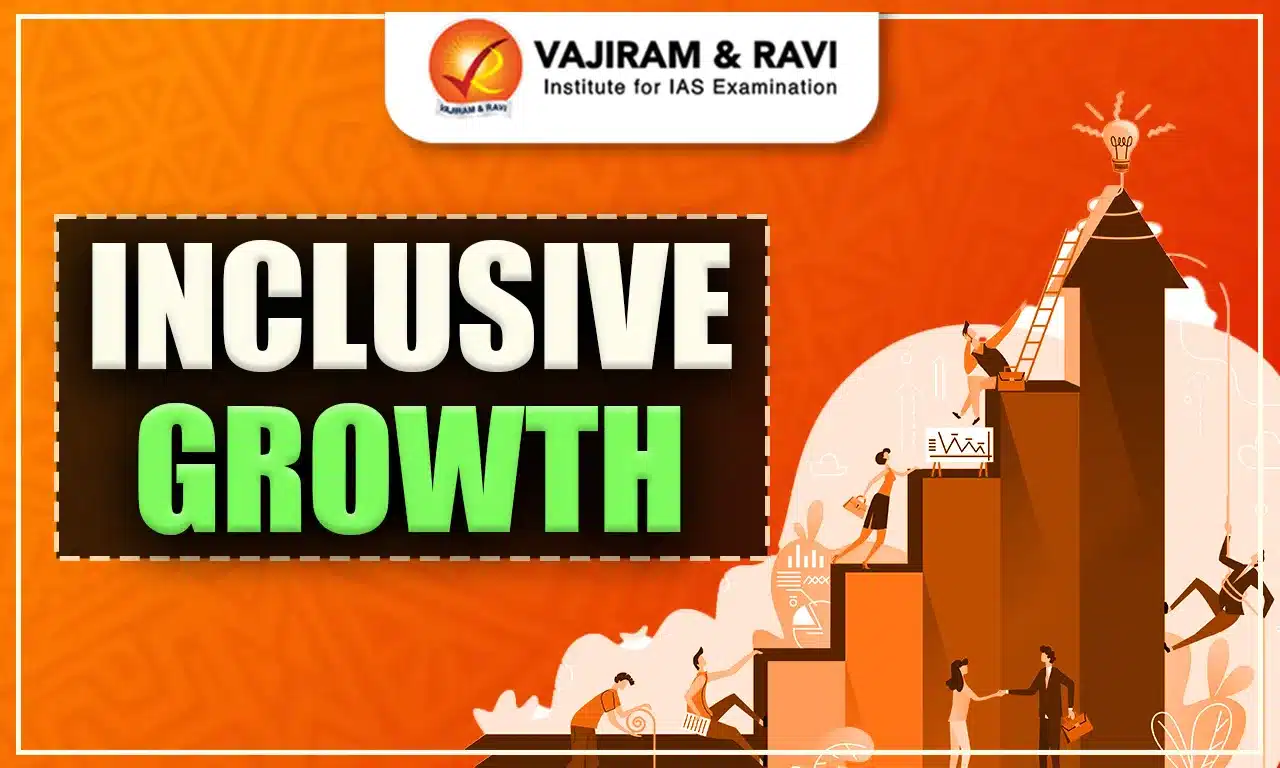
The United Nations Development Programme (UNDP) defines Inclusive Growth as both the process and the result of ensuring that all groups of people are able to participate in economic growth and share its benefits equally. It emphasizes that growth must not be limited to a few, but should expand opportunities for everyone, especially the marginalized.
This idea directly connects with Sustainable Development Goal (SDG) 10, which seeks to reduce inequality within and among countries. SDG 10 highlights the importance of providing equal opportunities and addressing unequal outcomes by eliminating discriminatory laws, policies, and practices. It also calls for proactive steps through legislation, reforms, and social measures to promote fairness and equity in development.
Inclusive Growth
Inclusive Growth ensures that economic growth benefits all sections of society, reducing poverty and inequality. It is not only about the pace of growth but also about its pattern, how it creates opportunities and distributes benefits. The goal is to expand productive employment rather than merely redistribute income.
Inclusiveness means equal access to markets, resources, and a fair regulatory environment for both individuals and businesses. Growth strategies must be modified to each country’s unique socio-economic conditions. Market forces largely drive inclusive growth, but government intervention is vital to provide support, regulation, and infrastructure.
Focus remains on improving productivity alongside job creation, ensuring long-term and sustainable development.
Inclusive Growth Need
- Reduce Poverty and Inequality: Rapid growth alone has not guaranteed poverty reduction; inclusiveness ensures benefits reach marginalized groups.
- Balanced Regional Development: Disparities across states and rural-urban divides call for growth that spreads evenly.
- Social Justice and Equity: Ensures equal access to opportunities, resources, and markets, upholding constitutional values.
- Human Development: Better education, healthcare, nutrition, and skill development raise overall productivity.
- Employment Generation: Moves beyond income redistribution to create quality jobs, especially in agriculture and informal sectors.
- Sustainable Growth: Focus on environmentally sound and socially inclusive policies avoids long-term risks.
- Political and Social Stability: Reduces unrest by bringing disadvantaged groups into the growth process.


Inclusive Growth Features
- Equitable Opportunities: Ensures access to resources and markets for all, regardless of socio-economic background.
- Reducing Inequality: Seeks to narrow income and wealth gaps, promoting social balance and stability.
- Social Safety Nets: Strengthens support systems for vulnerable groups during crises or economic transitions.
- Education and Skill Development: Focuses on quality education and training to enhance employability and productivity.
- Employment Generation: Prioritizes creation of decent and diverse jobs, especially for marginalized communities.
- Infrastructure Expansion: Improves healthcare, roads, sanitation, and housing to raise living standards.
- Gender Equality: Promotes women’s participation and empowerment across sectors.
- Rural-Urban Linkages: Encourages balanced development to reduce distress migration.
- Sustainability: Integrates ecological concerns into growth strategies.
- Participatory Approach: Involves all stakeholders, government, business, and civil society in shaping policies.
Factors Affecting Inclusive Growth
- Inequality:
- Inequalities in society go beyond individual differences; they are sustained by socio-economic and political structures.
- Rapid globalization has widened these inequities, creating fresh challenges for inclusion.
- Marginalized groups such as minorities, women, the disabled, and the poor remain excluded unless specific equity-focused measures are taken.
- Social Exclusion
- Exclusion is rooted in social structures that deny certain groups full participation in economic and social life.
- Even developed economies face exclusion, proving that growth alone doesn’t guarantee inclusion.
- Marginalization limits opportunities and deepens disadvantage.
- Poverty
- Poverty is multidimensional, covering not just income but health, education, and dignity.
- The poor face systemic barriers in decision-making and access to resources.
- Inclusion is necessary to enhance their capabilities, productivity, and incomes.
- Disparities
- Regional, gender, caste, and class disparities remain pervasive.
- Natural factors (climate, geography), socio-cultural norms, and government policies all shape these gaps.
- Addressing these disparities is crucial for balanced and equitable growth.
- Displacement
- Forced displacements due to projects, conflicts, or disasters disrupt livelihoods and culture.
- They result in economic loss, social suffering, and resistance movements, slowing inclusive development.
Inclusive Growth Policy Measures
- Constitutional Provisions
- Article 15: Prohibits discrimination based on religion, race, caste, sex, or place of birth.
- Article 16: Guarantees equality of opportunity in public employment.
- 16(4): Allows reservation in promotion for SCs and STs.
- 16(5): Permits religious/denominational institutions to appoint officeholders from specific faiths.
- 16(6): Provides for 10% reservation in jobs/education for Economically Weaker Sections (EWS).
- National Rehabilitation Policy
- Designed to protect and rehabilitate displaced persons due to development projects.
- Focuses on compensation, livelihood support, and social security for affected families.
- Women Empowerment Measures
- Institutions like the National Commission for Women (NCW) and the National Council for Empowerment of Women safeguard women’s rights.
- 33% reservation in local self-government bodies ensures grassroots political participation.
- Reservation Policies
- SCs, STs, and OBCs enjoy reservation in education and public sector employment.
- Reserved seats in Parliament and State Assemblies promote political inclusion.
- Minority Commissions address welfare and rights of religious minorities.
- Mahatma Gandhi National Rural Employment Guarantee Scheme (MGNREGS)
- Launched in 2005 to provide 100 days of guaranteed wage employment to rural households.
- Ensures 33% participation of women in the workforce.
- Focuses on irrigation and development works benefiting SCs and STs.
Measures to Promote Inclusive Growth in India
Inclusive Growth requires a holistic approach that touches all key dimensions of development, education, healthcare, employment, infrastructure, and social equality. Below are some major strategies:
- Education and Skill Development
- Expand access to quality education for all sections of society.
- Improve the functioning of government schools and promote vocational training centers.
- Provide scholarships and financial aid for underprivileged students to ensure equity in higher education.
- Healthcare Accessibility
- Ensure affordable healthcare services for all citizens, especially the marginalized.
- Strengthen healthcare infrastructure in rural and remote areas.
- Expand coverage of health insurance schemes to reduce out-of-pocket expenses.
- Poverty Alleviation
- Design targeted poverty reduction programs for economically weaker sections.
- Promote direct cash transfers, microfinance support, and livelihood schemes.
- Focus on sustainable employment generation to reduce dependence on subsidies.
- Rural Development
- Invest in agricultural infrastructure, irrigation, and rural industries.
- Encourage sustainable farming practices and promote rural entrepreneurship.
- Provide easy credit and financial support to farmers and rural enterprises.
- Women Empowerment
- Promote gender equality through education, skill training, and entrepreneurship opportunities.
- Guarantee equal access to healthcare, legal aid, and jobs for women.
- Implement women-focused welfare programs to reduce gender disparities.
- Infrastructure Development
- Expand transport, electricity, digital connectivity, and sanitation networks across the country.
- Reduce regional disparities by focusing on backward and underdeveloped regions.
- Use infrastructure as a driver of economic activity and job creation.
- Inclusive Governance
- Encourage citizen participation in policymaking and strengthen transparency.
- Empower Panchayati Raj Institutions and local governments.
- Involve marginalized communities directly in the decision-making process.
- Private Sector Engagement
- Promote Corporate Social Responsibility (CSR) initiatives focusing on education, healthcare, and rural development.
- Encourage businesses to invest in social sectors alongside profit-making activities.
- Promote public-private partnerships for inclusive projects.
- Sensitization and Awareness
- Conduct campaigns, workshops, and programs to address biases and stereotypes.
- Promote awareness of the importance of inclusivity and equal opportunity.
- Encourage a culture of social acceptance and equity across communities.

 Last updated on August, 2026
→ UPSC Mains 2026 commenced on 21st August 2026 and will continue through 30th August 2026, as per the official examination schedule.
→ UPSC Mains Question Paper 2026 is out now for Essay & GS Paper 1, 2, 3 & 4.
→ UPSC Mains GS Paper 1 2026 is out now.
→ UPSC Mains GS Paper 2 2026 is out now.
→ UPSC Mains GS Paper 3 2026 is out now.
→ UPSC Mains GS Paper 4 2026 is out now.
→ UPSC Mains Indian Language Paper & English Compulsory Paper are out now.
→ Check out the latest UPSC Syllabus 2026 here.
→ UPSC Mains Admit Card 2026 is now out.
→ Enroll in Vajiram & Ravi’s UPSC Mains Test Series 2027 for structured answer writing practice, expert evaluation, and exam-oriented feedback.
→ Join Vajiram & Ravi’s UPSC Mentorship Program 2027 for personalized guidance, strategy planning, and one-to-one support from experienced mentors.
→ Go through the UPSC Mains Previous Year Papers to enhance your preparation.
→ Download UPSC Mains Essay Paper 2025, UPSC Mains GS Paper-I 2025, UPSC Mains GS Paper-II 2025, UPSC Mains GS Paper-III 2025, UPSC Mains GS Paper-IV 2025, UPSC Mains English (Compulsory) Paper 2025, UPSC Mains Hindi (Qualifying) Paper 2025 here.
→ UPSC has released UPSC Toppers List 2025 with the Civil Services final result on its official website.
→ UPSC Calendar 2027 has been released.
→ Also check Best UPSC Coaching in India
Inclusive Growth FAQs
Q1. What are the three pillars of inclusive growth?+
Q2. What is the meaning of inclusion for growth?+
Q3. What do you mean by exclusive growth?+
Q4. What is the concept of inclusive growth?+
Q5. What are the three fundamental pillars of SDG?+
Tags: inclusive growth