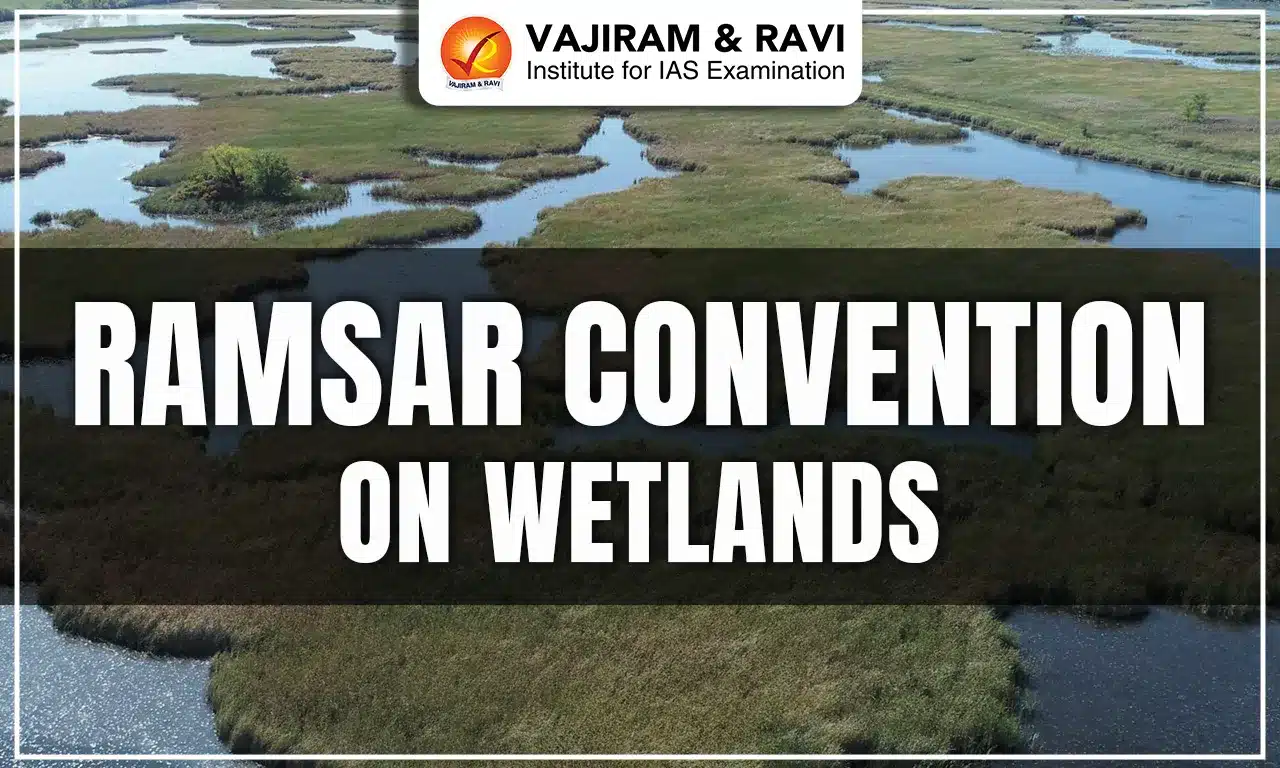
The Ramsar Convention on Wetlands, adopted in 1971, is a landmark international treaty dedicated to the conservation and sustainable use of wetlands. Wetlands are vital ecosystems that support biodiversity, regulate water cycles, and help mitigate climate change impacts. The Convention provides a global framework for identifying, designating, and managing wetlands of international importance.
Wetlands
Wetlands are among the planet’s most productive and ecologically rich environments, serving as cradles of biodiversity that sustain countless species of plants and animals. They provide essential ecosystem services critical to human survival, including freshwater supply, food, building materials, flood control, groundwater recharge, and climate change mitigation. Despite their importance, Wetlands face widespread degradation and conversion for other uses, threatening both biodiversity and human well-being. This urgent situation underscores the need for the wise use, management, and conservation of Wetlands globally.
Ramsar Convention on Wetlands
The Ramsar Convention on Wetlands is an intergovernmental treaty that sets the framework for both national action and international cooperation to conserve and ensure the wise use of wetlands and their resources. One of its strengths lies in its broad and inclusive definition of wetlands.
Under Ramsar, Wetlands are not limited to swamps and marshes alone but extend to lakes, rivers, underground aquifers, peatlands, oases, estuaries, deltas, tidal flats, mangroves, and coral reefs. The definition even covers human-made ecosystems such as rice fields, reservoirs, salt pans, and fish ponds, recognizing their ecological and livelihood importance.


Ramsar Convention on Wetlands History
The Ramsar Convention, also known as the Convention on Wetlands, emerged in response to the growing global concern over wetland degradation and loss. During the 1960s, environmentalists and waterfowl conservationists recognized the urgent need for an international framework to safeguard these ecosystems. This led to the formal adoption of the Ramsar Convention on February 2, 1971, in the Iranian city of Ramsar, from which it derives its name.
The treaty came into force on December 21, 1975, marking a significant milestone in international environmental cooperation. Its initial focus was on protecting wetlands as vital habitats for waterfowl, but over time, the scope expanded to cover the broader ecological, economic, and cultural significance of wetland ecosystems. Today, with nearly 172 contracting parties, the Ramsar Convention stands as one of the most widely endorsed global agreements, reflecting its central role in biodiversity conservation and sustainable development.
Ramsar Convention on Wetlands Objectives
The Ramsar Convention sets out clear objectives to guide the conservation and sustainable use of wetlands worldwide. These include:
- Protection and Management: Safeguard, restore, and ensure the wise use of wetlands to maintain their ecological character and long-term health.
- International Cooperation: Promote collaboration between countries, particularly for transboundary wetlands, through sharing knowledge, resources, and best practices.
- Biodiversity Conservation: Protect Wetland ecosystems as vital habitats for waterfowl, aquatic life, and countless other species, ensuring the survival of global biodiversity.
- Climate Regulation: Strengthen wetland’s role in carbon sequestration, flood control, and water cycle regulation to enhance resilience against climate change.
- Public Awareness: Promotes education and understanding about the ecological, cultural, and economic importance of wetlands for both people and nature.
Ramsar Convention Selection Criteria
Ramsar Sites are wetlands of international importance, identified under the Ramsar Convention for their ecological, cultural, and socio-economic value. The selection is based on well-defined criteria, ensuring the protection of globally significant wetland habitats and species. Key criteria include:
- Unique Wetlands: Sites that represent rare or unique examples of natural or near-natural wetland ecosystems.
- Biodiversity Value: Wetlands that support threatened, endangered, or critically endangered species and serve as vital habitats for their survival.
- Waterfowl Populations: Areas that regularly support large numbers of waterfowl, especially during migration, breeding, or wintering seasons.
- Species Life Cycle Support: Wetlands that provide refuge or critical support for plant and animal species at sensitive stages of their life cycle.
- Fish and Aquatic Life: Sites essential for sustaining fish populations, including breeding, spawning, and nursery grounds that support livelihoods and ecosystems.
Ramsar Convention on Wetlands Pillars
The Ramsar Convention’s mission is “the conservation and wise use of all wetlands through local and national actions and international cooperation, as a contribution towards achieving sustainable development throughout the world.”
To achieve this, Contracting Parties commit to three key pillars:
- Wise Use of Wetlands: Integrating wetlands into national policies, plans, and legislation while promoting sustainable management and public awareness.
- Designation of Ramsar Sites: Identifying and protecting suitable wetlands under the “Ramsar List of Wetlands of International Importance” and ensuring their effective management.
- International Cooperation: Collaborating on transboundary wetlands, shared species, and projects that impact wetlands across borders.
Beyond national commitments, many countries and donors support Ramsar’s mission by funding global wetland conservation projects. The Conference of the Parties (COP) provides a core budget every three years, administered by the Secretariat, with contributions proportionate to each nation’s share in the UN budget.
The Convention also works with five officially recognised International Organization Partners (IOPs), which provide expertise, technical guidance, and advocacy:
- BirdLife International
- International Union for Conservation of Nature (IUCN)
- International Water Management Institute (IWMI)
- Wetlands International
- WWF International
Ramsar Sites in India
Ramsar Sites in India are Wetlands of international importance, recognised under the Ramsar Convention for their unique biodiversity and ecological significance. At present, India has 49 Ramsar Sites, spread across different states and ecological regions. Prominent examples include Chilika Lake in Odisha, Keoladeo National Park in Rajasthan, and the Sundarbans in West Bengal.
These sites serve as critical habitats for migratory birds, aquatic species, and diverse plant life, making them vital for the country’s ecological balance. Beyond biodiversity, Ramsar Sites provide ecosystem services such as flood regulation, groundwater recharge, and water purification. They also sustain local communities by supporting livelihoods through fishing, agriculture, and eco-tourism.
By conserving Ramsar Sites, India not only safeguards its natural heritage but also strengthens climate resilience and promotes sustainable development.
Ramsar Convention on Wetlands Importance
Ramsar Sites hold immense ecological, social, and economic significance. Their importance can be understood through the following points:
- Protecting Biodiversity: These wetlands serve as critical habitats for migratory birds, fish, amphibians, and numerous plant species, safeguarding global biodiversity.
- Supporting Ecosystems: Ramsar Sites provide essential ecological services such as water purification, flood regulation, and nutrient cycling, which help maintain ecosystem balance.
- Mitigating Climate Change: Wetlands act as natural carbon sinks, regulating local climates and contributing to both climate change mitigation and adaptation.
- Supporting Livelihoods: Local communities rely on Ramsar Sites for food, water, fishing, agriculture, and cultural practices, linking conservation with human well-being.
- Promoting Ecotourism: Many Ramsar Sites are hotspots for eco-tourism, offering scenic landscapes and rich biodiversity that generate income and support conservation initiatives.
Montreux Record on Ramsar Sites
The Montreux Record is a register maintained under the Ramsar Convention, listing wetland sites where the ecological character has undergone, is undergoing, or is likely to undergo change due to factors such as technological development, pollution, or other human interference. It serves as a monitoring tool to identify and prioritize sites that need urgent conservation attention.
Currently, India has two wetlands included in the Montreux Record:
- Keoladeo National Park (Rajasthan)
- Loktak Lake (Manipur)
These inclusions highlight the need for focused conservation measures to restore and maintain the ecological balance of these fragile ecosystems.
| Also Check Other Posts | |
| Coastal Regulation Zone | Global Plastic Treaty |
| Nitrogen Cycle | Carbon Cycle |

 Last updated on Oct, 2026
→ UPSC 2027 Notification will be released on 13 January 2027 at upsconline.nic.in.
→ Check Nobel Prize 2026 Winners List here.
→ Download PIB PRiSM Monthly Magazine 2026 here.
→ Check UPSC Monthly Current Affairs Magazine The Recitals here.
→ Check out the latest UPSC Syllabus here.
→ Download UPSC Model Answers for Mains 2026
→ UPSC Mains Question Paper 2026 is out now for Essay & GS Paper 1, 2, 3 & 4.
→ UPSC Calendar 2027 has been released.
→ Enroll in Vajiram & Ravi’s UPSC Mains Test Series 2027 for structured answer writing practice, expert evaluation, and exam-oriented feedback.
→ Join Vajiram & Ravi’s UPSC Mentorship Program 2027 for personalized guidance, strategy planning, and one-to-one support from experienced mentors.
→ Go through the UPSC Mains Previous Year Papers to enhance your preparation.
→ UPSC has released UPSC Toppers List 2025 with the Civil Services final result on its official website.
→ Also check Best UPSC Coaching in India
Ramsar Convention on Wetlands FAQs
Q1. What are wetlands according to Ramsar Convention?+
Q2. Where is the Ramsar Convention on Wetlands headquarters?+
Q3. In which year Ramsar Convention on Wetlands was adopted?+
Q4. What are the three pillars of the Ramsar Convention?+
Q5. Which is the first Ramsar Site in India?+
Tags: ramsar convention on wetlands