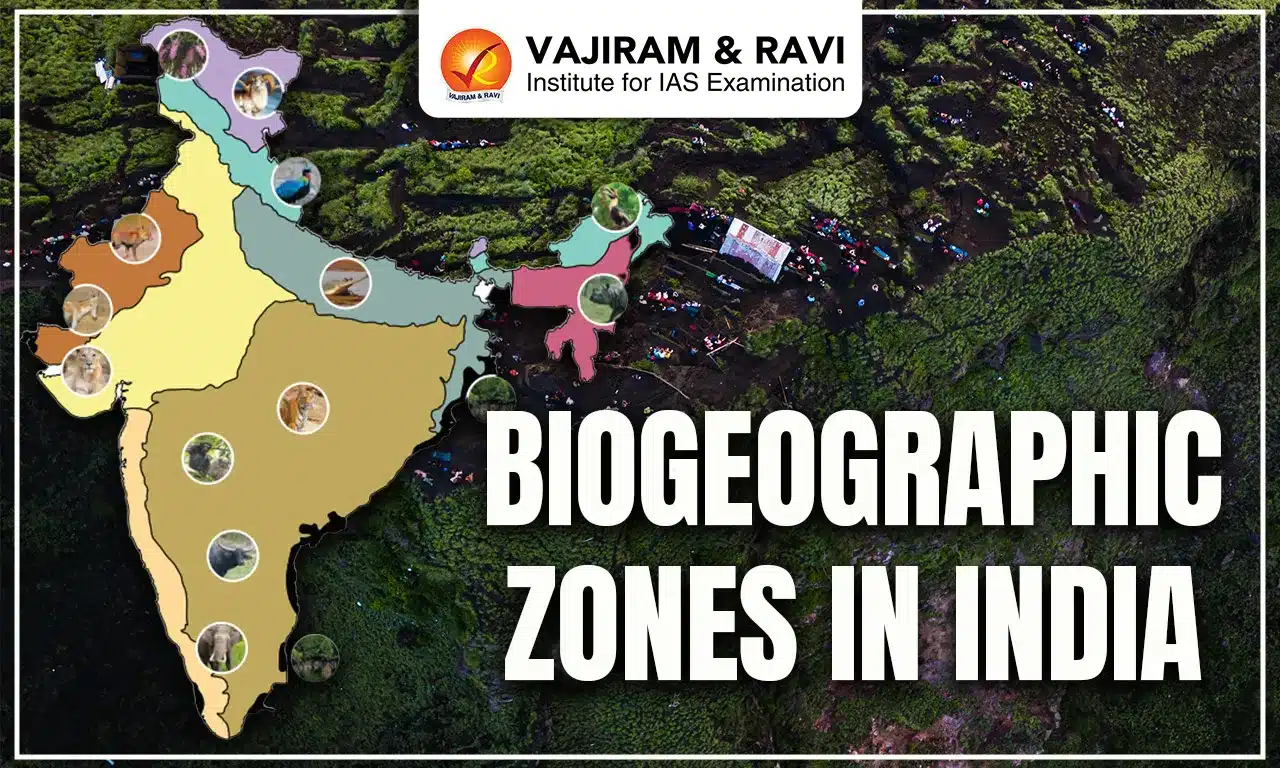
Biogeographic Zones of India provide the natural division of the country into 10 different regions classified on the basis of geography, climate, vegetation, and wildlife. India’s varied landscapes for mountains, deserts, coasts, and islands provide diverse habitats that nurture rich biodiversity. Every zone supports unique plants, animals, and ecosystems. Studying these zones helps us understand how life adapts to its surroundings and why their conservation is crucial for maintaining ecological balance.
Biogeographic Zones of India
Biogeographic Zones of India are big natural areas where ecosystems, animals, and plants share similar features. These divisions arise from factors like climate, latitude, altitude, geography, and habitat type. Simply put, a biogeographic region is an area where organisms of similar kinds live together because the environment and conditions are almost the same.
10 Biogeographic Zones of India
Biogeographic Zones of India are vast natural areas with plants, animals, and ecosystems sharing common environmental traits. Owing to India’s biodiversity, the nation is divided into 10 biogeographic zones, each defined by specific climate, terrain, vegetation, and wildlife. These zones highlight how living beings adjust to their habitats and survive across changing environments.
| Zone | Biogeographic Provinces | Location / States | Key Features | Major Wildlife |
|
1. Trans-Himalayan |
Ladakh, Sikkim, Tibetan Plateau |
J&K, Himachal, Ladakh |
Cold, dry, high-altitude |
Snow leopard, marmots, black-necked crane |
|
2. Himalayan |
West, Central, East Himalayas |
J&K, Himachal, Uttarakhand, Sikkim, Arunachal |
Tall mountains, diverse biodiversity |
Musk deer, red panda, Himalayan tahr |
|
3. Indian Desert |
Thar Desert, Rann of Kutch |
Rajasthan, Gujarat, Punjab, Haryana |
Hot, dry, scanty rainfall |
Indian bustard, camels, desert fox |
|
4. Semi-Arid |
Transitional dry areas |
Rajasthan, Gujarat, MP |
Dry climate, sparse vegetation |
Nilgai, blackbuck, chinkara |
|
5. Western Ghats |
Biodiversity hotspots |
Maharashtra, Goa, Karnataka, Kerala, TN |
Evergreen forests, endemic species |
Lion-tailed macaque, Malabar civet |
|
6. Deccan Plateau |
Peninsular highlands |
Telangana, AP, Karnataka, MP, Maharashtra |
Volcanic soil, mixed forests |
Sloth bear, wild boar, Indian wolf |
|
7. Gangetic Plain |
Indo-Gangetic lowlands |
UP, Bihar, WB, Haryana, Punjab |
Fertile plains, agriculture |
Elephants, rhinos, river dolphins |
|
8. North-East India |
Hills and valleys |
Assam, Meghalaya, Nagaland, Manipur, Mizoram |
Heavy rainfall, biodiversity |
Hornbill, hoolock gibbon, orchids |
|
9. Islands |
Andaman, Nicobar, Lakshadweep |
Bay of Bengal, Arabian Sea |
Coral reefs, mangroves |
Saltwater crocodile, dugong, turtles |
|
10. Coasts |
East & West Coastlines |
Entire Indian coastline |
Mangroves, estuaries, deltas |
Olive ridley turtles, flamingos |


Biogeographic Zones Challenges in India
While India’s Biogeographic zones are rich in biodiversity, they face many environmental and human-induced pressures. These resources threaten natural ecosystems, wildlife and long-term ecological stability.
- Changing Climate: Rising temperatures and irregular rainfall impact crops, forests, and animal survival.
- Water Scarcity: Rivers and aquifers are depleting due to overuse and low rainfall, affecting dry and desert regions.
- Loss of Species: Poaching, deforestation, and climate shifts are pushing many species towards extinction.
- Desertification: Overgrazing, deforestation, and poor land practices convert fertile lands into deserts.
- Melting Glaciers: Rapid glacial melt in the Himalayas threatens water availability and downstream farming.
- Floods & Droughts: Uneven rainfall triggers droughts in some areas and flash floods in others, especially in plains and coasts.
Biogeographic Zones Problems of India
Understanding the problems associated with Biogeographic zones also means recognizing the serious environmental challenges impacting biodiversity. These problems include:
- Deforestation & Habitat Loss: Logging, farming, mining, and urbanization reduce forests and wildlife shelter.
- Poaching & Wildlife Trade: Illegal hunting of tigers, elephants, and pangolins pushes species towards extinction.
- Invasive Species: Foreign plants like Lantana and Parthenium disturb natural forest ecosystems.
- Climate Change: Fragile zones like Himalayas, NE India, and coastal belts are highly climate-sensitive.
- Pollution: Industrial waste, pesticides, and sewage contaminate air, soil, and rivers.
- Human-Wildlife Conflict: Shrinking forests force animals into villages, causing frequent clashes.
- Overgrazing: Excessive livestock grazing damages grasslands and limits food for wild herbivores.
- Mining & Quarrying: Extraction in sensitive zones like Western Ghats harms habitats and rivers.
- Unsustainable Tourism: Excess tourism in Himalayas and islands disrupts fragile ecosystems.
- Poor Conservation Efforts: Weak laws, low funding, and limited community role hamper biodiversity protection.
Biogeographic Zones Benefits
Biogeographic Zones have the following benefits:
- Biodiversity Conservation: They help in identifying, conserving, and protecting India’s unique flora and fauna.
- Ecological Balance: Each zone maintains natural cycles like water, carbon, and nutrients, ensuring ecosystem stability.
- Climate Regulation: Forests, wetlands, and deserts within zones act as carbon sinks and regulate temperature and rainfall.
- Habitat Protection: Provide safe habitats for endangered and endemic species, reducing the risk of extinction.
- Resource Management :Enable sustainable use of natural resources like forests, water, and soils.
- Cultural Value: Many zones hold sacred groves, traditional practices, and tribal livelihoods connected to biodiversity.
- Scientific Research: Serve as natural laboratories for ecological and environmental studies.
- Tourism & Economy: Promote eco-tourism and generate income while encouraging awareness about wildlife.
- Disaster Mitigation: Coastal, desert, and Himalayan zones buffer floods, droughts, and landslides.
| Also Check Other Posts | |
| Coastal Regulation Zone | Global Plastic Treaty |
| Nitrogen Cycle | Carbon Cycle |

 Last updated on Oct, 2026
→ UPSC 2027 Notification will be released on 13 January 2027 at upsconline.nic.in.
→ Asian Games 2026 are being held in Aichi-Nagoya, Japan, from 19 September to 4 October.
→ Check Nobel Prize 2026 Winners List here.
→ Download PIB PRiSM Monthly Magazine 2026 here.
→ Check UPSC Monthly Current Affairs Magazine The Recitals here.
→ Check out the latest UPSC Syllabus here.
→ Download UPSC Model Answers for Mains 2026
→ UPSC Mains Question Paper 2026 is out now for Essay & GS Paper 1, 2, 3 & 4.
→ UPSC Calendar 2027 has been released.
→ Enroll in Vajiram & Ravi’s UPSC Mains Test Series 2027 for structured answer writing practice, expert evaluation, and exam-oriented feedback.
→ Join Vajiram & Ravi’s UPSC Mentorship Program 2027 for personalized guidance, strategy planning, and one-to-one support from experienced mentors.
→ Go through the UPSC Mains Previous Year Papers to enhance your preparation.
→ UPSC has released UPSC Toppers List 2025 with the Civil Services final result on its official website.
→ Also check Best UPSC Coaching in India
Biogeographic Zones in India FAQs
Q1. Does India have 12 biogeographical regions?+
Q2. Which is the largest biogeographic zone of India?+
Q3. What is a biogeography zone?+
Q4. What are the 10 biogeographic zones of India?+
Q5. What are the two types of biogeography?+
Tags: biogeographic zones in india