According to AIIMS Delhi, “Bio-medical waste” means any waste, which is generated during the diagnosis, treatment or immunization of human beings or animals or research activities pertaining thereto or in the production or testing of biological or in health camps.
The World Health Organisation (WHO) defines Bio-medical waste as waste generated by health care activities, ranging from used needles and syringes to soiled dressings, body parts, diagnostic samples, blood, chemicals, pharmaceuticals, medical devices and radioactive materials. This article shares insights on Bio-Medical Waste Management in India.
Bio-Medical Waste
Bio-Medical waste is biologically and chemically hazardous waste, containing biological and microbiological contaminants. Poor management of bio-medical waste exposes health care workers, waste handlers and the community to infections, toxic effects and injuries, and risks that pollute the environment.
Bio-Medical Waste Management in India
India’s expanding healthcare system generates a large quantity of biomedical waste (BMW) every day from hospitals, clinics, laboratories, vaccination camps, and home healthcare services. As of 2020, India generated approximately 774 tons of biomedical waste per day.
Bio-Medical Waste Management in India is regulated primarily under the Bio-Medical Waste Management Rules, 2016, notified under the Environment (Protection) Act, 1986, replacing the earlier 1998 Rules


Bio-Medical Waste Management Rules 2016
Bio-Medical Waste Management Rules 2016 are the primary rules to deal with bio-medical waste in India.
These rules apply to everyone who generates, collects, receives, stores, transports, treats, disposes, or handles bio-medical waste in any form. This includes hospitals, nursing homes, clinics, dispensaries, veterinary institutions, animal houses, pathological laboratories, and blood banks.
The 2016 rules moved away from simple disposal toward a more rigorous monitoring system, emphasizing the “polluter pays” principle.
Salient features of Bio-Medical Waste Management Rules 2016 are as follows:
- Expanded Scope: The scope of the rules has been expanded to include vaccination camps, blood donation camps, surgical camps or any other healthcare activity.
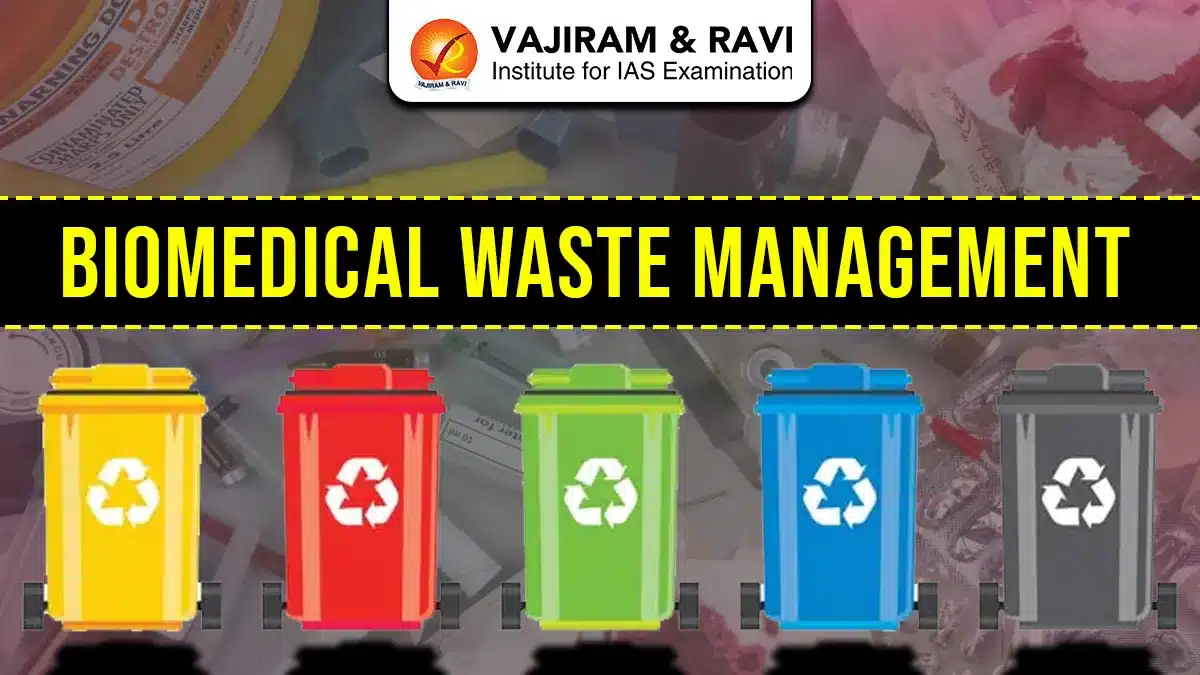
- Simplified Categorization: To make segregation easier for healthcare workers, the waste categories were reduced from ten to four color-coded categories:
- Yellow: For infectious waste, anatomical waste, soiled waste, and chemical waste.
- Red: For contaminated waste (recyclable) like tubing, bottles, and syringes.
- White: For waste sharps (needles, scalpels).
- Blue: For glassware and metallic body implants.
- Pre-treatment of Waste: Laboratory waste, microbiological waste, and blood bags must be pre-treated through disinfection or sterilization on-site (as per WHO or NACO guidelines) before being sent for final disposal.
- Phasing out Chlorinated Plastics: To prevent the release of toxic dioxins and furans during incineration, the rules mandated the phase-out of chlorinated plastic bags, gloves, and blood bags.
- Barcoding and GPS: Establish a Bar-Code System for bags or containers containing bio-medical waste for disposal
- Strict Emission Norms: The rules tightened the standards for incinerators, reducing the permissible limit for particulate matter and increasing the residence time in the secondary chamber to ensure complete combustion.
- Occupational Safety: Healthcare facilities must provide regular training and immunize all health workers (specifically against Hepatitis B and Tetanus) who handle bio-medical waste.
- Operator Responsibility: Common Bio-medical Waste Treatment Facility (CBMWTF) operators are now more accountable for the timely collection of waste from even small clinics.
Bio-Medical Waste rules 2016 doesn’t apply to the following types of wastes as they are covered under different acts enumerated below :
- Radioactive wastes,
- Municipal Solid Wastes,
- Hazardous chemicals,
- Lead acid batteries,
- Hazardous wastes,
- E-Waste,
- Hazardous microorganisms, genetically engineered microorganisms and cells
Challenges in Bio-Medical Waste Management in India
Despite a robust legal framework, bio-medical waste management in India faces several challenges.
- Improper segregation at source, especially in small clinics and rural health centres.
- Limited coverage and capacity of Common Bio-Medical Waste Treatment Facilities (CBWTFs) lead to unsafe disposal in remote areas.
- Inadequate training and awareness among healthcare workers and waste handlers increases occupational risks.
- Weak monitoring, poor data reporting, and non-compliance by private healthcare facilities.
- The surge in waste during health emergencies like COVID-19 has also exposed infrastructural and logistical gaps.
Way Forward
- Ensure strict segregation at source through regular audits and penalties.
- Expand CBWTF coverage in rural and underserved areas.
- Strengthen training, safety gear, and immunisation of healthcare workers.
- Use digital tools like bar-coding, GPS tracking, and real-time reporting.
- Integrate BMW management into health emergency and disaster planning.

 Last updated on Oct, 2026
→ UPSC 2027 Notification will be released on 13 January 2027 at upsconline.nic.in.
→ Check Nobel Prize 2026 Winners List here.
→ Download PIB PRiSM Monthly Magazine 2026 here.
→ Check UPSC Monthly Current Affairs Magazine The Recitals here.
→ Check out the latest UPSC Syllabus here.
→ Download UPSC Model Answers for Mains 2026
→ UPSC Mains Question Paper 2026 is out now for Essay & GS Paper 1, 2, 3 & 4.
→ UPSC Calendar 2027 has been released.
→ Enroll in Vajiram & Ravi’s UPSC Mains Test Series 2027 for structured answer writing practice, expert evaluation, and exam-oriented feedback.
→ Join Vajiram & Ravi’s UPSC Mentorship Program 2027 for personalized guidance, strategy planning, and one-to-one support from experienced mentors.
→ Go through the UPSC Mains Previous Year Papers to enhance your preparation.
→ UPSC has released UPSC Toppers List 2025 with the Civil Services final result on its official website.
→ Also check Best UPSC Coaching in India
Bio-Medical Waste Management FAQs
Q1. What is Bio-medical waste?+
Q2. Which law governs bio-medical waste in India?+
Q3. Who is covered under BMWM Rules, 2016?+
Q4. Which waste is not covered under BMWM Rules, 2016?+
Q5. What are the key features of BMWM Rules, 2016?+
Tags: biomedical waste management