India Power Grid Latest News
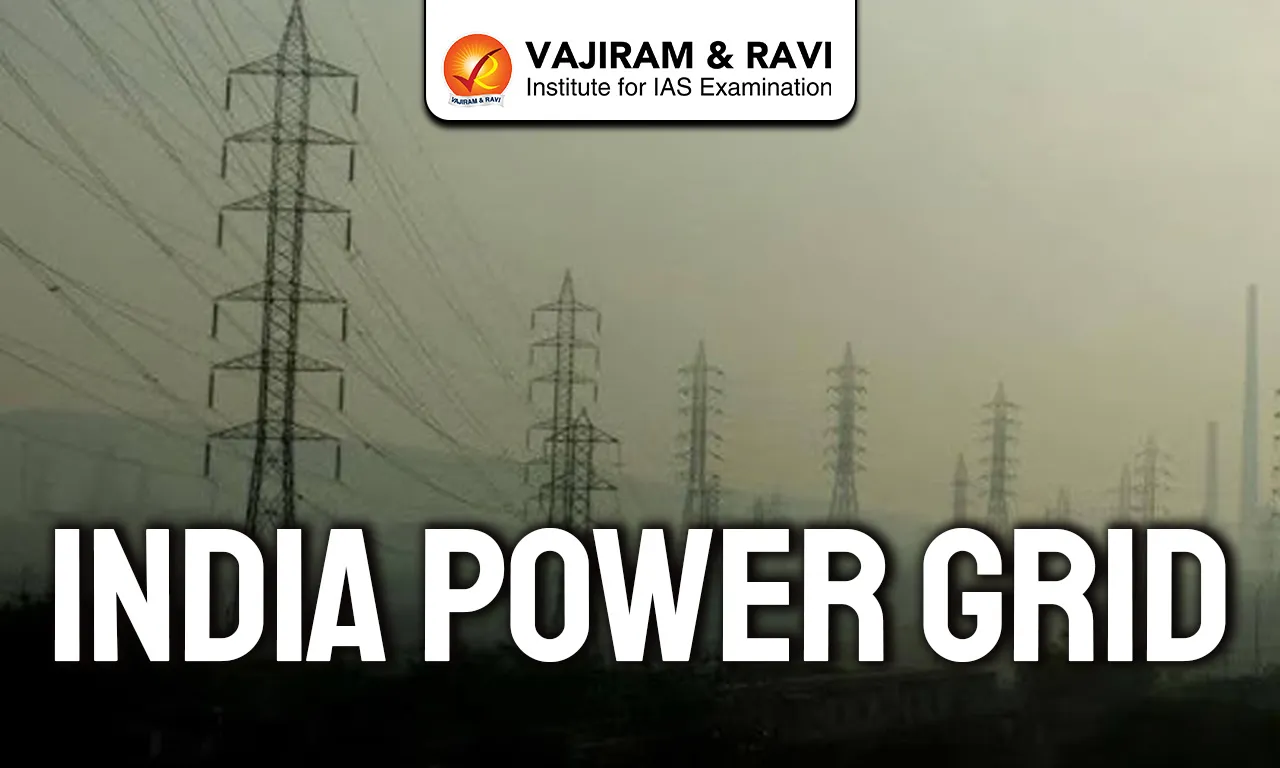
- India’s power system is set for a major transformation as AI-driven data centres expand rapidly, according to Grid India chief.
- While AI depends on algorithms, it also demands vast amounts of electricity. India’s current data centre capacity of about 1.2 GW is expected to quadruple by 2030 as AI-led computing surges.
- This growth will significantly reshape grid planning and operations, with data centres becoming large, complex, and dynamic loads on the power network.
Rising Grid Risks from Data Centre Expansion
- AI-driven data centres represent intense electricity loads, often requiring direct transmission-level connectivity rather than traditional sub-transmission networks.
- Their projected growth to 8–10 GW by 2030 will significantly strain grid infrastructure.
- Unlike conventional industrial demand, data centres exhibit sharp variability, rapid load ramps, and “silent exits” from the grid.
- As inverter-based systems, sudden withdrawal of 1–2 GW could destabilise grid operations.
Planning and Resource Adequacy
- Experts emphasise the need for proactive infrastructure planning, including robust transmission networks, strong connectivity, and compliance mechanisms.
- Data centres must also meet resource adequacy norms, covering primary energy, reserves, and balancing requirements.
- Given AI’s unpredictable load patterns, especially during peak processing phases, forecasting becomes difficult.
- Grid authorities stress that risks cannot be fully absorbed by the grid and must be managed at the demand side.
Evolving Standards and Storage Integration
- Globally, many jurisdictions require data centres to have dedicated generation capacity.
- India’s grid codes, standards, and energy storage integration must evolve to accommodate these emerging large-scale, dynamic loads.


Risk of Chaos Without Strategic Planning
- Rapid expansion of hyperscale data centres — each requiring nearly 1 GW — could severely strain the grid if not carefully planned.
- Such demand necessitates high-voltage substations and coordinated planning by central and state transmission utilities.
- Since hyperscale data centres have steady baseload demand, they require long-duration, stable generation sources.
- While the US increasingly relies on nuclear power, India may need a diversified supply approach.
Mixed Energy and Storage Solutions
- Experts recommend combining grid supply with captive generation, renewable energy, and long-duration battery storage (6–9 hours) to manage reliability and reduce dependence on the grid alone.
- To avoid chaotic infrastructure expansion and rising tariffs, authorities should identify and pre-plan dedicated data centre zones.
- Without coordinated planning, ad hoc grid expansion could lead to inefficiencies and higher costs for consumers.
Renewables and Efficiency in Data Centre Expansion
- Renewable energy can power new data centres through the open access route, which allows large consumers (1 MW+) to buy electricity directly from suppliers or exchanges, bypassing DISCOMs.
- Surplus generation capacity and upcoming pump hydro projects could support affordable round-the-clock green power.
Semiconductor-Level Efficiency Gains
- Semiconductor firms are central to the AI-driven power challenge.
- Under Intel’s 18A process, innovations such as RibbonFET, backside power delivery, and advanced packaging improve efficiency by about 15% and reduce energy use by limiting data movement.
- Intel also promotes a “heterogeneous AI” approach, arguing that not all AI tasks require energy-intensive GPUs.
- Optimised workload allocation across processors can significantly reduce total power consumption.
Hyperscalers’ Key Requirements
- AI scaling in India is still emerging, offering time to plan.
- For large investments, hyperscalers prioritise assured renewable power, grid reliability, regulatory clarity, long-term price certainty, and quick power availability.

 Last updated on Oct, 2026
→ UPSC 2027 Notification will be released on 13 January 2027 at upsconline.nic.in.
→ Check Nobel Prize 2026 Winners List here.
→ Download PIB PRiSM Monthly Magazine 2026 here.
→ Check UPSC Monthly Current Affairs Magazine The Recitals here.
→ Check out the latest UPSC Syllabus here.
→ Download UPSC Model Answers for Mains 2026
→ UPSC Mains Question Paper 2026 is out now for Essay & GS Paper 1, 2, 3 & 4.
→ UPSC Calendar 2027 has been released.
→ Enroll in Vajiram & Ravi’s UPSC Mains Test Series 2027 for structured answer writing practice, expert evaluation, and exam-oriented feedback.
→ Join Vajiram & Ravi’s UPSC Mentorship Program 2027 for personalized guidance, strategy planning, and one-to-one support from experienced mentors.
→ Go through the UPSC Mains Previous Year Papers to enhance your preparation.
→ UPSC has released UPSC Toppers List 2025 with the Civil Services final result on its official website.
→ Also check Best UPSC Coaching in India
India Power Grid FAQs
Q1. Why is India power grid under pressure from data centres?+
Q2. How do data centres affect India power grid stability?+
Q3. What planning reforms are needed for India power grid?+
Q4. Can renewable energy support India power grid expansion?+
Q5. Why is storage critical for India power grid resilience?+
Tags: India Power Grid mains articles upsc current affairs upsc mains current affair