Vitamin B3 Latest News
A clinical trial is exploring whether high doses of vitamin B3 could give patients with glioblastoma a better chance against aggressive brain cancer.
About Vitamin B3
- Vitamin B3, or Niacin, is a water-soluble vitamin.
- Water-soluble vitamins dissolve in water. Leftover amounts of the vitamin leave the body through the urine.
- The body keeps a small reserve of these vitamins, but they have to be taken on a regular basis to maintain the reserve.
- It is naturally present in many foods, added to some food products, and available as a dietary supplement.
- Your body gets niacin through food, but it also makes small amounts from the amino acid tryptophan, which can be found in protein sources like turkey and other animal foods.
- The two most common forms of niacin in food and supplements are nicotinic acid and nicotinamide.
- Functions:
- Niacin works in the body as a coenzyme, with more than 400 enzymes dependent on it for various reactions.
- Niacin helps to convert nutrients into energy, create cholesterol and fats, create and repair DNA, and exert antioxidant effects.
- Due to Niacin’s positive effects on cholesterol levels, it may help prevent heart disease.
- Additionally, it may reduce oxidative stress and inflammation, which are associated with atherosclerosis, or the hardening of the arteries.
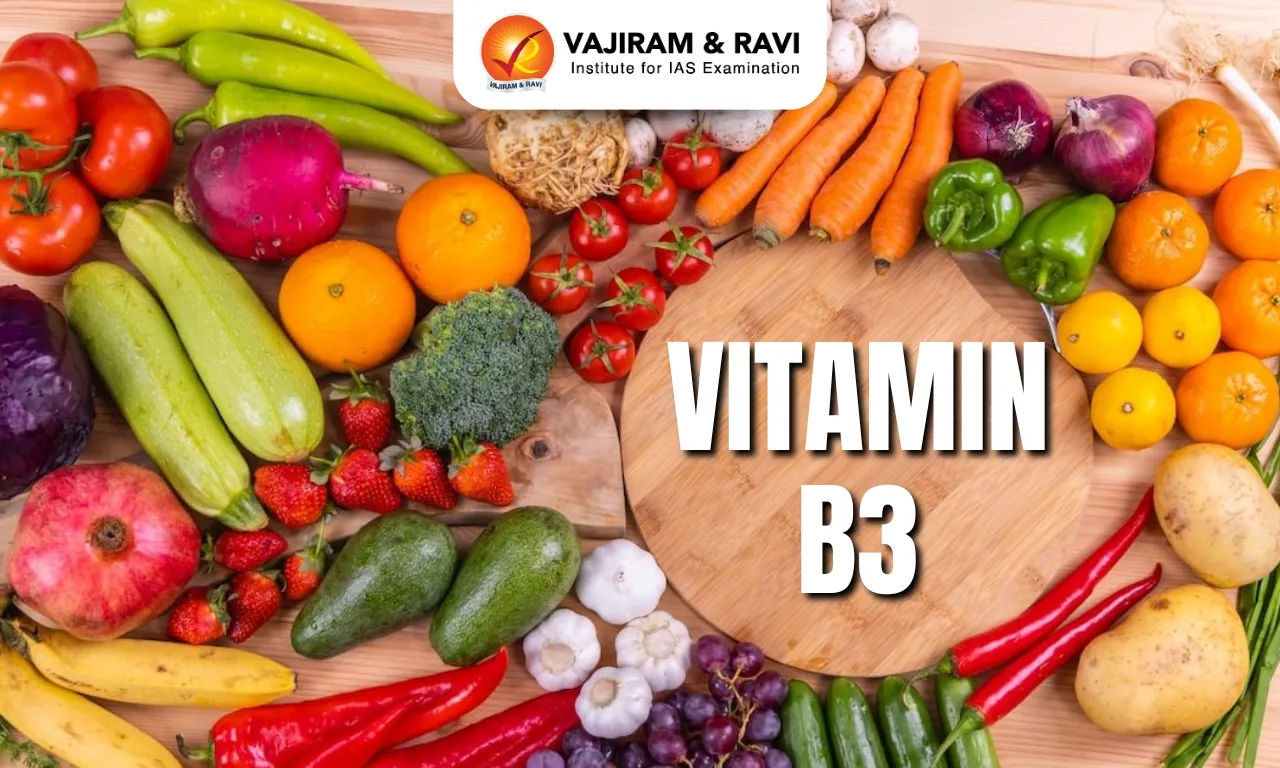
- Food Sources: It is found in many foods, both from animals and plants.
- Red meat: beef, beef liver, pork
- Poultry
- Fish
- Brown rice
- Fortified cereals and breads
- Nuts, seeds
- Legumes
- Bananas
- Deficiency:
- A severe niacin deficiency leads to pellagra, a condition that causes a dark, sometimes scaly rash to develop on skin areas exposed to sunlight; bright redness of the tongue; and constipation/diarrhea.
- Other signs of severe niacin deficiency include:
- Depression
- Headache
- Fatigue
- Memory loss
- Hallucinations.
News: SD


 Last updated on Oct, 2026
→ UPSC 2027 Notification will be released on 13 January 2027 at upsconline.nic.in.
→ Check Nobel Prize 2026 Winners List here.
→ Download PIB PRiSM Monthly Magazine 2026 here.
→ Check UPSC Monthly Current Affairs Magazine The Recitals here.
→ Check out the latest UPSC Syllabus here.
→ Download UPSC Model Answers for Mains 2026
→ UPSC Mains Question Paper 2026 is out now for Essay & GS Paper 1, 2, 3 & 4.
→ UPSC Calendar 2027 has been released.
→ Enroll in Vajiram & Ravi’s UPSC Mains Test Series 2027 for structured answer writing practice, expert evaluation, and exam-oriented feedback.
→ Join Vajiram & Ravi’s UPSC Mentorship Program 2027 for personalized guidance, strategy planning, and one-to-one support from experienced mentors.
→ Go through the UPSC Mains Previous Year Papers to enhance your preparation.
→ UPSC has released UPSC Toppers List 2025 with the Civil Services final result on its official website.
→ Also check Best UPSC Coaching in India
Vitamin B3 FAQs
Q1. What is another name for Vitamin B3?+
Q2. Is Vitamin B3 a water-soluble or fat-soluble vitamin?+
Q3. What are the two most common forms of niacin found in foods and supplements?+
Q4. What role does niacin play in the body?+
Q5. How does niacin help in energy production?+
Tags: prelims pointers upsc current affairs upsc prelims current affairs vitamin b3