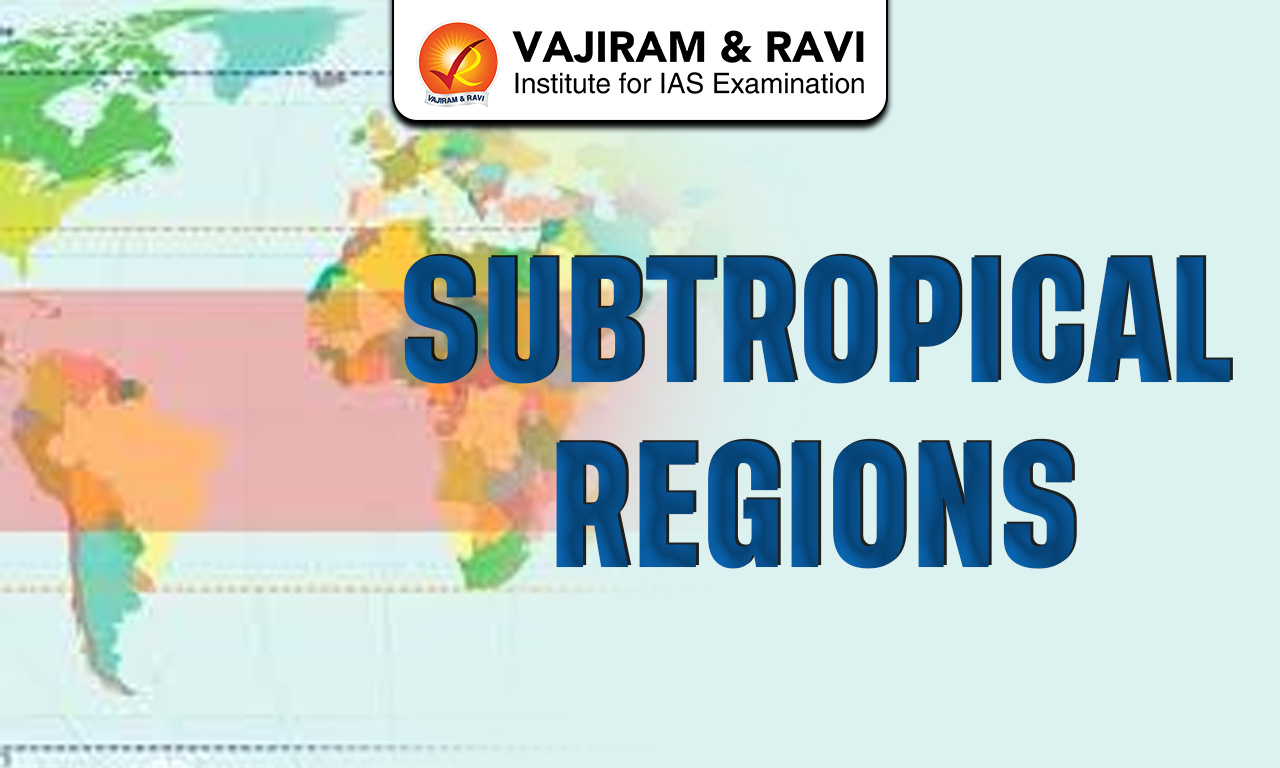
Subtropical Regions are important climate zones located immediately north and south of the tropics, forming a transition between tropical and temperate zones. These regions generally extend from about 23° latitude to nearly 35°-40° in both hemispheres and include the horse latitudes. They experience hot summers, mild winters and limited frost. Subtropical zones are influenced by atmospheric circulation such as the Hadley cell and subtropical high pressure systems, which strongly control temperature, rainfall and vegetation patterns across these regions.
Subtropical Regions Types
Subtropical Regions are classified into major climate types based on temperature patterns and seasonal rainfall distribution across continents.
- Humid Subtropical Climate (Cfa/ Cwa): Characterized by hot, humid summers and mild winters, with rainfall concentrated in warm months. Found in Southeast China, Indo-Gangetic Plain, eastern Australia and southeastern United States, influenced by monsoon and tropical air masses.
- Mediterranean Climate (Csa/ Csb): Marked by hot, dry summers and mild, wet winters. Occurs in the Mediterranean Basin, coastal California, central Chile, southwestern Australia and South Africa, where seasonal rainfall is concentrated in cooler months.
- Subtropical Highland Climate (Cfb/ Cwb): Found in elevated tropical or Subtropical Regions like Mexican Plateau and Ethiopian Highlands. It shows mild temperatures year round, with either evenly distributed rainfall or monsoon influenced wet summers and dry winters.
- Semi arid/ Desert Subtropical Climate (BSh/ BWh): Characterized by high temperatures above 18°C, low rainfall and high evaporation. Common in desert regions due to subtropical high pressure systems, such as Sahara and coastal deserts of South America.
Subtropical Regions Features
Subtropical Regions show distinct climatic features shaped by latitude, pressure systems and oceanic influences.
- Temperature Pattern: Subtropical Regions experience hot summers and mild winters with rare frost. According to Trewartha classification, at least eight months record temperatures above 10°C and one month below 18°C.
- Precipitation Distribution: Rainfall varies widely, with humid subtropics receiving summer rainfall, Mediterranean regions receiving winter rainfall and deserts having minimal precipitation due to high pressure subsidence.
- Atmospheric Circulation: Dominated by Hadley cell circulation, where air rises near the equator and sinks around 30° latitude, forming subtropical high pressure zones responsible for arid conditions.
- Subtropical Ridge Influence: Semi permanent high pressure systems create stable atmospheric conditions, leading to desert formation and clear skies, especially on western continental margins.
- Oceanic Impact: Regions near warm oceans experience heavy rainfall and tropical cyclones, while those near cold currents face fog, dryness and reduced precipitation.
- Seasonal Variation: Distinct seasonal patterns exist, including wet summers in monsoon regions and dry summers in Mediterranean climates, influenced by shifting wind systems.
- Temperature Classification Criteria: Köppen defines subtropical climates with warmest month above 22°C and coldest above 0°C or -3°C, while Holdridge defines biotemperature between 16°C-24°C.


Subtropical Regions Distribution
Subtropical Regions are widely distributed across continents and islands, covering large parts of mid latitude zones globally.
- Latitudinal Extent: Located between 23°26′ and approximately 35°-40° latitude in both hemispheres, forming a transitional belt between tropical and temperate regions.
- Continental Distribution: Found across Asia, Africa, North and South America, Europe and Australia, including regions like India, China, United States, Mediterranean Europe and southern Africa.
- Desert Concentration: A large portion of world deserts lies in subtropics due to descending air masses near 30° latitude, creating arid conditions in regions like Sahara and Arabian deserts.
- Coastal Distribution: Eastern continental margins have humid subtropical climates, while western margins exhibit Mediterranean or arid climates depending on ocean currents.
- Highland Presence: Subtropical climates also occur in elevated tropical regions such as Mexican Plateau, Ethiopian Highlands and Vietnamese highlands due to altitude induced temperature moderation.
- Extended Range: Some subtropical conditions extend beyond 40° latitude due to maritime influence, particularly in northwestern Europe and parts of Argentina.
- Examples: Major important regions include Delhi, Shanghai, Tokyo, Cairo, Los Angeles, Cape Town and Sydney, reflecting global spread across both hemispheres.
Subtropical Regions Biodiversity
Subtropical Regions support diverse plant and animal life due to moderate temperatures and varied rainfall patterns.
Flora
- Vegetation Diversity: Subtropical Regions support crops like citrus, mango, pistachio, lychee and avocado, commonly grown in regions such as India, China and California due to mild winters and limited frost.
- Tree Types: Vegetation includes tree ferns, dracaena, yucca and Taxaceae trees, along with apple, pear and pomegranate, found in regions like southern United States, Mediterranean Europe and East Asia.
- Climate Adaptation: Plants near the frost line, such as palms and mango trees, are sensitive to cold, while species like apple and pear adapt better to cooler subtropical margins.
Fauna
- General Characteristics: Animal life includes mammals like deer and foxes, birds such as parrots and eagles and reptiles like lizards, depending on forest, grassland, or desert habitats.
- Desert Adaptation: In arid Subtropical Regions like the Sahara and Arabian deserts, animals such as camels, desert foxes and reptiles show adaptations like water conservation and nocturnal behavior.
- Humid Region Diversity: Humid subtropical areas like Southeast China and the southeastern United States support species such as amphibians, insects and birds due to dense vegetation and high rainfall.
Agricultural Biodiversity
- Subtropical Regions support diverse agriculture that are benefitted from moderate climate and lower pest intensity.
- These include Mango in India, Citrus in Mediterranean regions and Avocado in California,

 Last updated on Oct, 2026
→ UPSC 2027 Notification will be released on 13 January 2027 at upsconline.nic.in.
→ Check Nobel Prize 2026 Winners List here.
→ Download PIB PRiSM Monthly Magazine 2026 here.
→ Check UPSC Monthly Current Affairs Magazine The Recitals here.
→ Check out the latest UPSC Syllabus here.
→ Download UPSC Model Answers for Mains 2026
→ UPSC Mains Question Paper 2026 is out now for Essay & GS Paper 1, 2, 3 & 4.
→ UPSC Calendar 2027 has been released.
→ Enroll in Vajiram & Ravi’s UPSC Mains Test Series 2027 for structured answer writing practice, expert evaluation, and exam-oriented feedback.
→ Join Vajiram & Ravi’s UPSC Mentorship Program 2027 for personalized guidance, strategy planning, and one-to-one support from experienced mentors.
→ Go through the UPSC Mains Previous Year Papers to enhance your preparation.
→ UPSC has released UPSC Toppers List 2025 with the Civil Services final result on its official website.
→ Also check Best UPSC Coaching in India
Subtropical Regions FAQs
Q1. What are Subtropical Regions? +
Q2. What is the climate of Subtropical Regions? +
Q3. Which are the main types of subtropical climates? +
Q4. Why are many deserts found in Subtropical Regions? +
Q5. What crops are grown in Subtropical Regions? +
Tags: geography geography notes subtropical regions