Intangible Cultural Heritage refers to the living traditions and practices that people inherit from their ancestors and continue to pass on to future generations. It includes things like songs, dances, festivals, languages, rituals, and traditional knowledge that are not physical objects but are still an important part of a community’s identity. This kind of heritage helps people feel connected to their culture and history, and it keeps traditions alive in everyday life. Unlike monuments or artifacts, it exists in people’s memories, skills, and shared experiences, making it a valuable and dynamic part of human culture.
Intangible Cultural Heritage Domains
- According to UNESCO (2003 Convention), Intangible Cultural Heritage (ICH) is expressed through five main domains:
- Oral traditions and expressions – stories, languages, and folklore
- Performing arts – music, dance, and theatre
- Social practices, rituals, and festivals – community celebrations and customs
- Knowledge related to nature and the universe – traditional wisdom about environment and life
- Traditional craftsmanship – skills used to create handmade items
Intangible Cultural Heritage List (UNESCO)
The Intangible Cultural Heritage List of UNESCO includes living traditions, practices, and cultural expressions recognized for their outstanding value to humanity. These elements from India are discussed below, highlighting their cultural significance and diversity.
| Intangible Cultural Heritage List (UNESCO) | ||
|
S.No. |
Element |
Year |
|
1 |
Kutiyattam (Sanskrit Theatre) |
2008 |
|
2 |
Tradition of Vedic Chanting |
2008 |
|
3 |
Ramlila |
2008 |
|
4 |
Ramman Festival |
2009 |
|
5 |
Chhau Dance |
2010 |
|
6 |
Kalbelia Songs and Dance |
2010 |
|
7 |
Mudiyettu |
2010 |
|
8 |
Buddhist Chanting (Ladakh) |
2012 |
|
9 |
Sankirtana (Manipur) |
2013 |
|
10 |
Thatheras Craft (Punjab) |
2014 |
|
11 |
Nowruz |
2016 |
|
12 |
Yoga |
2016 |
|
13 |
Kumbh Mela |
2017 |
|
14 |
Durga Puja (Kolkata) |
2021 |
|
15 |
Garba (Gujarat) |
2023 |
|
16 |
Deepavali |
2025 |


Intangible Cultural Heritage of India
India has a rich collection of living traditions that are recognised by UNESCO. These traditions reflect the country’s deep cultural roots and diversity.
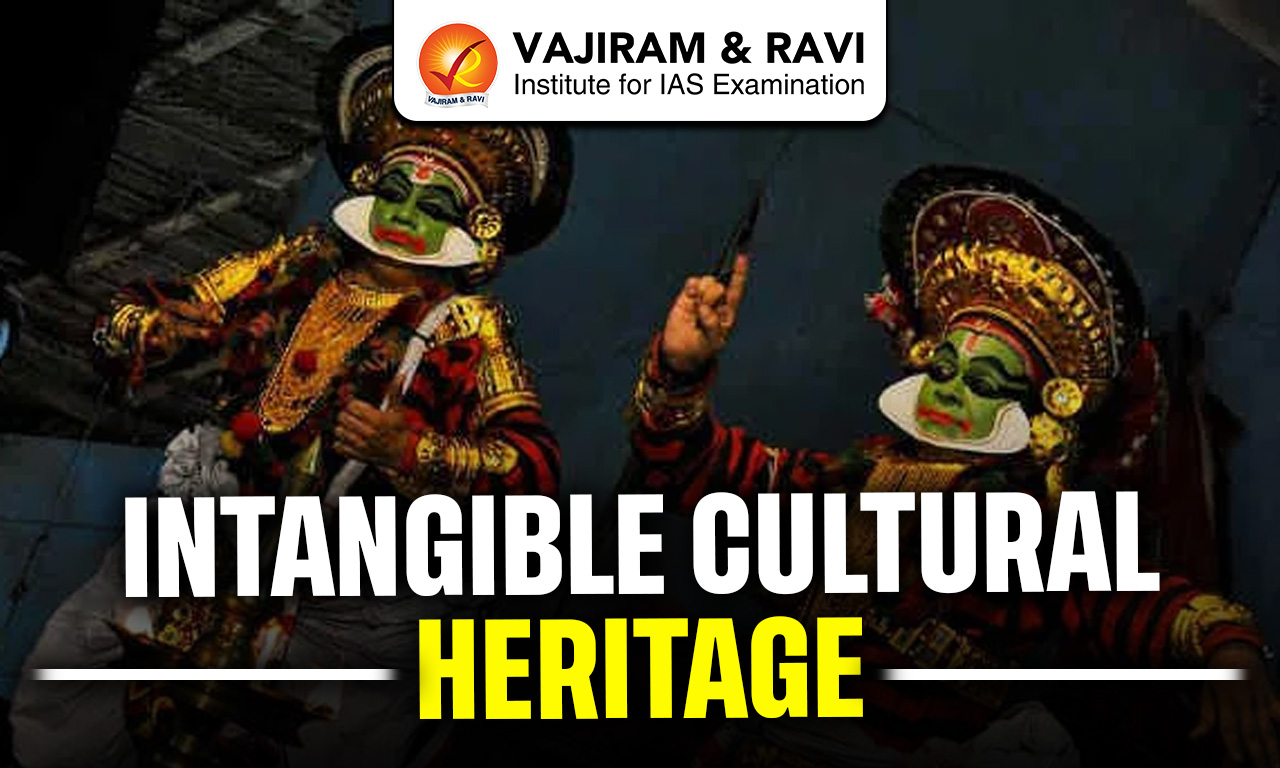
- Kutiyattam (Kerala)
- Kutiyattam is one of the oldest surviving theatre traditions in India, with a history of more than 2,000 years. It is performed in temple theatres known as Kuttampalams. This art form combines classical Sanskrit drama with local traditions of Kerala. The acting style is highly expressive, especially through eye movements (neta abhinaya) and hand gestures (hasta abhinaya), which convey deep emotions and thoughts. Performances are very elaborate sometimes a single act can take several days, and a full play may last up to 40 days. Artists undergo years of strict training to master this form.
- Tradition of Vedic Chanting
- The tradition of Vedic chanting involves the oral transmission of the Vedas, which are among the oldest sacred texts in the world, composed over 3,500 years ago. These texts include hymns, prayers, and philosophical ideas. What makes this tradition unique is the precise way the chants are memorized and passed down through generations by priests. Special techniques ensure that the pronunciation, tone, and rhythm remain unchanged over time. Even today, this practice continues, though only a limited number of recitation traditions have survived.
- Ramlila (North India)
- Ramlila is a traditional dramatic performance of the Ramayana, telling the story of Lord Rama’s life, especially his battle with Ravana. It is usually performed during the festival of Dussehra across many parts of northern India. The performance includes songs, dialogues, narration, and acting, and often continues for several days. Entire communities come together to watch and participate, making it both a cultural and social event. Famous Ramlilas are held in places like Ayodhya and Varanasi.
- Ramman (Uttarakhand)
- Ramman is a unique religious festival celebrated in the villages of Saloor-Dungra in Uttarakhand. It is held in honor of a local deity, Bhumiyal Devta. The festival includes a mix of rituals, storytelling, masked dances, and music. Different members of the community have specific roles to perform, making it a highly organized and meaningful event. One of the highlights is the use of sacred masks, including that of Narasimha, a half-man, half-lion deity.
- Chhau Dance (Eastern India)
- Chhau is a traditional dance form found in parts of Jharkhand, West Bengal, and Odisha. It combines elements of dance, drama, and martial arts. The dance often depicts stories from epics like the Mahabharata and Ramayana, as well as local folklore. Some styles of Chhau use colorful masks, while others rely on facial expressions. The movements are energetic and include imitation of animals, birds, and everyday human activities. It is usually performed during festivals in open spaces at night.
- Kalbelia Folk Songs and Dances (Rajasthan)
- The Kalbelia dance and music are performed by the Kalbelia community of Rajasthan, who were traditionally snake charmers. Their performances reflect their connection with snakes, with dancers moving in a flexible, flowing manner like serpents. Women wear black skirts decorated with embroidery and mirrors, while men play traditional instruments. The songs are often created spontaneously, showing the creativity and oral tradition of the community.
- Mudiyettu (Kerala)
- Mudiyettu is a ritual dance drama performed in temples dedicated to Goddess Kali in Kerala. It tells the story of the battle between Goddess Kali and the demon Darika. Before the performance, a large image of the goddess is drawn on the ground using colored powders, and rituals are performed to invoke her presence. The entire village participates in this annual event, making it both a religious and community activity.
- Buddhist Chanting (Ladakh)
- In Ladakh, Buddhist monks chant sacred texts in monasteries and villages. These chants represent the teachings of Buddha and are performed during religious ceremonies and important occasions. The chanting is accompanied by musical instruments like drums, bells, and trumpets, as well as symbolic hand gestures. It is an important way of preserving spiritual knowledge and maintaining religious traditions.
- Sankirtana (Manipur)
- Sankirtana is a devotional performance that includes singing, drumming, and dancing. It is mainly associated with the Vaishnava tradition of Manipur and focuses on the life and stories of Lord Krishna. Performances are held during festivals and important life events. It not only has religious significance but also strengthens social bonds within the community.
- Traditional Brass and Copper Craft (Punjab)
- This craft is practiced by the Thatheras of Jandiala Guru in Punjab. They use traditional techniques to make utensils from brass and copper. The process involves heating, hammering, and shaping metal into different forms. These utensils are then polished using natural materials. The skill is passed down through generations and reflects both cultural identity and practical knowledge.
- Nowruz
- Nowruz is the Persian New Year, celebrated by various communities including Parsis in India. It marks the arrival of spring and symbolizes renewal and positivity. Families gather to celebrate with special meals and decorations. A table is set with symbolic items representing health, wealth, and happiness.
- Yoga
- Yoga is an ancient practice from India that focuses on the connection between mind, body, and soul. It includes physical postures, breathing exercises, meditation, and chanting. Traditionally, it was taught through the guru-shishya system. Today, yoga is practiced worldwide for its physical and mental health benefits.
- Kumbh Mela
- Kumbh Mela is the largest religious gathering in the world. It is held every four years at four different locations – Prayagraj, Haridwar, Ujjain, and Nashik. Millions of people gather to take a holy dip in sacred rivers, believing it will cleanse them of sins. The event also includes religious discussions, rituals, and spiritual teachings.
- Durga Puja (Kolkata)
- Durga Puja is a major festival celebrated especially in Kolkata. It honors Goddess Durga and lasts for about ten days. Beautiful idols are created, worshipped, and later immersed in rivers. The festival is known for its artistic decorations, cultural programs, and community participation. It brings together people from all backgrounds.
- Garba (Gujarat)
- Garba is a traditional dance performed during the festival of Navratri in Gujarat. People dance in circles around a lamp or an image of Goddess Amba, symbolizing energy and life. The dance starts slowly and gradually becomes faster and more energetic. It is a joyful expression of devotion and community bonding.
- Deepavali
- Deepavali, also known as Diwali, is a major Indian festival celebrated on Kartik Amavasya (October-November). It symbolises the victory of light over darkness and good over evil, and is marked by lighting lamps, prayers, and celebrations of prosperity and happiness.
- The festival includes traditions like Dhanteras (buying items for prosperity), Naraka Chaturdashi (removal of negativity through lamps), Lakshmi-Ganesha Puja, and Bhai Dooj (celebrating sibling bonds).
- It is linked to several legends, including the return of Lord Rama to Ayodhya in the Ramayana, the return of the Pandavas in the Mahabharata, King Bali’s visit in Maharashtra, and Lord Mahavira attaining Nirvana in Jainism.
- Historical records also mention Diwali. Al-Biruni described it in the 11th century, Niccolò de’ Conti noted its lamp-lit celebrations in the 15th century, and Abul Fazl recorded it in the Mughal era.
Also Read: Fairs and Festivals of India
Convention for the Safeguarding of the Intangible Cultural Heritage (ICH)
- The Convention for the Safeguarding of the Intangible Cultural Heritage is an international agreement aimed at protecting and promoting living cultural traditions such as music, dance, rituals, crafts, and oral heritage. It was adopted in 2003 at the 32nd General Conference of UNESCO in Paris.
- The convention helps countries safeguard their cultural traditions by identifying, documenting, and supporting them so they are not lost due to modernization. It also promotes awareness and respect for cultural diversity worldwide.
- It has three main lists: the Urgent Safeguarding List, the Representative List of Humanity’s Intangible Cultural Heritage, and the Register of Good Safeguarding Practices.
- Its work is managed by the General Assembly of States Parties, which meets every two years, and the Intergovernmental Committee, made up of 24 elected countries that examine nominations and safeguarding plans.
- More than 180 countries, including India, are part of this convention. Each country is responsible for identifying and protecting its own cultural heritage.
Intangible Cultural Heritage Significance
- Preserves cultural identity: Intangible Cultural Heritage helps people stay connected with their roots, traditions, and history. It gives communities a strong sense of identity and belonging.
- Promotes unity in diversity: It brings different communities together through shared festivals, rituals, and traditions, helping to strengthen social harmony and national integration.
- Transfers knowledge across generations: Traditional skills, stories, and cultural practices are passed from elders to younger generations, ensuring that valuable heritage is not lost over time.
- Supports livelihoods and economy: Many traditional arts, crafts, and cultural performances provide employment to artisans and performers and also promote tourism.
- Protects and preserves living traditions: It helps safeguard important cultural practices from disappearing due to modernization and ensures they continue for future generations.

 Last updated on Oct, 2026
→ UPSC 2027 Notification will be released on 13 January 2027 at upsconline.nic.in.
→ Check Nobel Prize 2026 Winners List here.
→ Download PIB PRiSM Monthly Magazine 2026 here.
→ Check UPSC Monthly Current Affairs Magazine The Recitals here.
→ Check out the latest UPSC Syllabus here.
→ Download UPSC Model Answers for Mains 2026
→ UPSC Mains Question Paper 2026 is out now for Essay & GS Paper 1, 2, 3 & 4.
→ UPSC Calendar 2027 has been released.
→ Enroll in Vajiram & Ravi’s UPSC Mains Test Series 2027 for structured answer writing practice, expert evaluation, and exam-oriented feedback.
→ Join Vajiram & Ravi’s UPSC Mentorship Program 2027 for personalized guidance, strategy planning, and one-to-one support from experienced mentors.
→ Go through the UPSC Mains Previous Year Papers to enhance your preparation.
→ UPSC has released UPSC Toppers List 2025 with the Civil Services final result on its official website.
→ Also check Best UPSC Coaching in India
Intangible Cultural Heritage FAQs
Q1. What is Intangible Cultural Heritage (ICH)?+
Q2. What are the main domains of ICH according to UNESCO?+
Q3. What is the significance of Kutiyattam?+
Q4. Why is Yoga important?+
Q5. What is Kumbh Mela?+
Tags: art and culture art and culture notes intangible cultural heritage