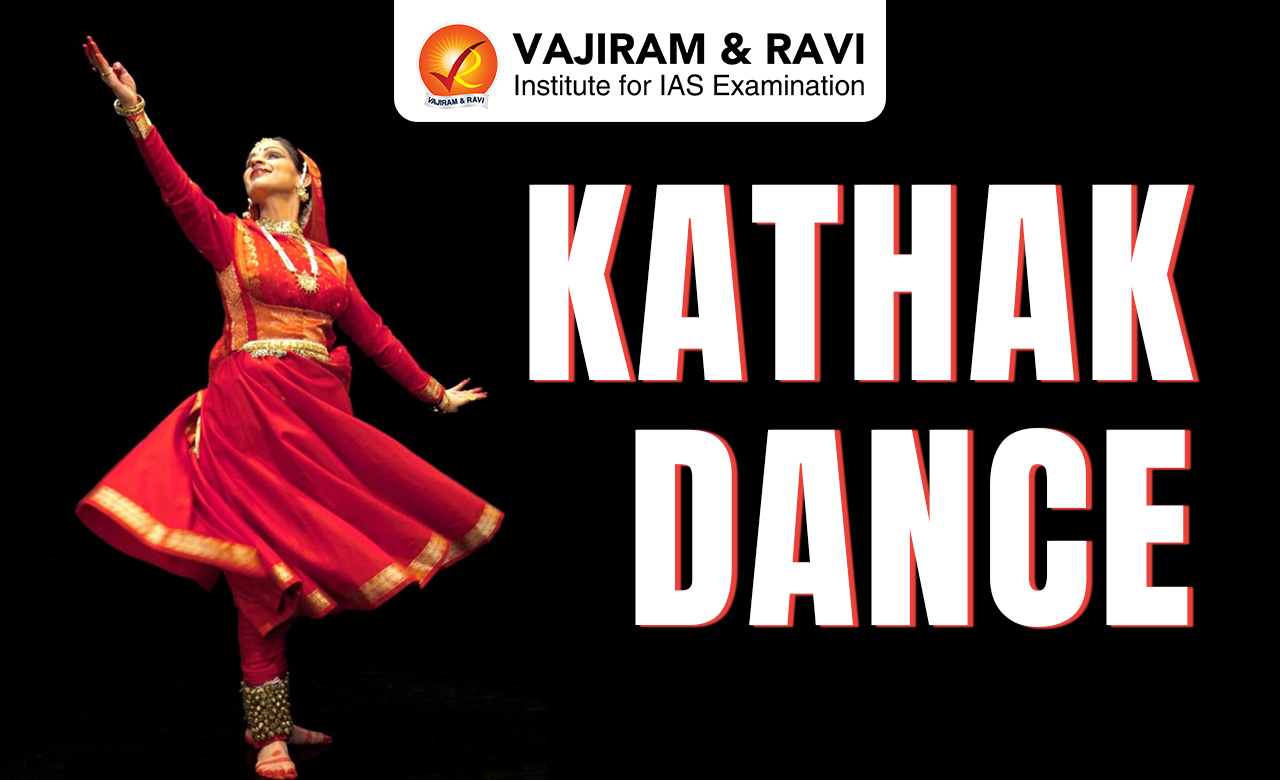
Kathak Dance is one of the major classical dance forms of India. It is known for intricate footwork, expressive storytelling and rhythmic precision. It originated in the northern region, particularly present day Uttar Pradesh and reflects a rich blend of Hindu temple traditions and Mughal court influences. The dance derives its name from the Sanskrit word “katha,” meaning story and is deeply rooted in narrative performance through music, gestures and expressions.
Kathak Dance Historical Background
Kathak Dance evolved from ancient storytelling traditions into a refined classical dance, shaped by religious movements, royal patronage and cultural transformations over centuries.
- Early traditions: Early performers narrated epics like the Mahabharata and Ramayana through dance, music and gestures, as seen in texts like Adi Parva and Sangeet Ratnakara.
- Bhakti Movement: During the 15th century, Kathak flourished under the Bhakti movement, especially around Krishna devotion. Centres like Varanasi became hubs where dancers depicted stories of Krishna and gopis through expressive performances.
- Mughal Era: In the 16th century, Kathak received patronage in Mughal courts such as Lucknow and Jaipur. Persian and Islamic elements enriched costumes, music and aesthetics, transforming it into a sophisticated court dance form.
- British Rule: In the 19th century, colonial policies and the Anti Nautch Movement marginalized Kathak. It was often misrepresented due to its association with court dancers, leading to decline in patronage and public perception.
- Post Independence: Despite decline, gurus like Kalka Prasad Maharaj preserved Kathak through the guru-shishya tradition. After independence, it gained formal recognition as a classical dance, reviving its cultural significance.
Kathak Dance Features
Kathak Dance combines rhythm, expression and storytelling with distinctive techniques, gharanas, costumes and musical accompaniment that define its unique identity.
- Core Style Elements: Kathak integrates Nritta (pure dance), Nritya (expressive dance) and Natya (dramatic storytelling). It emphasizes graceful movements, rhythmic footwork, swift spins and expressive gestures rooted in storytelling traditions.
- Taal and Rhythm: Taal forms the rhythmic framework of Kathak. Dancers synchronize intricate footwork with complex rhythmic cycles, demonstrating precision and control while interacting dynamically with accompanying musicians.
- Abhinaya and Expression: Abhinaya involves facial expressions, mudras and body movements to convey emotions and narratives. Stories from epics and Krishna legends are depicted using subtle eye, eyebrow and hand gestures.
- Footwork and Techniques: Kathak is known for tatkar (foot strikes), chakkars (spins) and paltas (patterns). Ghungroos enhance rhythmic clarity, while upright posture ensures balance, grace and visual symmetry.
- Gharanas of Kathak: Major gharanas include Lucknow, Jaipur, Banaras and Raigarh. Lucknow focuses on expression, Jaipur on technical footwork, Banaras blends tandava and lasya and Raigarh integrates folk and court traditions.
- Music and Instruments: Kathak is performed with Hindustani classical music using instruments like tabla, pakhawaj, harmonium, sarangi, sitar, flute and tanpura, which support rhythm, melody and expressive storytelling.
- Costumes and Attire: Female dancers wear lehenga choli or anarkali with dupatta, while males wear dhoti or kurta churidar. Mughal influence introduced churidar and angarkha styles. Ghungroos and minimal jewelry are essential.
- Themes and Storytelling: Themes revolve around Radha Krishna, devotional poetry and courtly romance. Kathak uniquely blends Hindu spirituality with Persian aesthetics, reflecting India’s composite cultural heritage.
- Performance: A Kathak recital includes segments like Thaat (graceful beginning), Amad (entry), Tora and Tukra (rhythmic compositions), Paran and Gat Bhav, combining technical skill with expressive storytelling.
- Famous Kathak Exponents: Renowned artists include Birju Maharaj, Sitara Devi, Shambhu Maharaj, Lachhu Maharaj, Shovana Narayan and Kumudini Lakhia.


Kathak Dance Recognitions
Kathak Dance has gained national and international recognition as a classical dance form, representing India’s cultural diversity and artistic heritage.
- Classical Dance status: Kathak is officially recognized as one of the eight classical dances of India, alongside Bharatanatyam, Kathakali, Manipuri, Kuchipudi and Odissi, highlighting its cultural and historical importance.
- World Kathak Day: Celebrated on February 4, this day marks the birth anniversary of Birju Maharaj, recognizing his role in popularizing Kathak internationally and preserving its traditions.

 Last updated on Oct, 2026
→ UPSC 2027 Notification will be released on 13 January 2027 at upsconline.nic.in.
→ Check Nobel Prize 2026 Winners List here.
→ Download PIB PRiSM Monthly Magazine 2026 here.
→ Check UPSC Monthly Current Affairs Magazine The Recitals here.
→ Check out the latest UPSC Syllabus here.
→ Download UPSC Model Answers for Mains 2026
→ UPSC Mains Question Paper 2026 is out now for Essay & GS Paper 1, 2, 3 & 4.
→ UPSC Calendar 2027 has been released.
→ Enroll in Vajiram & Ravi’s UPSC Mains Test Series 2027 for structured answer writing practice, expert evaluation, and exam-oriented feedback.
→ Join Vajiram & Ravi’s UPSC Mentorship Program 2027 for personalized guidance, strategy planning, and one-to-one support from experienced mentors.
→ Go through the UPSC Mains Previous Year Papers to enhance your preparation.
→ UPSC has released UPSC Toppers List 2025 with the Civil Services final result on its official website.
→ Also check Best UPSC Coaching in India
Kathak Dance FAQs
Q1. What is Kathak Dance?+
Q2. Where did Kathak originate?+
Q3. What are the main gharanas of Kathak?+
Q4. Which instruments are used in Kathak Dance?+
Q5. Who are famous Kathak dancers?+
Tags: geography geography notes indian history kathak dance