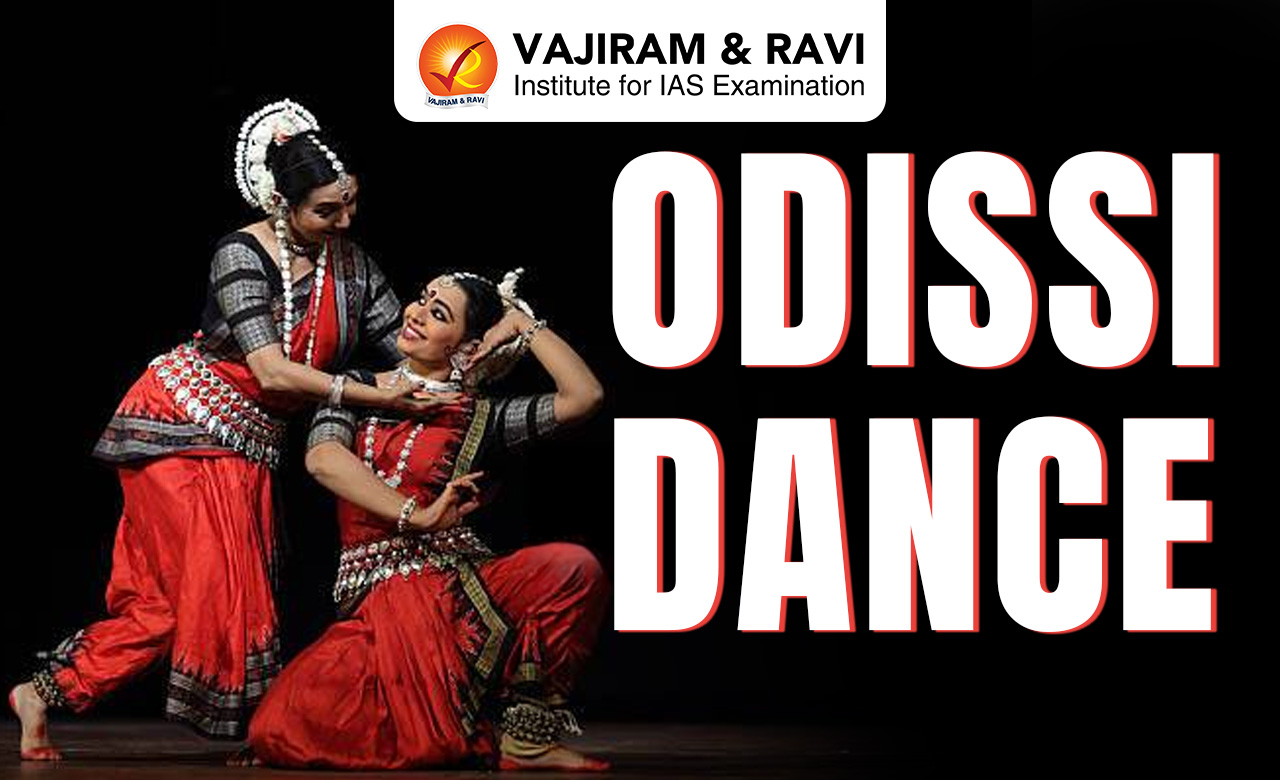
Odissi Dance is one of the oldest classical dance traditions of India. It originates from the eastern state of Odisha and is rooted in ancient temple culture. It follows the principles of the Natyashastra, combining expressive storytelling, rhythmic movements and sculptural poses. It is known for its lyrical grace and spiritual depth. Odissi reflects themes of devotion, especially related to Krishna and Radha, while maintaining continuity through centuries of cultural transformation and revival.
Odissi Dance Historical Background
Odissi Dance has a long historical evolution shaped by temple traditions, medieval patronage, decline and modern revival.
- Origin: Odissi dates back nearly 2,000 years, with archaeological evidence in Udayagiri and Khandagiri caves near Bhubaneswar showing dancer carvings resembling present movements, indicating early forms of the dance tradition.
- Literary Sources: Important texts influencing Odissi include Abhinaya Darpana, Abhinaya Chandrika by Rajmani Patra and Maheshwara Mahapatra and works like Gitagovinda.
- Medieval Flourishing: Under the Ganga dynasty (11th-15th centuries), Odissi thrived with royal support and was influenced by the Bhakti movement, especially Jayadeva’s Gitagovinda.
- Decline: Turkish and Mughal invasions, followed by British colonial rule and the Anti Nautch Movement, led to the decline of temple dance traditions and loss of patronage.
- Revival: In the mid 20th century, gurus like Pankaj Charan Das, Kelucharan Mohapatra, Debaprasad Das and Mayadhar Raut reconstructed Odissi using texts, sculptures and traditions, leading to its recognition in the late 1950s.
Odissi Dance Traditions
The key traditions of the Odissi Dance over time included:
- Temple Tradition: Odissi developed primarily in temples, especially the Sun Temple at Konark and Jagannath Temple in Puri, where dance formed part of ritual worship and devotional expression.
- Mahari Tradition: Maharis were female temple dancers dedicated to Lord Jagannath, performing devotional dance as part of sacred rituals and preserving classical elements of Odissi.
- Nartaki Tradition: Nartakis performed in royal courts under patronage, adapting Odissi into a courtly art while maintaining its aesthetic and devotional aspects.
- Gotipua Tradition: Emerging in the 16th century, Gotipuas were young boys dressed as girls performing devotional dances, preserving Odissi techniques during periods of decline.
Also Read: Chhau Dance


Odissi Dance Features
Odissi Dance is known for its unique blend of expressive storytelling, stylized movements and musical integration rooted in classical traditions.
- Style and Technique: Odissi is highly stylized, focusing on movements of head, torso and limbs, built around chowka (square stance) and tribhanga (three-bend posture), symbolizing masculine strength and feminine grace respectively.
- Postures and Expressions: The dance uses abhinaya with facial expressions, mudras and body movements to depict emotions and narratives, often conveying the nine rasas described in classical texts.
- Performance: A traditional recital includes Mangalacharan (invocation), Batu (technical dance), Pallavi (pure dance expansion), Abhinaya (expressive storytelling) and Moksha (spiritual conclusion).
- Music Tradition: Odissi is accompanied by classical Odia music, based on ragas and talas, reflecting synthesis of northern and southern musical traditions and enhancing emotional depth.
- Instruments Used: Musical accompaniment includes mardala, flute, violin, manjira, tabla, pakhawaj, harmonium, sitar and Swarmandal, creating rhythmic and melodic richness.
- Costume: Dancers wear Sambalpuri or Bomkai silk saris, silver jewelry, mukut headpiece and alta on hands and feet, with bold eye makeup enhancing expressions.
- Gharanas: Odissi has four gharanas: Pankaj Charan gharana (devotional), Kelucharan Mohapatra gharana (technical precision), Debaprasad gharana (folk influence) and Mayadhar Raut gharana (graceful and scholarly approach).
- Exponents: Key figures include Pankaj Charan Das, Kelucharan Mohapatra, Debaprasad Das, Mayadhar Raut, Sanjukta Panigrahi, Sonal Mansingh and Madhumita Raut.
Also Read: Helmand River
Odissi Dance Recognitions
Odissi Dance has gained formal recognition and global visibility through institutional support and cultural achievements.
- Classical Dance Status: Odissi was formally recognized as a classical dance in the late 1950s.
- Academic Inclusion: Odissi has been included in the BTech syllabus of IIT Bhubaneswar since 2015, marking its integration into formal academic frameworks.
- Global Presence: Odissi has gained international recognition, with performances across countries and establishment of centers like the Oxford Odissi Centre at the University of Oxford in 2016.
- Guinness World Records: A record was set on 23 December 2011 at Kalinga Stadium with 555 dancers performing together, while over 1000 dancers performed at the World Cultural Festival in 2016.

 Last updated on Sep, 2026
→ UPSC 2027 Notification will be released on 13 January 2027 at upsconline.nic.in.
→ Asian Games 2026 are being held in Aichi-Nagoya, Japan, from 19 September to 4 October.
→ Check out the latest UPSC Syllabus here.
→ Download UPSC Model Answers for Mains 2026
→ UPSC Mains Question Paper 2026 is out now for Essay & GS Paper 1, 2, 3 & 4.
→ UPSC Calendar 2027 has been released.
→ Enroll in Vajiram & Ravi’s UPSC Mains Test Series 2027 for structured answer writing practice, expert evaluation, and exam-oriented feedback.
→ Join Vajiram & Ravi’s UPSC Mentorship Program 2027 for personalized guidance, strategy planning, and one-to-one support from experienced mentors.
→ Go through the UPSC Mains Previous Year Papers to enhance your preparation.
→ UPSC has released UPSC Toppers List 2025 with the Civil Services final result on its official website.
→ Also check Best UPSC Coaching in India
Odissi Dance FAQs
Q1. What is Odissi Dance?+
Q2. What are the basic postures in Odissi?+
Q3. What type of music and instruments are used in Odissi Dance?+
Q4. What are the main components of an Odissi performance?+
Q5. Who are some famous Odissi Dance Exponents?+
Tags: history history notes indian history odissi dance