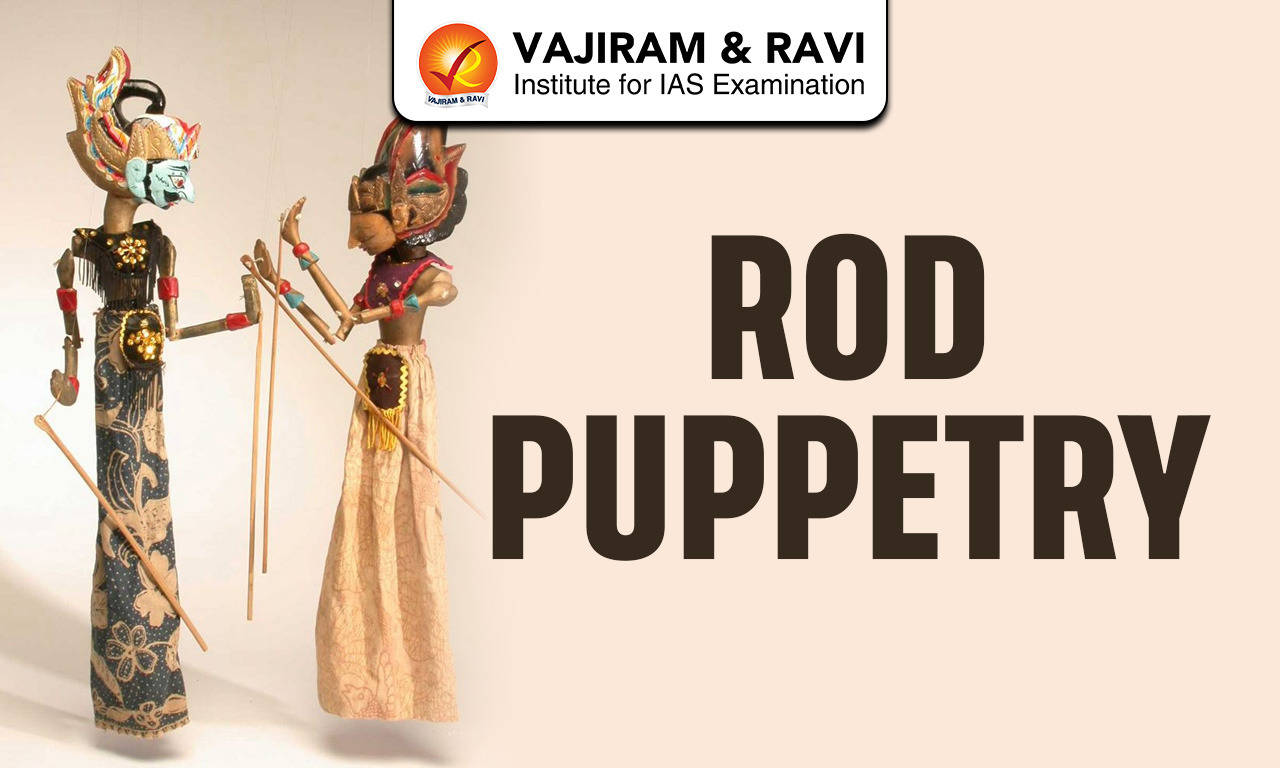
Rod Puppetry is a traditional form of Indian Puppetry that evolved as an advanced version of glove Puppetry, distinguished by the use of rods for manipulation. These Puppets are larger in size and are controlled from below using one or more sticks of varying lengths. It is practiced mainly in West Bengal, Odisha and Bihar. It combines craftsmanship, storytelling and performance, making it an important medium of folk expression rooted in mythology, social themes and local traditions.
Rod Puppetry Features
Rod Puppetry is a developed form of glove Puppetry, characterized by rod based manipulation, larger Puppet size and distinct structural composition.
- Structure and Joints: Rod Puppets generally consist of three joints where the head is fixed to the main rod at the neck, while both hands are attached to separate rods at the shoulders, enabling controlled movement.
- Material Composition: The body and hands of these Puppets are made using bamboo, rice husk and hay, which are mixed and moulded into desired shapes, ensuring durability and lightweight handling.
- Costume and Appearance: Puppets are dressed in traditional attire such as dhotis and saris based on character roles and the main rod remains hidden beneath the costume to maintain visual realism during performance.
- Manipulation Technique: The Puppeteer operates the Puppet from below using rods, especially controlling the hands through action rods, creating expressive gestures and lifelike movements in performances.
- Regional Presence: This form is predominantly found in West Bengal and Odisha, where it has developed into structured theatrical traditions with defined performance styles and storytelling formats.
Rod Puppetry of Odisha
Rod Puppetry in Odisha, known as Kathi Kandhe, is a smaller sized and culturally rich form, deeply linked with religious and social storytelling traditions.
- Local Name: In Odisha, Rod Puppetry is called Kathi Kandhe.
- Size: The Puppets are comparatively smaller than those in West Bengal, usually measuring around 12 to 18 inches in height.
- Performance Style: Puppeteers manipulate the Puppets while squatting behind a screen, creating a concealed performance style that focuses audience attention entirely on the Puppet movements.
- Thematic Content: The stories performed are mainly derived from epics like Ramayana, Puranas and also include social issues, making the performances both entertaining and informative.
- Musical Elements: The performance begins with a ritual orchestral prelude called Stuti, followed by the main play, integrating structured musical traditions into the theatrical presentation.
- Song Traditions: Medieval songs such as Bhajan, Champu, Koili and Chautisha are sung during performances, often adapted in style to appeal to contemporary audiences while retaining classical roots.
Also Read: Shadow Puppetry


Rod Puppetry of Bihar
Rod Puppetry in Bihar, known as Yampuri, is unique for its wooden structure and absence of joints, requiring high skill from Puppeteers.
- Traditional Form: Yampuri is the traditional Rod Puppetry of Bihar, recognized for its distinct style and use of solid wooden Puppets crafted from a single piece.
- No Joint Structure: Unlike other regions, Yampuri Puppets do not have joints, which limits flexibility in movement and demands greater dexterity and expertise from Puppeteers.
- Craftsmanship: These Puppets are carved from a single block of wood, then painted and decorated with vibrant colours, reflecting strong local artistic traditions.
- Performance Setup: The shows are performed on a raised platform of about three feet height, with curtains used as backdrops and musicians positioned nearby to enhance the presentation.
- Cultural Challenges: Yampuri is facing decline due to limited patronage and exclusivity to specific communities, highlighting the need for revival efforts to preserve this traditional art form.
Rod Puppetry of West Bengal
Rod Puppetry in West Bengal, known as Putul Nach, is one of the most elaborate forms, characterized by large Puppets and dynamic performance styles.
- Local Identity: In West Bengal, Rod Puppetry is called Putul Nach, meaning “dancing dolls,” and is widely practised as a traditional theatrical form in the region.
- Puppet Dimensions: These Puppets are large, often reaching heights of 1.5 metres and weighing up to 10 kilograms, built on bamboo sticks measuring around 2.5 metres.
- Costume and Design: Puppets are decorated in local painting styles and dressed like Jatra theatre characters, enhancing their visual appeal and cultural authenticity.
- Performance Elements: The performances include a musical troupe of three to four artists playing harmonium, cymbals and tabla, creating a vibrant and engaging stage environment.
- Themes and Adaptation: Traditional themes include Ramayana and Satee Behula, while modern performances increasingly incorporate movie plots, reflecting adaptation to changing audience preferences.
Rod Puppetry Significance
Rod Puppetry holds cultural significance as one of the oldest forms of Puppetry in India, representing a blend of art, storytelling and traditional knowledge systems.
- Cultural Heritage: Rod Puppetry is an important part of India’s intangible cultural heritage, preserving regional traditions, folklore and mythological narratives through visual storytelling.
- Artistic Value: The art form showcases intricate craftsmanship using natural materials like bamboo and wood, combined with performance skills that bring inanimate figures to life.
- Regional Diversity: Each state, including West Bengal, Odisha and Bihar, has developed its own distinct style, reflecting local customs, themes and performance techniques.
- Educational Importance: Puppetry plays a role in communication and social awareness by presenting moral lessons, cultural values and social issues in an engaging format.
- Need for Preservation: With declining popularity due to modern entertainment media, there is a growing need for institutional support and innovation to sustain and revive this traditional art form.

 Last updated on Oct, 2026
→ UPSC 2027 Notification will be released on 13 January 2027 at upsconline.nic.in.
→ Check Nobel Prize 2026 Winners List here.
→ Download PIB PRiSM Monthly Magazine 2026 here.
→ Check UPSC Monthly Current Affairs Magazine The Recitals here.
→ Check out the latest UPSC Syllabus here.
→ Download UPSC Model Answers for Mains 2026
→ UPSC Mains Question Paper 2026 is out now for Essay & GS Paper 1, 2, 3 & 4.
→ UPSC Calendar 2027 has been released.
→ Enroll in Vajiram & Ravi’s UPSC Mains Test Series 2027 for structured answer writing practice, expert evaluation, and exam-oriented feedback.
→ Join Vajiram & Ravi’s UPSC Mentorship Program 2027 for personalized guidance, strategy planning, and one-to-one support from experienced mentors.
→ Go through the UPSC Mains Previous Year Papers to enhance your preparation.
→ UPSC has released UPSC Toppers List 2025 with the Civil Services final result on its official website.
→ Also check Best UPSC Coaching in India
Rod Puppetry FAQs
Q1. What is Rod Puppetry?+
Q2. Which states are famous for Rod Puppetry?+
Q3. What materials are used to make Rod Puppets?+
Q4. What makes Yampuri Puppets unique?+
Q5. What themes are shown in Rod Puppetry performances?+
Tags: art and culture rod puppetry