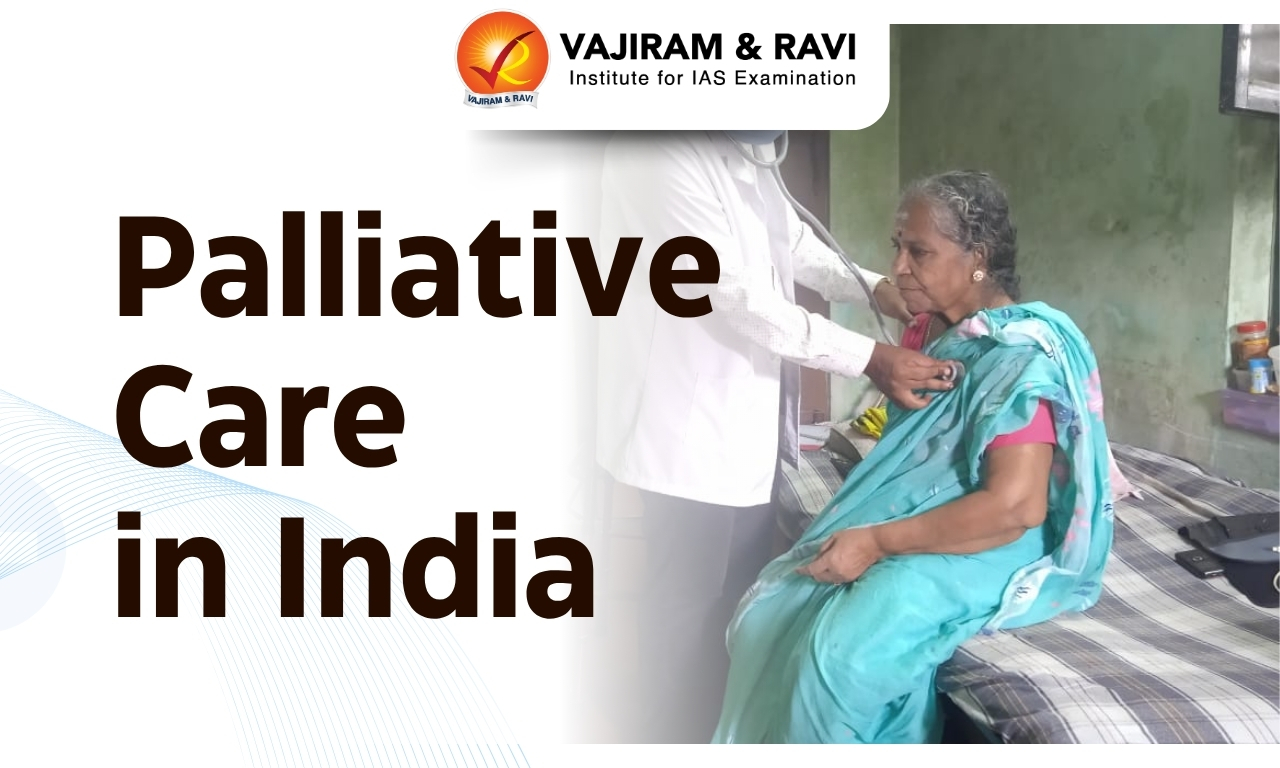
Palliative care in India focuses on improving the quality of life of people who are suffering from serious or long-term illnesses. It is not just about treating the disease, but about reducing pain, stress, and emotional suffering. This type of care supports both patients and their families by addressing physical, mental, and social needs. In recent years, awareness about palliative care has grown, but access is still limited in many parts of the country.
About Palliative Care in India
- Palliative care is a form of medical support that aims to make life more comfortable for people living with serious or long-term illnesses, by managing pain and addressing their physical, emotional, and social needs, instead of focusing only on curing the disease.
- It is considered part of the right to health, as it aims to reduce pain, suffering, and emotional stress for patients and their families.
- This care looks after the overall well-being of a person by addressing physical discomfort, mental health, social support, and even spiritual concerns.
- It is especially important for people with conditions like cancer, heart disease, kidney failure, and neurological disorders, where long-term care is needed.
- Palliative care also helps in avoiding unnecessary or excessive medical treatments that may not improve life quality and can create financial burden on families.
- With the rise of non-communicable diseases (NCDs) worldwide, the need for palliative care is increasing rapidly.
- According to the World Health Organization (WHO), around 40 million people need palliative care every year globally, and most of them live in low- and middle-income countries.
- However, only a small percentage (about 14%) of people actually receive this care, showing a large gap in access.
- Recognizing its importance, global health policies now include palliative care as a key part of managing chronic diseases and improving healthcare systems.
Palliative Care in India Need
- Palliative care is needed in India because many people suffer from serious and long-term illnesses that cannot always be cured.
- These patients often go through pain, discomfort, and emotional stress, so care should focus on making their lives more comfortable and dignified.
- In India, the need is very high, around 7-10 million people require palliative care every year, but only 1-2% actually receive it, showing a huge gap.
- India’s healthcare system is already under pressure, and palliative care can help by reducing unnecessary hospital visits and treatments.
- It also supports families by lowering emotional stress and financial burden, especially by avoiding expensive treatments that may not improve quality of life.
- With the rise of chronic diseases like cancer, diabetes, and heart problems, the demand for such care is increasing rapidly.
- Although the National Health Policy (2017) recognizes palliative care as important, its implementation is still weak due to lack of funds, awareness, and trained professionals.
- Overall, palliative care is essential to ensure that patients in India can live with comfort, dignity, and proper support.


Palliative Care in India Current Status, Facilities and Provisions
- Growing but Limited Services: India has around 100-150+ palliative care centers, but most are located in big cities and cancer hospitals, leaving many regions underserved.
- Kerala as a Model State: Kerala stands out with a strong community-based network, covering a large population. It was the first state to introduce a palliative care policy (2008) and is often seen as a global example.
- Role of NGOs: Organizations like CanSupport (Delhi) and Guwahati Pain and Palliative Care Society (Assam) provide home-based care, support services, and awareness, showing the importance of NGO participation.
- Hospice & Institutional Care: Centers like Karunashraya (Bengaluru) and major hospitals provide hospice care, home care, and hospital-based services, ensuring continuous support to patients.
- Integration with Cancer Care: Some institutions have started combining palliative care with cancer treatment, helping patients receive support from the early stages of illness.
- Home-Based Care Expansion: Care at home is becoming popular as it allows patients to stay comfortable with family, reduces hospital visits, and is more affordable and culturally suitable.
- Community Participation (NNPC Model): The Neighbourhood Network in Palliative Care (NNPC) shows how trained local volunteers can deliver effective, low-cost care at the community level.
- Rising Need: Millions of people in India need palliative care every year due to cancer and other chronic diseases, and this demand is increasing with longer life expectancy.
- Limited Pain Relief Access: Despite medical advances, very few patients receive proper pain relief, mainly due to strict regulations on medicines like morphine.
- Government Efforts: Policies and programs now recognize palliative care as important, with steps like training healthcare workers and setting up basic facilities at district hospitals.
Palliative Care in India Challenges
- Limited Access & Inequality: Palliative care services are unevenly distributed, especially in rural and poorer regions, leaving many people without proper support.
- Lack of Awareness: Many people, including healthcare workers, do not clearly understand palliative care and often confuse it only with end-of-life care.
- Shortage of Trained Professionals: Even though India has a reasonable doctor-population ratio, there is a lack of specialists trained in palliative care, affecting proper pain management and support.
- Inadequate Infrastructure: There are few dedicated centers, hospices, and facilities, making it difficult to deliver quality care across the country.
- Limited Funding: Insufficient financial support restricts the expansion and improvement of services.
- Poor Integration in Healthcare: While included in primary healthcare, palliative care is not well integrated into higher-level (tertiary) hospitals.
- Weak Policy Implementation: Programs like the National Programme for Palliative Care (NPPC) have been slow and unevenly implemented, limiting their impact.
- Cultural and Social Barriers: In many communities, talking about death or serious illness is avoided, so families delay seeking care.
- Neglect of Pediatric Care: Children’s palliative care is often overlooked, even though many children in India suffer from serious conditions needing such support.
- Systemic Challenges: Overall inefficiencies in the healthcare system continue to affect timely and effective delivery of palliative care services.
Steps Taken for Palliative Care in India
- Strengthening Healthcare System: India has a three-tier health system and schemes like Ayushman Bharat to improve access to healthcare, including support for serious illnesses.
- National Programme for Palliative Care (NPPC): Launched in 2012 to expand services, but lack of dedicated funding has slowed its full implementation.
- Support under NHM: Palliative care is included under the National Health Mission (NHM), allowing states to plan and receive support through flexible funding.
- Care for the Elderly: The National Programme for Health Care of the Elderly (2010) focuses on providing long-term and supportive care to the ageing population.
- Focus on NCDs: The National Programme for Prevention & Control of Non-Communicable Diseases (NP-NCD) works to manage diseases like cancer and has been updated to strengthen palliative care services.
- Role of NGOs: Organizations like Pallium India, Karunashraya, and CanSupport are actively providing care and spreading awareness, though their reach is limited compared to government capacity.
- District-Level Services: Efforts are being made to provide basic palliative care at district hospitals and integrate it into regular healthcare services.
- Training & Capacity Building: Programs focus on training doctors, nurses, and health workers and improving infrastructure for better care delivery.
- Community Participation: There is increasing emphasis on involving families and communities in caregiving and support.
- Awareness Initiatives: Campaigns and activities are being conducted to spread awareness and encourage people to seek timely palliative care.

 Last updated on Oct, 2026
→ UPSC 2027 Notification will be released on 13 January 2027 at upsconline.nic.in.
→ Check Nobel Prize 2026 Winners List here.
→ Download PIB PRiSM Monthly Magazine 2026 here.
→ Check UPSC Monthly Current Affairs Magazine The Recitals here.
→ Check out the latest UPSC Syllabus here.
→ Download UPSC Model Answers for Mains 2026
→ UPSC Mains Question Paper 2026 is out now for Essay & GS Paper 1, 2, 3 & 4.
→ UPSC Calendar 2027 has been released.
→ Enroll in Vajiram & Ravi’s UPSC Mains Test Series 2027 for structured answer writing practice, expert evaluation, and exam-oriented feedback.
→ Join Vajiram & Ravi’s UPSC Mentorship Program 2027 for personalized guidance, strategy planning, and one-to-one support from experienced mentors.
→ Go through the UPSC Mains Previous Year Papers to enhance your preparation.
→ UPSC has released UPSC Toppers List 2025 with the Civil Services final result on its official website.
→ Also check Best UPSC Coaching in India
Palliative Care in India FAQs
Q1. What is Palliative Care?+
Q2. Why is Palliative Care important in India?+
Q3. How much Palliative Care is available in India?+
Q4. What are the major challenges in Palliative Care in India?+
Q5. What is the current status of Palliative Care services in India?+
Tags: governance governance notes palliative care in india