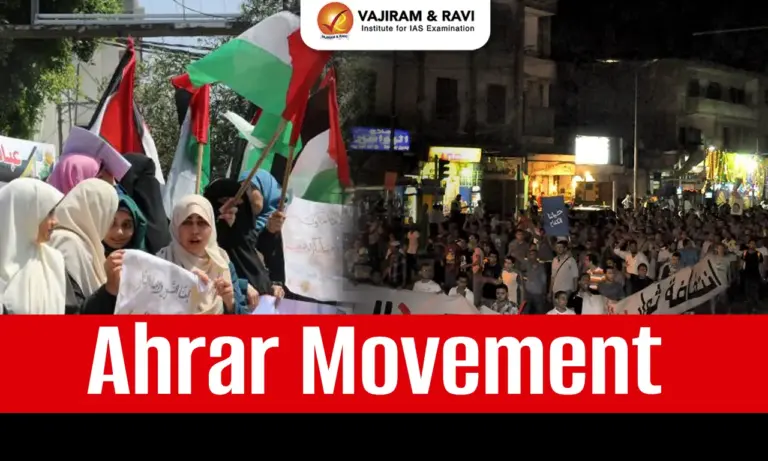
The Ahrar Movement emerged as a significant Islamic political and reformist organization in early twentieth century British India. It developed during a period marked by colonial dominance, rising nationalist resistance, and intense debate over Muslim political identity. The movement combined religious activism with anti imperial politics and played a visible role in mobilizing Muslim opinion against British rule. It influenced debates on nationalism, communal unity, and religious authority, leaving a lasting imprint on the political history of the Indian subcontinent.
Ahrar Movement
The Ahrar Movement was a Sunni Muslim political organization that sought to defend Islamic values while actively opposing British colonial control. It rejected Western imperial influence and promoted social equality, religious revivalism, and political mobilization among Indian Muslims. The movement emphasized grassroots activism, mass protests, and religious symbolism to mobilize support. It gained momentum after major colonial crises and positioned itself as both a nationalist and religious force during India’s freedom struggle.
Ahrar Movement History
The Ahrar Movement developed amid political unrest, religious revival, and growing resistance to colonial authority.
- 1919 Foundation Context: Emerged after Jallianwala Bagh massacre intensified anti British sentiment among Muslims.
- Khilafat Association: Closely aligned with Khilafat agitation defending Ottoman Caliphate post World War I.
- 1920s Expansion: Gained influence in Punjab through mosque networks and religious preaching.
- 1930s Mobilization: Organized mass protests against colonial laws and perceived cultural domination.
- Opposition to Communal Division: Rejected separate electorates and emphasized Hindu Muslim unity.
- Conflict with Ahmadiyya: Actively opposed Ahmadi religious claims, triggering communal tensions.
- 1940 Political Shift: Strongly opposed Lahore Resolution advocating partition of India.
- Post 1947 Decline: Lost relevance after independence and political realignments.
- 1953 Crisis: Anti Ahmadi agitation escalated into riots, prompting state intervention.
- 1954 Ban: Pakistani government outlawed the movement citing public order concerns.





Ahrar Movement Features
The movement was defined by religious activism, political resistance, and social reform agendas.
- Sunni Islamic Orientation: Promoted orthodox Sunni interpretations of Islamic faith and practice.
- Anti Imperialist Ideology: Rejected British political, cultural, and economic dominance.
- Grassroots Mobilization: Relied on sermons, rallies, and local religious leaders.
- Islamic Social Justice: Advocated equality and welfare rooted in Islamic principles.
- Rejection of Westernization: Criticized Western cultural influence on Muslim society.
- Political Activism: Participated in national movements including Non Cooperation.
- Mass Protest Strategy: Preferred civil resistance over constitutional negotiations.
- Religious Nationalism: Linked Islamic identity with political freedom.
- Anti Ahmadi Position: Declared Ahmadis outside Islam, shaping later religious politics.
- Transregional Influence: Extended influence beyond India into Pakistan and Afghanistan.
Ahrar Movement Founder
The Ahrar Movement was initiated by prominent Islamic scholars committed to religious revival and anti colonialism.
- Maulana Mahmood Hasan: Inspired the movement through Deobandi reformist ideology.
- Maulana Muhammad Ali Mohamed: Provided religious leadership and political direction.
- Ajmal Hikmat Khan: Supported organizational expansion and intellectual outreach.
- Ideological Roots: Influenced by Deoband school’s emphasis on Islamic orthodoxy.
- Anti Colonial Vision: Sought liberation through religious unity and political resistance.
- Educational Emphasis: Promoted Islamic education as resistance to colonial dominance.
- Khilafat Alignment: Founders actively participated in pan Islamic movements.
- Mass Mobilization Strategy: Used religious authority to mobilize common Muslims.
- Opposition to Elite Politics: Rejected Western educated Muslim leadership models.
- Moral Authority: Derived legitimacy from religious scholarship rather than institutions.
Ahrar Movement Leaders
Several influential leaders shaped the ideological and political direction of the movement.
- Maulana Habib-ur-Rehman Ludhianvi: Led organizational activities in Punjab region.
- Sheikh Hissam-ud-Din: Key mobilizer arrested during colonial crackdowns.
- Hakim Ajmal Khan: Strengthened Muslim participation during early independence phase.
- Mazhar Ali Azhar: Vocal critic of colonial policies and communal division.
- Atiq-ur-Rehman: Coordinated mass demonstrations and religious outreach.
- Public Orators: Leaders used sermons to influence political opinion.
- Anti Partition Figures: Consistently opposed Muslim League’s separatist agenda.
- Congress Interaction: Occasionally collaborated with nationalist leaders.
- Grassroots Leadership: Leaders emerged from local religious communities.
- Post Independence Activists: Some leaders remained active until movement ban.
Also Read: Social Movements in India
Ahrar Movement Impact
The movement significantly shaped Muslim political consciousness in colonial and post colonial contexts.
- Anti Colonial Mobilization: Contributed to Muslim participation in freedom struggle.
- Religious Politicization: Integrated Islamic identity into nationalist discourse.
- Khilafat Support: Strengthened mass Muslim engagement in global Islamic causes.
- Communal Polarization: Intensified religious divisions, especially with Ahmadis.
- Opposition to Partition: Challenged Muslim League dominance pre 1947.
- Political Awareness: Raised consciousness among rural Muslim populations.
- Islamic Nationalism: Influenced later Islamist political movements.
- State Religion Debate: Shaped discourse on role of Islam in governance.
- Pakistan Politics: Became major opposition force in early Pakistani years.
- Historical Legacy: Continues to inform debates on religion and politics.
Ahrar Movement Decline
The decline occurred due to state repression, political isolation, and internal contradictions.
- Colonial Suppression: British authorities arrested thousands during late 1930s.
- 1939 Arrests: Over 7,500 members detained under Defense of India regulations.
- Leadership Imprisonment: Senior leaders removed from public life.
- Congress Non Support: Limited backing weakened political leverage.
- Partition Shock: Loss of unified political base post 1947.
- 1953 Riots: Anti Ahmadi violence triggered martial law in Lahore.
- Government Crackdown: Pakistan banned organization in 1954.
- Ideological Marginalization: Lost relevance amid modern political frameworks.
- Fragmentation: Members dispersed into smaller religious groups.
- Enduring Influence: Ideas persisted despite organizational dissolution.

 Last updated on April, 2026
→ UPSC Final Result 2025 is now out.
→ UPSC has released UPSC Toppers List 2025 with the Civil Services final result on its official website.
→ Anuj Agnihotri secured AIR 1 in the UPSC Civil Services Examination 2025.
→ UPSC Marksheet 2025 is now out.
→ UPSC Notification 2026 & UPSC IFoS Notification 2026 is now out on the official website at upsconline.nic.in.
→ UPSC Calendar 2026 has been released.
→ Check out the latest UPSC Syllabus 2026 here.
→ UPSC Prelims 2026 will be conducted on 24th May, 2026 & UPSC Mains 2026 will be conducted on 21st August 2026.
→ The UPSC Selection Process is of 3 stages-Prelims, Mains and Interview.
→ Prepare effectively with Vajiram & Ravi’s UPSC Prelims Test Series 2026 featuring full-length mock tests, detailed solutions, and performance analysis.
→ Enroll in Vajiram & Ravi’s UPSC Mains Test Series 2026 for structured answer writing practice, expert evaluation, and exam-oriented feedback.
→ Join Vajiram & Ravi’s Best UPSC Mentorship Program for personalized guidance, strategy planning, and one-to-one support from experienced mentors.
→ Shakti Dubey secures AIR 1 in UPSC CSE Exam 2024.
→ Also check Best UPSC Coaching in India
Ahrar Movement FAQs
Q1. What was the Ahrar Movement?+
Q2. When was the Ahrar Movement founded?+
Q3. Who were the main leaders of the Ahrar Movement?+
Q4. What was the Ahrar Movement’s stand on Partition?+
Q5. Why was the Ahrar Movement banned in Pakistan?+
Tags: ahrar movement