About Army Court Martial:
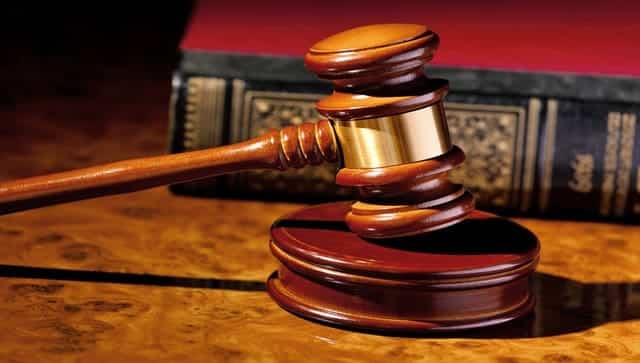
- A court-martial has been granted the authority to judge the guilt of members of the armed forces which is subject to military law, and, in the case, if the accused or defendant is found guilty, to decide upon punishment which they have to carry.
What is the legal provision related to court martial in India?
- The Armed Forces Tribunal Act 2007 was passed by the Parliament and led to the formation of the Armed Forces Tribunal.
- This tribunal is empowered with the adjudication of disputes and complaints concerning the commission, appointments, enrolments and conditions of service in respect of persons subject to the Army Act, 1950, The Navy Act, 1957 and the Air Force Act, 1950
- Composition of the Armed Forces Tribunal
- The Judicial Members are retired High Court Judges and Administrative Members are retired Members of the Armed Forces who have held the rank of Major General/ equivalent or above for a period of three years or more.
- Judge Advocate General (JAG) who has held the appointment for at least one year is also entitled to be appointed as the Administrative Member.
- There are four kinds of courts-martial in India namely; General Court Martial (GCM), District Court Martial (DCM), Summary General Court Martial (SGCM) and Summary Court Martial (SCM).
- Under the Army Act, army courts can try personnel for all kinds of offences, except for murder and rape of a civilian, which are primarily tried by a civilian court of law.
- Pardoning power: The president of India can use his judicial power under Article 72 of the Constitution to pardon, reprieve, respite or remission of punishment or sentence given by a court martial.
Q1)Who can remove the High court judges in India?
The constitution provides that a judge can be removed only by an order of the president, based on a motion passed by both houses of parliament. The procedure for removal of judges is elaborated in the Judges Inquiry Act, 1968.
Source: Court martial suggests life term to Captain for staged encounter






 Last updated on March, 2026
→ UPSC Final Result 2025 is now out.
→ UPSC has released UPSC Toppers List 2025 with the Civil Services final result on its official website.
→ Anuj Agnihotri secured AIR 1 in the UPSC Civil Services Examination 2025.
→ UPSC Marksheet 2025 is now out.
→ UPSC Notification 2026 & UPSC IFoS Notification 2026 is now out on the official website at upsconline.nic.in.
→ UPSC Calendar 2026 has been released.
→ Check out the latest UPSC Syllabus 2026 here.
→ UPSC Prelims 2026 will be conducted on 24th May, 2026 & UPSC Mains 2026 will be conducted on 21st August 2026.
→ The UPSC Selection Process is of 3 stages-Prelims, Mains and Interview.
→ Prepare effectively with Vajiram & Ravi’s UPSC Prelims Test Series 2026 featuring full-length mock tests, detailed solutions, and performance analysis.
→ Enroll in Vajiram & Ravi’s UPSC Mains Test Series 2026 for structured answer writing practice, expert evaluation, and exam-oriented feedback.
→ Join Vajiram & Ravi’s Best UPSC Mentorship Program for personalized guidance, strategy planning, and one-to-one support from experienced mentors.
→ Shakti Dubey secures AIR 1 in UPSC CSE Exam 2024.
→ Also check Best UPSC Coaching in India