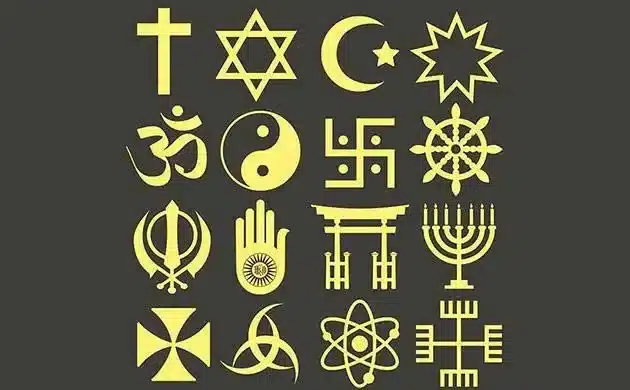
About Article 25 of Indian Constitution
- Article 25 says that all persons are equally entitled to freedom of conscience and the right to freely profess, practice, and propagate religion. The implications of these are:
- Freedom of conscience: Inner freedom of an individual to mould his relation with God or Creatures in whatever way he desires.
- Right to profess: Declaration of one’s religious beliefs and faith openly and freely.
- Right to practice: Performance of religious worship, rituals, ceremonies, and exhibition of beliefs and ideas.
- Right to propagate: Transmission and dissemination of one’s religious beliefs to others or exposition of the tenets of one’s religion. But it does not include the right to convert another person to one’s own religion. Forcible conversions impinge on the ‘freedom of conscience’ guaranteed to all the persons alike.
- Thus, Article 25 covers not only religious beliefs (doctrines) but also religious practices (rituals).
- Moreover, these rights are available to all persons–citizens as well as non-citizens.
- However, these rights are subject to public order, morality, health, and other provisions relating to fundamental rights.
- Further, nothing in this article shall affect the operation of any existing law or prevent the State from making any law to
- regulate or restrict any economic, financial, political, or other secular activity associated with religious practice;
- provide for social welfare and reform, or throw open Hindu religious institutions of a public character to all classes and sections of Hindus;
- Article 25 also contains two explanations: one, the wearing and carrying of kirpans is to be included in the profession of the Sikh religion; and two, the Hindus, in this context, include Sikhs, Jains, and Buddhists.
Q1) What is Article 26 of the Indian Constitution?
Article 26 of the Indian Constitution, under Part III that deals with fundamental rights, addresses the right to manage religious affairs. It grants freedom to every religious denomination or any section thereof, subject to public order, morality, and health, to manage its religious affairs. It ensures that religious communities have the autonomy to manage their religious institutions and matters pertaining to their faith without external interference.






 Last updated on April, 2026
→ UPSC Final Result 2025 is now out.
→ UPSC has released UPSC Toppers List 2025 with the Civil Services final result on its official website.
→ Anuj Agnihotri secured AIR 1 in the UPSC Civil Services Examination 2025.
→ UPSC Marksheet 2025 is now out.
→ UPSC Notification 2026 & UPSC IFoS Notification 2026 is now out on the official website at upsconline.nic.in.
→ UPSC Calendar 2026 has been released.
→ Check out the latest UPSC Syllabus 2026 here.
→ UPSC Prelims 2026 will be conducted on 24th May, 2026 & UPSC Mains 2026 will be conducted on 21st August 2026.
→ The UPSC Selection Process is of 3 stages-Prelims, Mains and Interview.
→ Prepare effectively with Vajiram & Ravi’s UPSC Prelims Test Series 2026 featuring full-length mock tests, detailed solutions, and performance analysis.
→ Enroll in Vajiram & Ravi’s UPSC Mains Test Series 2026 for structured answer writing practice, expert evaluation, and exam-oriented feedback.
→ Join Vajiram & Ravi’s Best UPSC Mentorship Program for personalized guidance, strategy planning, and one-to-one support from experienced mentors.
→ Shakti Dubey secures AIR 1 in UPSC CSE Exam 2024.
→ Also check Best UPSC Coaching in India