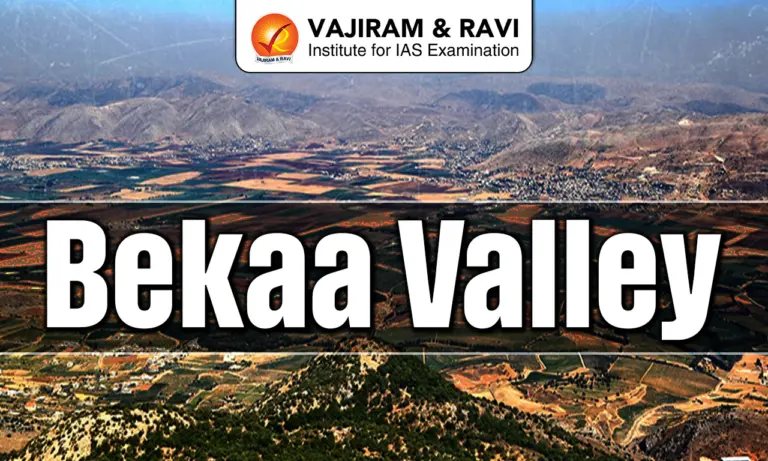
Bekaa Valley is a broad and scenic valley in Lebanon. It is known for its open plains, natural beauty, and fertile land. The valley has been an important area for people to live, farm, and trade for a long time. Its landscapes and cultural significance make it a well-known and special part of the region.
Bekaa Valley Location and Geography
- Bekaa Valley is located in eastern Lebanon, lying between two major mountain ranges: the Mount Lebanon range to the west and the Anti-Lebanon Mountains to the east. It is a long and wide valley, stretching across much of the country.
- The valley is known for its flat and fertile land, which makes it ideal for farming. Rivers, streams, and underground water sources flow through the valley, helping agriculture thrive. Its climate is generally warm and dry in the summer and cool in the winter, with more rainfall than the surrounding mountains.
- Bekaa Valley’s geography has made it an important region for settlement, trade, and farming throughout history, connecting different parts of Lebanon and neighboring countries.
Bekaa Valley Climate and Weather Patterns
- Bekaa Valley has a Mediterranean climate, which means it experiences hot and dry summers and cool, wet winters. The surrounding mountains often get snow in winter, and as it melts, it provides water that flows into the valley, supporting its farms and rivers.
- The valley is known for its fertile alluvial soil, which, along with sufficient rainfall, makes it perfect for agriculture. The landscape is a mix of wide plains, farmlands, and vineyards, dotted with small villages and towns. This combination of climate, water, and soil has helped make Bekaa Valley an important agricultural and settlement region for centuries.





Bekaa Valley Agriculture and Economic Importance
- The Bekaa Valley is Lebanon’s main agricultural region, thanks to its fertile soil and favorable climate. The plains of the valley produce a wide range of crops, including wheat, barley, potatoes, vegetables, and fruits. The valley is especially renowned for its vineyards and wineries, which produce internationally recognized Lebanese wines such as those from Château Ksara, Château Kefraya, and Château Musar.
- Besides grapes, farmers in the Bekaa cultivate olives, citrus fruits, and apples, while the southern areas of the valley support extensive livestock farming. The Litani River Project, launched in the mid-20th century, improved irrigation and electricity supply, further boosting agricultural productivity.
- Despite its importance, the valley faces some challenges. Informal farming practices, occasional droughts, and the impact of regional conflicts can affect crop yields. Additionally, the arrival of refugees from Syria since 2011 has placed extra pressure on local resources and infrastructure, influencing both agriculture and the broader economy.
- The Bekaa Valley continues to play a vital role in Lebanon’s economy, serving as a key source of food, wine, and other agricultural products.
Bekaa Valley History and Cultural Significance
- The Bekaa Valley has a rich history, with evidence of human habitation dating back to prehistoric times. Its location made it an important corridor, connecting the coastal areas of Lebanon with the interior regions of Syria and Mesopotamia. Over the centuries, the valley was part of several major civilizations, including the Phoenicians, Greeks, Romans, and Byzantines.
- During the Roman era, the valley became particularly famous for Heliopolis, now known as Baalbek, which housed some of the grandest temple complexes of the ancient world. The Temple of Jupiter and the Temple of Bacchus still stand today as well-preserved examples of Roman architecture, reflecting the region’s religious and cultural importance. The valley also acted as a hub for trade and cultural exchange, linking the Mediterranean with inland Asia.
- In the Islamic period, the Bekaa Valley remained a fertile and agriculturally productive region, serving as a breadbasket for surrounding areas. Later, under Ottoman rule, it was incorporated into the empire’s provincial system, contributing crops, livestock, and other resources to the wider economy. The valley’s long history and cultural heritage make it a significant region in both historical and contemporary contexts.
Bekaa Valley Natural Resources and Environment
- The Bekaa Valley is rich in natural resources, which make it an important region for Lebanon. Its fertile soil, nourished by rivers like the Litani and snowmelt from surrounding mountains, supports agriculture and vineyards. The valley’s water resources are used for irrigation, helping farmers grow crops like wheat, vegetables, fruits, and grapes.
- The valley also has forests and grasslands, which provide grazing land for livestock and contribute to biodiversity. The surrounding mountains are home to wildlife and help regulate the local climate.
- However, the environment faces challenges. Overuse of water, deforestation, and human activities have put pressure on the natural balance. Pollution and unplanned urbanisation are also affecting soil quality and water resources. Conserving these natural resources is essential to maintain the valley’s agriculture, wildlife, and overall ecological health.
- The Bekaa Valley’s environment not only supports life and farming but also adds to its scenic beauty, making it attractive for tourism and sustainable development.

 Last updated on March, 2026
→ UPSC Final Result 2025 is now out.
→ UPSC has released UPSC Toppers List 2025 with the Civil Services final result on its official website.
→ Anuj Agnihotri secured AIR 1 in the UPSC Civil Services Examination 2025.
→ UPSC Marksheet 2025 is now out.
→ UPSC Notification 2026 & UPSC IFoS Notification 2026 is now out on the official website at upsconline.nic.in.
→ UPSC Calendar 2026 has been released.
→ Check out the latest UPSC Syllabus 2026 here.
→ UPSC Prelims 2026 will be conducted on 24th May, 2026 & UPSC Mains 2026 will be conducted on 21st August 2026.
→ The UPSC Selection Process is of 3 stages-Prelims, Mains and Interview.
→ Prepare effectively with Vajiram & Ravi’s UPSC Prelims Test Series 2026 featuring full-length mock tests, detailed solutions, and performance analysis.
→ Enroll in Vajiram & Ravi’s UPSC Mains Test Series 2026 for structured answer writing practice, expert evaluation, and exam-oriented feedback.
→ Join Vajiram & Ravi’s Best UPSC Mentorship Program for personalized guidance, strategy planning, and one-to-one support from experienced mentors.
→ Shakti Dubey secures AIR 1 in UPSC CSE Exam 2024.
→ Also check Best UPSC Coaching in India
Bekaa Valley FAQs
Q1. What is the Bekaa Valley?+
Q2. Where is the Bekaa Valley located?+
Q3. What is the climate of the Bekaa Valley?+
Q4. Why is the Bekaa Valley important for agriculture?+
Q5. What is the historical significance of the Bekaa Valley?+
Tags: bekaa valley geography geography notes