About Cell-free DNA:
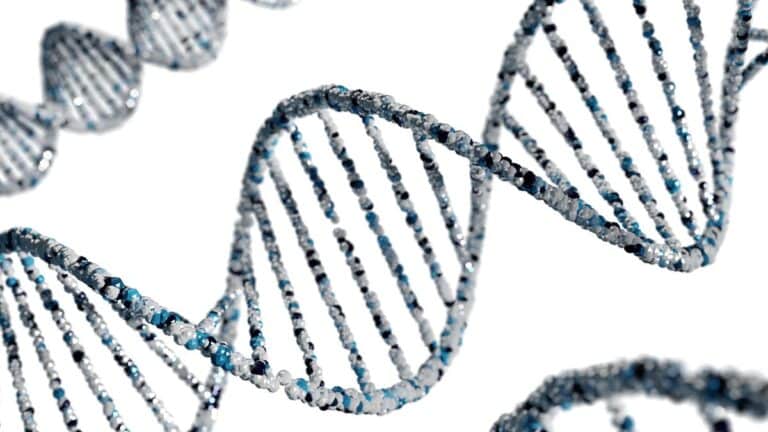
- In the human body, most of the DNA in a genome is neatly packed inside cells with the help of specific proteins, protecting it from being degraded.
- In a variety of scenarios, some fragments of DNA are ‘released’ from their containers and are present outside the cell, in body fluids. These small fragments of nucleic acids are widely known as cell-free DNA (cfDNA).
- How they are generated/released?
- It can be generated and released from a cell in a number of possible situations, including when a cell is dying and the nucleic acids become degraded.
- Since an array of processes modulates the degradation, the amount, size, and source of the cfDNA can vary across a range as well.
- This could occur together with a variety of processes, including those required for normal development, those related to the development of certain cancers, and those associated with several other diseases.
Applications of cfDNA
- One of the most widely used applications of cfDNA has been in screening foetuses for specific chromosomal abnormalities, an application known as non-invasive prenatal testing.
- It is useful tool to understand human diseases and to use the knowledge to improve diagnosis, monitoring, and prognosis.
- It is useful in understanding why a body is rejecting a transplanted organ.
- This could be used as a biomarker for neurological disorders like Alzheimer’s disease, neuronal tumours, stroke, traumatic brain injury.
Q1) What is a biomarker?
A biomarker, short for biological marker, is a measurable and quantifiable characteristic or substance that indicates the presence or severity of a particular biological process, disease, or condition. Biomarkers can be found in various biological materials, such as blood, urine, tissue, or saliva, and they are used to assess the physiological or pathological state of an organism.
Source: Cell-free DNA promises to transform how we find diseases






 Last updated on March, 2026
→ UPSC Final Result 2025 is now out.
→ UPSC has released UPSC Toppers List 2025 with the Civil Services final result on its official website.
→ Anuj Agnihotri secured AIR 1 in the UPSC Civil Services Examination 2025.
→ UPSC Marksheet 2025 is now out.
→ UPSC Notification 2026 & UPSC IFoS Notification 2026 is now out on the official website at upsconline.nic.in.
→ UPSC Calendar 2026 has been released.
→ Check out the latest UPSC Syllabus 2026 here.
→ UPSC Prelims 2026 will be conducted on 24th May, 2026 & UPSC Mains 2026 will be conducted on 21st August 2026.
→ The UPSC Selection Process is of 3 stages-Prelims, Mains and Interview.
→ Prepare effectively with Vajiram & Ravi’s UPSC Prelims Test Series 2026 featuring full-length mock tests, detailed solutions, and performance analysis.
→ Enroll in Vajiram & Ravi’s UPSC Mains Test Series 2026 for structured answer writing practice, expert evaluation, and exam-oriented feedback.
→ Join Vajiram & Ravi’s Best UPSC Mentorship Program for personalized guidance, strategy planning, and one-to-one support from experienced mentors.
→ Shakti Dubey secures AIR 1 in UPSC CSE Exam 2024.
→ Also check Best UPSC Coaching in India