What’s in Today’s Article?
- Electoral Transparency Latest News
- Background
- Understanding Form 17C
- Demand of Activists and Opposition Parties
- EC’s Stand
- Way Forward
- Form 17C and Voting Data Transparency FAQs
Electoral Transparency Latest News
- In May 2024, during the Lok Sabha elections, the Supreme Court heard a petition asking the Election Commission of India to publish booth-wise voter turnout data from Form 17C on its website within 48 hours of voting.





Background
- During the 2024 Lok Sabha elections, the Association for Democratic Reforms (ADR) filed a petition in the Supreme Court demanding that the Election Commission of India (ECI) publish Form 17C (Part 1) data—containing booth-wise voter turnout—on its website within 48 hours of polling.
- Despite rising public demand for transparency, the EC refused, stating it is legally required to share this data only with polling agents, not the public.
- However, following backlash over discrepancies in voter turnout data, the new Chief Election Commissioner, Gyanesh Kumar, has indicated a willingness to meet with petitioners, suggesting possible policy re-evaluation.
Understanding Form 17C
- Form 17C is a two-part document mandated under the Conduct of Election Rules, 1961, and must be filled at every polling station.
- With over 10.5 lakh polling stations in 2024, the volume of data involved is immense.
- Part 1: Account of Votes Recorded
- Filled by the presiding officer, this form includes:
- Booth’s EVM identification number
- Total electors assigned
- Total votes cast via EVM
- Number of tendered ballots and paper seals used
- Discrepancies, if any
- Each copy is signed by polling agents and sealed before being sent to the returning officer.
- Part 2: Result of Counting
- Filled on counting day by the returning officer, it lists:
- Candidate-wise vote counts
- Whether these counts match with votes recorded in Part 1
- Signatures from the returning officer, supervisor, and candidate representatives.
Demand of Activists and Opposition Parties
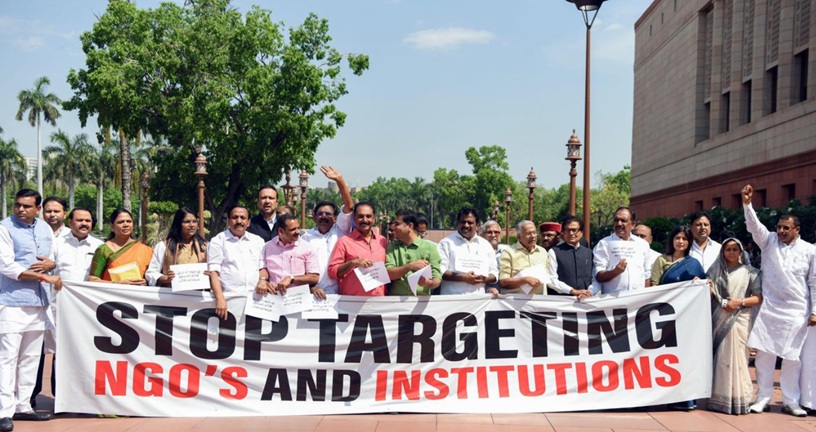
- Opposition leaders and election transparency advocates want Form 17C’s Part 1 published promptly online to:
- Ensure booth-level transparency
- Cross-verify final vote counts with recorded turnout
- Prevent post-poll manipulation or errors
- Increase public trust in EVM-based elections
- ADR’s July 2024 analysis revealed that only five Lok Sabha constituencies had matching votes polled and counted. In the other 538 constituencies,
- 362 had 5.5 lakh fewer votes counted than polled
- 176 had 35,000 more votes counted than polled
- Even though these figures represent a small fraction of 64.64 crore votes, ADR argues that “every vote matters”, regardless of the winning margin.
EC’s Stand
- Legal Position
- The EC maintains that it is not legally obligated to publish Form 17C online. It is only required to share it with polling agents present at the booth.
- Fear of Data Misuse
- The EC warns that online publication could lead to morphing of images, misinformation, and public chaos, especially on social media platforms.
- Exclusion of Postal Ballots
- Form 17C does not include postal ballots, which could add further confusion if published without context.
- Logistical Hurdles
- Former CEC O.P. Rawat highlights practical difficulties:
- Around 1 crore polling personnel are involved, many under high pressure and lacking advanced training.
- Mistakes during data entry are common due to stressful conditions.
- Post-election, data must be verified by election observers using video footage and documentation, leading to delays.
- It remains unclear if “corrected” forms are re-validated by polling agents.
Way Forward
- To strengthen voter confidence, electoral transparency advocates suggest:
- Digitising and publishing Form 17C data post-verification
- Enabling public access with safeguards against manipulation
- Clarifying the legal scope of the EC’s obligations
- Enhancing training and tech support for polling personnel
- Creating a centralised, tamper-proof database for all booth-level data
- A digital reform of election documentation like Form 17C can help bridge the gap between transparency and practicality in India’s democratic process.
Form 17C and Voting Data Transparency FAQs
Q1. What is Form 17C in Indian elections?
Ans. It is an official two-part document recording booth-level votes cast and vote counts during an election.
Q2. Why is there a demand to publish Form 17C online?
Ans. Activists argue it helps detect discrepancies, enhance transparency, and increase voter trust.
Q3. What discrepancies have been found in vote data?
Ans. ADR reported mismatches between votes polled and counted in 538 out of 543 constituencies in 2024.
Q4. Why is the EC hesitant to upload Form 17C data?
Ans. The EC cites legal limits, potential data misuse, and verification delays as key concerns.
Q5. What challenges do poll workers face in filling Form 17C?
Ans. Stress, limited training, and manual errors contribute to delays and occasional inaccuracies.
Source : TH

 Last updated on March, 2026
→ UPSC Final Result 2025 is now out.
→ UPSC has released UPSC Toppers List 2025 with the Civil Services final result on its official website.
→ Anuj Agnihotri secured AIR 1 in the UPSC Civil Services Examination 2025.
→ UPSC Marksheet 2025 is now out.
→ UPSC Notification 2026 & UPSC IFoS Notification 2026 is now out on the official website at upsconline.nic.in.
→ UPSC Calendar 2026 has been released.
→ Check out the latest UPSC Syllabus 2026 here.
→ UPSC Prelims 2026 will be conducted on 24th May, 2026 & UPSC Mains 2026 will be conducted on 21st August 2026.
→ The UPSC Selection Process is of 3 stages-Prelims, Mains and Interview.
→ Prepare effectively with Vajiram & Ravi’s UPSC Prelims Test Series 2026 featuring full-length mock tests, detailed solutions, and performance analysis.
→ Enroll in Vajiram & Ravi’s UPSC Mains Test Series 2026 for structured answer writing practice, expert evaluation, and exam-oriented feedback.
→ Join Vajiram & Ravi’s Best UPSC Mentorship Program for personalized guidance, strategy planning, and one-to-one support from experienced mentors.
→ Shakti Dubey secures AIR 1 in UPSC CSE Exam 2024.
→ Also check Best UPSC Coaching in India