Latest News
- As India prepares for a hotter-than-nor
Coal Push Solar Curtailment
mal summer with more heatwave days, concerns have emerged over the government’s plan to rely more on coal-based power amid gas shortages caused by the West Asia conflict.
- This raises issues like solar curtailment and grid management.





Power Demand and Preparedness
- The government has stated that India’s power system is adequately prepared to meet peak summer demand.
- However, gas supply disruptions have created challenges, especially during periods of high electricity consumption.
Role of Gas-Based Power
- Although gas-based power contributes a small share to India’s energy mix, it plays a critical balancing role, especially:
- During non-solar hours (evenings and nights)
- When demand is high in summer
- Around 10 GW of gas-based capacity is typically used during peak demand periods.
Shift Towards Coal and Alternatives
- To compensate for reduced gas availability, the government plans to rely on:
- Coal-based power generation
- Renewable energy sources
- Energy storage systems
- This shift ensures immediate supply but comes with long-term trade-offs.
- Gas-based power plants are more flexible and responsive:
- They can ramp up or down quickly
- Help balance fluctuations in renewable energy
- Ensure grid stability during evening peaks, when solar power is unavailable
- Thus, reduced gas usage affects efficient integration of renewables.
Concern: Solar Curtailment
- A key concern is the curtailment of solar energy (i.e., reducing or stopping solar power generation despite availability).
- Coal plants are inflexible: They cannot quickly adjust output.
- This leads to situations where solar power is reduced to accommodate coal-based generation.
- This undermines renewable energy utilisation.
Greater Reliance on Coal-Based Power
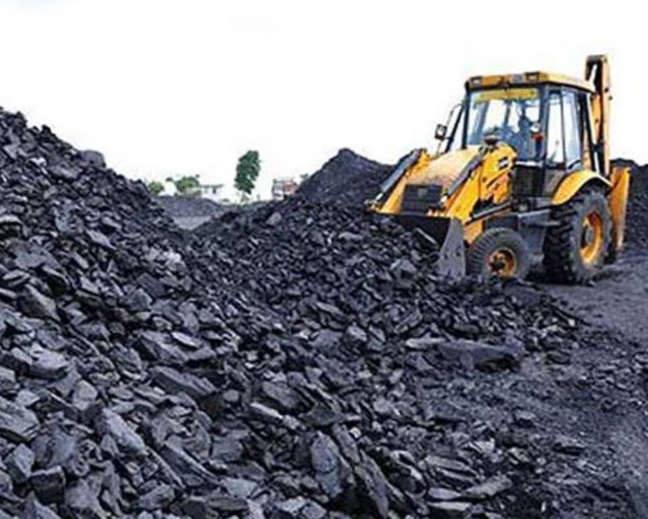
- India’s electricity generation is heavily dependent on coal, contributing over 70%, while gas-based power accounts for only 1–2%.
- Despite being costlier than coal and renewables, gas-based plants are crucial during peak demand periods, especially in summer evenings, due to their flexibility.
- The West Asia conflict has disrupted gas supplies, forcing the government to prioritise limited gas availability for essential sectors.
- This has reduced the availability of gas for power generation, increasing dependence on coal-based plants.
Government Measures to Bridge the Gap
- To meet rising summer demand, the government has initiated several steps:
- Directed Tata Power’s 4 GW imported coal plant in Gujarat to resume full operations from April 1 after being idle for six months.
- Asked thermal power plants to defer maintenance to maximise electricity generation.
- Ensured that all generating companies maintain full capacity utilisation, except during unavoidable outages.
- These steps are expected to make around 10,000 MW of additional capacity available between April and June 2026.
- The government is also closely tracking thermal and hydro projects scheduled for commissioning by June 2026 to ensure timely addition of capacity during peak demand.
Role of Hydro and Renewable Energy
- Hydropower is being carefully scheduled to conserve water for peak demand periods.
- Renewable energy expansion is being accelerated, with faster clearances for:
- Wind power projects
- Battery Energy Storage Systems (BESS)
- India is prioritising energy security through coal-based generation amid gas shortages, while simultaneously pushing renewables and storage solutions.
- The challenge lies in balancing short-term demand with long-term clean energy goals.
Renewable Energy Curtailment: Emerging Concern
- A higher dependence on coal-based power plants may lead to increased renewable energy (RE) curtailment, especially solar.
- This is mainly due to the operational inflexibility of coal plants, which cannot easily reduce output when renewable generation rises.
What is Curtailment and Why It Happens
- Curtailment refers to the reduction or shutdown of renewable power generation despite availability.
- It occurs to maintain grid stability and safety, particularly when:
- Power supply exceeds demand
- The grid faces frequency issues or congestion
- Between May and November last year, India curtailed about 23 GW of renewable energy, highlighting the scale of the issue.
- A major reason behind curtailment is the Minimum Technical Load (MTL) of coal plants.
- MTL is the lowest level at which a thermal plant can operate safely (currently around 55% capacity).
- Coal plants often cannot reduce output below this level, even when solar generation is high during the day.
- Experts suggest lowering MTL (possibly to 40%) to better accommodate renewable energy.
Changing Power Generation Pattern
- Earlier:
- Solar met daytime demand.
- Gas-based plants handled evening peaks.
- Now:
- Greater reliance on coal means coal plants remain operational even during daytime.
- This forces cheaper solar power to be curtailed, despite availability.
Grid Constraints and Regional Challenges
- Curtailment is also driven by:
- Transmission congestion, especially in high-renewable states like Rajasthan and Gujarat
- Low power demand in certain states (underdrawal)
- Limited ability to transfer surplus renewable power across regions
- These constraints make it difficult to fully utilise renewable energy.
Operational and Economic Factors
- Coal plants are preferred for reliability, especially for evening peak demand.
- Increasing flexibility in coal plants requires technical adjustments and higher costs, though compensation mechanisms exist.
- For utilities, it is often easier to keep coal plants running at minimum load and curtail renewables rather than frequently ramping generation.
Structural Challenge: Lack of System Flexibility
- Curtailment is not just about renewable availability but about system-wide flexibility, including:
- Energy storage (BESS)
- Flexible demand management
- Balancing resources
- Without these, integrating large-scale renewables becomes difficult.
Source: IE

 Last updated on March, 2026
→ UPSC Final Result 2025 is now out.
→ UPSC has released UPSC Toppers List 2025 with the Civil Services final result on its official website.
→ Anuj Agnihotri secured AIR 1 in the UPSC Civil Services Examination 2025.
→ UPSC Marksheet 2025 is now out.
→ UPSC Notification 2026 & UPSC IFoS Notification 2026 is now out on the official website at upsconline.nic.in.
→ UPSC Calendar 2026 has been released.
→ Check out the latest UPSC Syllabus 2026 here.
→ UPSC Prelims 2026 will be conducted on 24th May, 2026 & UPSC Mains 2026 will be conducted on 21st August 2026.
→ The UPSC Selection Process is of 3 stages-Prelims, Mains and Interview.
→ Prepare effectively with Vajiram & Ravi’s UPSC Prelims Test Series 2026 featuring full-length mock tests, detailed solutions, and performance analysis.
→ Enroll in Vajiram & Ravi’s UPSC Mains Test Series 2026 for structured answer writing practice, expert evaluation, and exam-oriented feedback.
→ Join Vajiram & Ravi’s Best UPSC Mentorship Program for personalized guidance, strategy planning, and one-to-one support from experienced mentors.
→ Shakti Dubey secures AIR 1 in UPSC CSE Exam 2024.
→ Also check Best UPSC Coaching in India
Coal Push Solar Curtailment FAQs
Q1. What is solar curtailment?+
Q2. Why is coal push causing solar curtailment?+
Q3. What role does gas-based power play?+
Q4. What is Minimum Technical Load (MTL)?+
Q5. What is the long-term challenge?+
Tags: Coal push solar curtailment mains articles upsc current affairs upsc mains current affairs