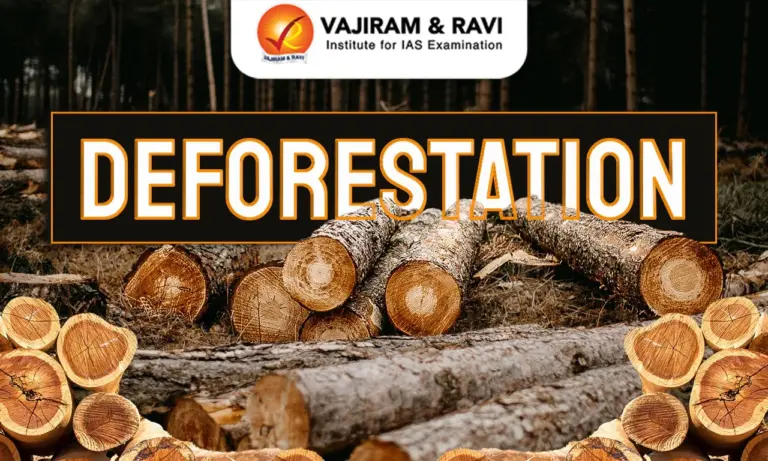
Deforestation refers to the large-scale process of cutting down forest cover, often to make way for farming, construction, or logging. As trees are cleared, the natural balance of ecosystems is disrupted, leading to a loss of biodiversity, increased soil erosion, and a rise in carbon emissions that fuel climate change. Reducing Deforestation through sustainable practices is required to protect both the environment and future generations in a longer run.
Deforestation
The process of cleaning the forest for human use is referred to as Deforestation which carries along significant environmental and social consequences. It also increases greenhouse gas emission, soil erosion and the decline of the water quality. It increases the risk of floods and wildfires, reduces the rainfall which leads to displacement of communities located nearby.
Deforestation Causes
The major reasons behind deforestation and cutting down of trees include:
- Agriculture: Cutting forests for agriculture is the leading cause of Deforestation worldwide. Land is converted into croplands, pastures, or large-scale plantations. This is largely driven by population growth and the increasing demand for food.
- Logging: The timber and paper industries are another major contributor. Trees are cut down for wood, pulp, and other commercial products. As economies expand and populations grow, so does the demand for these resources.
- Mining: Forests are often cleared to access mineral deposits such as gold, copper, and iron ore. Mining activities not only destroy tree cover but also leave behind toxic waste, polluting the environment.
- Urbanization: Expanding cities and infrastructure projects require land, and forests are often the first to go. As urban populations rise, forests are cleared to make way for roads, housing, and commercial zones.
- Fires: Both natural and human-caused forest fires can lead to deforestation. Lightning strikes, careless activities, or intentional burning for land clearing can rapidly destroy large forested areas.





Deforestation Impact
The various environmental and ecological consequences of Deforestation has been highlighted below:
- Greenhouse Gas Emissions: Forests absorb carbon dioxide. When trees are removed or burned, that stored carbon is released back into the atmosphere, increasing the climate change.
- Soil Erosion: Tree roots hold soil in place. Without them, soil is more likely to wash away, leading to erosion, landslides, and sediment buildup in rivers.
- Water Quality Degradation: Forests act as natural filters for water. Without this vegetation, runoff can carry pollutants directly into rivers and lakes, harming aquatic life and human health.
- Reduced Rainfall: Forests play an important role in maintaining local and regional rainfall patterns through transpiration. Large-scale deforestation can disrupt this balance, leading to irregular rainfall, droughts, or floods.
- Higher Risk of Wildfires: Forests help retain moisture in the soil and air. Deforestation can dry out the land and increase the likelihood of frequent, intense wildfires.
Deforestation Effects
Deforestation has affected the ecology and environment for many countries in various ways, out of which few Deforestation Effects are discussed below:
- Water Cycle Disruption: Deforestation disrupts local and regional water cycles, reducing water availability for both communities and ecosystems.
- Loss of Livelihoods: It displaces indigenous and local populations who are dependent on forests for shelter, food, medicine, and income.
- Increased Risk of Natural Disasters: With trees gone, natural protection against floods, landslides, and storms is weakened, making affected areas more vulnerable.
- Cultural Erosion: The destruction of forests endangers the cultural identity and traditions of indigenous communities that are deeply tied to the land.
- Economic Impact: While Deforestation may have short-term benefits, it undermines long-term sustainability by degrading land, reducing biodiversity, and eliminating renewable resources.
Deforestation Prevention Measures
Several steps can be taken to prevent deforestation and promote sustainable land use:
- Sustainable Forest Management: Forests should be managed in a way that maintains their ecological balance, productivity, and biodiversity over the long term.
- Reforestation: Planting trees in deforested areas helps restore ecosystems, improve soil quality, and support local wildlife.
- Reduced Demand for Forest Products: Using alternatives like recycled paper, bamboo, and digital tools can ease pressure on natural forests.
- Government Regulation: Strong legal frameworks and enforcement can protect forests from illegal logging, land conversion, and overexploitation.
- Public Awareness: Educating communities about the value of forests and the consequences of Deforestation encourages more responsible consumption and conservation efforts.
Deforestation Government Initiatives
The government has introduced various initiatives to prevent Deforestation. These efforts include:
- Governments have introduced laws to safeguard forest region. For instance, Brazil has introduced regulations restricting deforestation in the Amazon rainforest.
- Some countries provide monetary support to promote sustainable forest practices. In the US, landowners receive assistance for managing their forests responsibly.
- Awareness campaigns play a key role. The United Nations, for example, has launched global initiatives to highlight the urgency of forest conservation.
| Related Articles | |
| Social Forestry | Agroforestry in India |
| Environmental Organizations in India | Air Pollution |

 Last updated on March, 2026
→ UPSC Final Result 2025 is now out.
→ UPSC has released UPSC Toppers List 2025 with the Civil Services final result on its official website.
→ Anuj Agnihotri secured AIR 1 in the UPSC Civil Services Examination 2025.
→ UPSC Marksheet 2025 is now out.
→ UPSC Notification 2026 & UPSC IFoS Notification 2026 is now out on the official website at upsconline.nic.in.
→ UPSC Calendar 2026 has been released.
→ Check out the latest UPSC Syllabus 2026 here.
→ UPSC Prelims 2026 will be conducted on 24th May, 2026 & UPSC Mains 2026 will be conducted on 21st August 2026.
→ The UPSC Selection Process is of 3 stages-Prelims, Mains and Interview.
→ Prepare effectively with Vajiram & Ravi’s UPSC Prelims Test Series 2026 featuring full-length mock tests, detailed solutions, and performance analysis.
→ Enroll in Vajiram & Ravi’s UPSC Mains Test Series 2026 for structured answer writing practice, expert evaluation, and exam-oriented feedback.
→ Join Vajiram & Ravi’s Best UPSC Mentorship Program for personalized guidance, strategy planning, and one-to-one support from experienced mentors.
→ Shakti Dubey secures AIR 1 in UPSC CSE Exam 2024.
→ Also check Best UPSC Coaching in India
Deforestation FAQs
Q1. What is deforestation?+
Q2. What are the main causes of deforestation?+
Q3. How does deforestation affect the environment?+
Q4. Which regions are most affected by deforestation?+
Q5. What is the link between deforestation and climate change?+
Tags: deforestation environment