About Design Law Treaty:
- It seeks to harmonize the procedural frameworks for industrial design protection, improving the efficiency and accessibility of registration processes across multiple jurisdictions.
- The treaty requires 15 contracting parties to enter into force.
- Key features
- It provides for a grace period of 12 months following a first disclosure of the design, during which such disclosure will not affect its validity for registration.
- It provides relief measures and offers some flexibility to applicants to prevent them from losing their rights if they miss a deadline.
- Simplified Renewal Process: Simplifies the procedure for requesting the renewal of a design registration.
- E-filing Systems: Promotes the introduction of e-filing systems for designs and the electronic exchange of priority documents.
- Technical Assistance: Ensures the availability of technical assistance to developing and least developed countries for the implementation of the treaty.
- Benefits
- Its goal is to ensure that the benefits of streamlined design protection are accessible to all stakeholders, with particular emphasis on small and medium-sized enterprises (SMEs), startups, and independent designers.
- By standardizing procedural requirements, the DLT reduces administrative burdens, thereby promoting global creativity in design.
- When combined with initiatives like the Startup India program and the Startups Intellectual Property Protection (SIPP) scheme, these provisions will help empower startups and SMEs to secure design rights globally, boosting their competitiveness and supporting market growth.
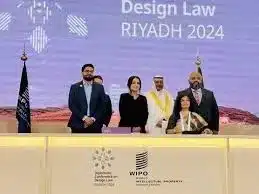
- India recently signed the final act of this treaty.
Q1: What is the World Intellectual Property Organization?
It is a specialized agency of the United Nations, located in Geneva, Switzerland. It was established by the WIPO Convention in 1967. Its mission is to lead the development of a balanced and effective international intellectual property (IP) system that enables innovation and creativity for the benefit of all.
News: India signs the Final Act of the Riyadh Design Law Treaty






 Last updated on March, 2026
→ UPSC Final Result 2025 is now out.
→ UPSC has released UPSC Toppers List 2025 with the Civil Services final result on its official website.
→ Anuj Agnihotri secured AIR 1 in the UPSC Civil Services Examination 2025.
→ UPSC Marksheet 2025 is now out.
→ UPSC Notification 2026 & UPSC IFoS Notification 2026 is now out on the official website at upsconline.nic.in.
→ UPSC Calendar 2026 has been released.
→ Check out the latest UPSC Syllabus 2026 here.
→ UPSC Prelims 2026 will be conducted on 24th May, 2026 & UPSC Mains 2026 will be conducted on 21st August 2026.
→ The UPSC Selection Process is of 3 stages-Prelims, Mains and Interview.
→ Prepare effectively with Vajiram & Ravi’s UPSC Prelims Test Series 2026 featuring full-length mock tests, detailed solutions, and performance analysis.
→ Enroll in Vajiram & Ravi’s UPSC Mains Test Series 2026 for structured answer writing practice, expert evaluation, and exam-oriented feedback.
→ Join Vajiram & Ravi’s Best UPSC Mentorship Program for personalized guidance, strategy planning, and one-to-one support from experienced mentors.
→ Shakti Dubey secures AIR 1 in UPSC CSE Exam 2024.
→ Also check Best UPSC Coaching in India