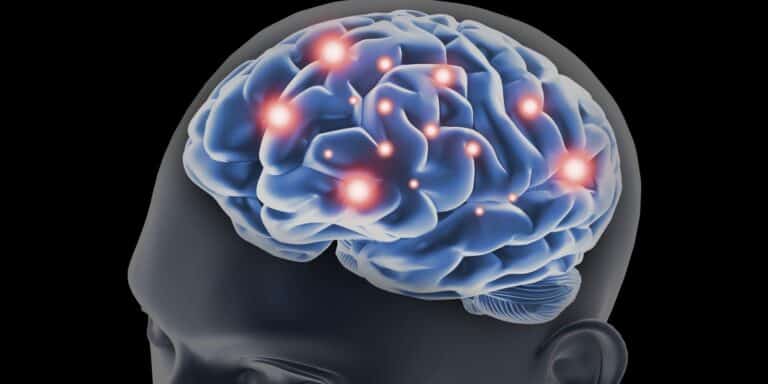
About Dopamine
- It is a neurotransmitter.
- It is a chemical messenger that helps in the transmission of signals in the brain and other vital areas.
- Dopamine is found in humans as well as animals, including both vertebrates and invertebrates.
- It plays a role as a “reward center” and in many body functions, including memory, movement, motivation, mood, attention, and more.
- Dopamine is released when your brain is expecting a reward. When you come to associate a certain activity with pleasure, mere anticipation may be enough to raise dopamine levels.
- Dysfunction of the dopamine system has been implicated in different nervous system diseases.
- High or low dopamine levels are associated with diseases including Parkinson’s disease, restless legs syndrome, and attention deficit hyperactivity disorder (ADHD).
- Where is dopamine produced?
- Neurons in the region at the base of the brain produce dopamine in a two-step process.
- First, the amino acid tyrosine is converted into another amino acid, called L-dopa.
- Then L-dopa undergoes another change as enzymes turn it into dopamine.
- In other parts of the body, dopamine acts as a type of hormone called catecholamine. Catecholamines are made in the adrenal glands- small hormone production factories that sit on top of the kidneys.
- There are three main catecholamines: Dopamine, Epinephrine (adrenaline), and Norepinephrine.
- These hormones get released into the bloodstream when the body is physically or mentally stressed. They cause biochemical changes that activate the so-called fight-or-flight response. That’s the body’s natural reaction to real or perceived stress.
What are neurotransmitters?
- Neurotransmitters are chemical messengers that your body can’t function without.
- Their job is to carry chemical signals (“messages”) from one neuron (nerve cell) to the next target cell.
- The next target cell can be another nerve cell, a muscle cell, or a gland.
Q1) What are Neurons?
Neurons (also called neurones or nerve cells) are the fundamental units of the brain and nervous system, the cells responsible for receiving sensory input from the external world, for sending motor commands to our muscles, and for transforming and relaying the electrical signals at every step in between.
Source: Human behaviour may be determined by fast changes in dopamine levels






 Last updated on April, 2026
→ UPSC Final Result 2025 is now out.
→ UPSC has released UPSC Toppers List 2025 with the Civil Services final result on its official website.
→ Anuj Agnihotri secured AIR 1 in the UPSC Civil Services Examination 2025.
→ UPSC Marksheet 2025 is now out.
→ UPSC Notification 2026 & UPSC IFoS Notification 2026 is now out on the official website at upsconline.nic.in.
→ UPSC Calendar 2026 has been released.
→ Check out the latest UPSC Syllabus 2026 here.
→ UPSC Prelims 2026 will be conducted on 24th May, 2026 & UPSC Mains 2026 will be conducted on 21st August 2026.
→ The UPSC Selection Process is of 3 stages-Prelims, Mains and Interview.
→ Prepare effectively with Vajiram & Ravi’s UPSC Prelims Test Series 2026 featuring full-length mock tests, detailed solutions, and performance analysis.
→ Enroll in Vajiram & Ravi’s UPSC Mains Test Series 2026 for structured answer writing practice, expert evaluation, and exam-oriented feedback.
→ Join Vajiram & Ravi’s Best UPSC Mentorship Program for personalized guidance, strategy planning, and one-to-one support from experienced mentors.
→ Shakti Dubey secures AIR 1 in UPSC CSE Exam 2024.
→ Also check Best UPSC Coaching in India