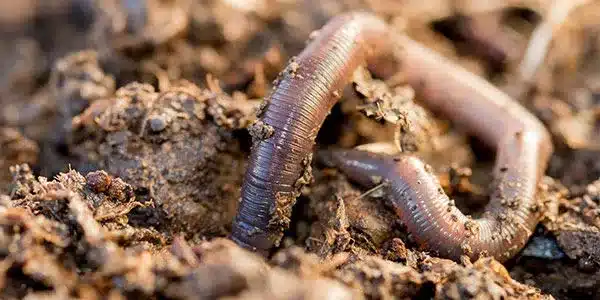
About Earthworms:
- They are terrestrial worms of the class Oligochaeta (phylum Annelida)—in particular, members of the genus Lumbricus.
- Earthworms are harmless, often beneficial residents of the soil.
- Earthworms occur in virtually all soils of the world in which the moisture and organic content are sufficient to sustain them.
- Features:
- The earthworm body is divided into ringlike segments. Some internal organs, including the excretory organs, are duplicated in each segment.
- They don’t have lungs; they breathe through their skin.
- They also lack eyes, so instead use receptors in their skin to sense light and touch.
- Earthworms have five “hearts” that pump blood through their bodies.
- Their food consists of decaying plants and other organisms; as they eat, however, earthworms also ingest large amounts of soil, sand, and tiny pebbles.
- Earthworms are hermaphrodites, meaning an individual worm has both male and female reproductive organs.
- Benefits:
- Earthworms’ breakdown dead and decaying organic matter into rich humus soil, thereby supporting plant growth.
- Earthworm releases waste from their bodies called castings. Castings contain many nutrients that the plant can use.
- They also dig tiny channels and make holes that aerate soil and improve drainage.
Q1: What are roundworms?
Roundworms are small organisms that can live in your intestine, which is part of your digestive system. Roundworms can live in the human intestine for a long time. They can be harmful and cause many problems, including abdominal (belly) pain, fever and diarrhea.
Source: There could be 30,000 species of earthworms wriggling around the world






 Last updated on March, 2026
→ UPSC Final Result 2025 is now out.
→ UPSC has released UPSC Toppers List 2025 with the Civil Services final result on its official website.
→ Anuj Agnihotri secured AIR 1 in the UPSC Civil Services Examination 2025.
→ UPSC Marksheet 2025 is now out.
→ UPSC Notification 2026 & UPSC IFoS Notification 2026 is now out on the official website at upsconline.nic.in.
→ UPSC Calendar 2026 has been released.
→ Check out the latest UPSC Syllabus 2026 here.
→ UPSC Prelims 2026 will be conducted on 24th May, 2026 & UPSC Mains 2026 will be conducted on 21st August 2026.
→ The UPSC Selection Process is of 3 stages-Prelims, Mains and Interview.
→ Prepare effectively with Vajiram & Ravi’s UPSC Prelims Test Series 2026 featuring full-length mock tests, detailed solutions, and performance analysis.
→ Enroll in Vajiram & Ravi’s UPSC Mains Test Series 2026 for structured answer writing practice, expert evaluation, and exam-oriented feedback.
→ Join Vajiram & Ravi’s Best UPSC Mentorship Program for personalized guidance, strategy planning, and one-to-one support from experienced mentors.
→ Shakti Dubey secures AIR 1 in UPSC CSE Exam 2024.
→ Also check Best UPSC Coaching in India