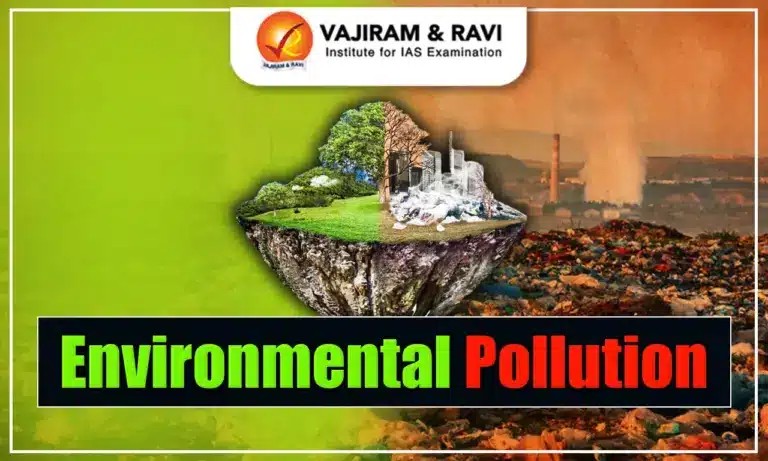
Environmental Pollution is one of the biggest problems facing the world today. It occurs when harmful substances or pollutants enter our air, water, and soil, affecting the health of humans, animals, and plants. Pollution not only damages our environment but also disrupts ecosystems and contributes to climate change. With increasing industrialization, urban growth, and unsustainable practices, the problem of environmental pollution has become more urgent than ever.
What is Environmental Pollution?
Environmental pollution occurs when harmful substances, known as pollutants, enter natural resources such as air, water, and soil, leading to negative impacts on ecosystems, human health, and wildlife. It is mostly caused by human activities like industrial processes, vehicle emissions, and farming practices, but also includes other forms of pollution such as noise, heat, and radiation.
What is Pollutants?
A pollutant is any substance, form of energy (such as heat, noise, or radiation), or material that enters the environment through human actions or natural events. and causes harm. Pollutants contaminate air, water, or soil, disrupt ecosystems, and can accumulate to dangerous levels.





Types of Pollutants
Pollutants can be classified in several ways depending on their nature, persistence, and source. Understanding these types helps us know how they affect the environment and how to control them.
1. Based on Nature of Disposal
This classification looks at how pollutants break down in nature:
a) Non-Biodegradable Pollutants
- These pollutants cannot be broken down naturally into harmless substances.
- They accumulate in the environment and can enter the food chain, becoming more concentrated at higher levels (bioaccumulation and biomagnification).
- Examples: Plastics, polythene bags, DDT, insecticides, pesticides, mercury, lead, arsenic, aluminium cans, synthetic fibres, glass, iron products, silver foils.
b) Biodegradable Pollutants
- These can decompose naturally over time with the help of bacteria or other organisms.
- They are usually less harmful because they get recycled into the ecosystem.
- Examples: Domestic waste, sewage, urine, faecal matter, agricultural residues, paper, wood, cloth, animal dung, leather, wool, vegetable waste.
2. Based on Form of Persistence
This classification depends on how pollutants remain in the environment after being released:
a) Primary Pollutants
- These are released directly from the source and remain in the environment in their original form.
- Examples: Smoke, ash, dust, fumes, nitric oxide, sulphur dioxide, hydrocarbons.
b) Secondary Pollutants
- These are formed when primary pollutants react chemically with other substances in the environment.
- Examples: Ozone (O₃), sulphur trioxide, nitrogen dioxide, aldehydes, ketones, smog.
3. Based on Nature of Pollutants
This classification considers whether pollutants naturally exist in the environment or are artificially added:
a) Quantitative Pollutants
- Substances that normally exist in the environment but become harmful when their concentration increases beyond safe limits.
- Examples: Carbon dioxide (CO₂), water, nitrogen compounds.
b) Qualitative Pollutants
- Substances that do not naturally occur in the environment and are introduced by human activity.
- Examples: Synthetic insecticides, industrial chemicals, certain plastics, heavy metals.
Environmental Pollution Causes
Environmental Pollution is mainly caused by human activities that release harmful substances into the air, water, and soil. Natural events also contribute, but human actions are the primary drivers of pollution today.
- Rapid Industrialization: Factories emit smoke, chemicals, and hazardous waste that pollute air, water, and soil.
- Urbanization: Expanding cities increase traffic, construction, and waste generation, worsening pollution levels.
- Deforestation: Cutting down trees reduces nature’s ability to absorb pollutants and carbon dioxide.
- Agricultural Practices: Excessive use of fertilizers, pesticides, and herbicides contaminates soil and water.
- Fossil Fuel Combustion: Burning coal, petrol, and diesel releases harmful gases like CO₂ and sulfur dioxide.
- Improper Waste Disposal: Open dumping, untreated sewage, and plastic accumulation pollute land and water bodies.
- Forest Fires: Wildfires release smoke and gases that contribute to air pollution.
- Industrial Accidents and Radioactive Leaks: Accidental chemical spills or nuclear leaks release dangerous pollutants into the environment.
Environmental Pollution Effects
Environmental pollution has serious consequences for humans, animals, plants, and the planet. Its impacts are widespread, affecting health, ecosystems, climate, and the economy.
Impact on Human Health
- Air pollution causes respiratory diseases like asthma, bronchitis, and lung cancer.
- Contaminated water spreads cholera, typhoid, and other gastrointestinal diseases.
- Soil pollution and chemical exposure can lead to organ damage and developmental problems.
- Example: Exposure to lead or mercury can cause neurological issues in children.
Damage to Ecosystems and Biodiversity
- Pollutants destroy habitats and reduce biodiversity.
- Aquatic life suffers due to water pollution, leading to fish deaths and ecosystem imbalance.
- Airborne toxins and soil contamination harm plants and wildlife.
- Example: Oil spills in oceans kill marine life and disrupt coral reefs.
Climate Change Acceleration
- Greenhouse gases like carbon dioxide and methane trap heat in the atmosphere, causing global warming.
- Rising temperatures lead to melting glaciers, sea-level rise, and extreme weather events.
- Example: Increased frequency of heatwaves, floods, and droughts worldwide.
Economic Consequences
- Pollution reduces agricultural productivity and fishery yields.
- Increased healthcare costs due to pollution-related diseases.
- Tourism and industries dependent on natural resources also suffer.
- Example: Crop damage from acid rain reduces farmer income.
Degradation of Quality of Life
- Noise, air, and light pollution affect mental well-being and life satisfaction.
- Polluted cities experience poor visibility, foul odours, and unhealthy living conditions.
- Example: Chronic noise from traffic leads to stress and sleep disorders.
Long-Term Environmental Damage
- Persistent pollutants like plastics and heavy metals remain in the environment for decades.
- Bioaccumulation and biomagnification lead to higher concentrations of toxins in the food chain.
- Example: Mercury accumulation in fish can harm predators, including humans.
Types of Environmental Pollution
Environmental pollution can be classified based on the part of the environment it affects: air, water, soil, or energy. Each type has unique causes and impacts.
1. Air Pollution
- Air Pollution is caused by the release of harmful gases, smoke, and particulate matter into the atmosphere.
- Major sources include vehicles, industries, and burning of fossil fuels.
- Leads to respiratory diseases, heart problems, and asthma in humans.
- Contributes to global warming, acid rain, and damage to plants and ecosystems.
2. Water Pollution
- Water Pollution occurs when rivers, lakes, oceans, and groundwater are contaminated by harmful substances.
- Caused by industrial effluents, domestic sewage, agricultural runoff, and oil spills.
- Harms aquatic life and disrupts ecosystems.
- Makes water unsafe for drinking and irrigation, leading to health problems.
3. Soil Pollution
- Soil Pollution is caused by contamination of land by chemicals, pesticides, heavy metals, and industrial waste.
- Results from improper waste disposal, excessive use of fertilizers, and industrial dumping.
- Reduces soil fertility and affects crop production.
- Contaminated soil can harm humans and animals through the food chain.
4. Noise Pollution
- Noise Pollution is caused by excessive or harmful sound that negatively affects humans and wildlife.
- Caused by traffic, construction activities, industries, and urban development.
- Leads to stress, hearing loss, sleep disorders, and reduced concentration.
- Affects animals by disturbing their communication and natural behaviors.
5. Thermal Pollution
- Sudden increase or decrease in water temperature due to human activities.
- Mainly caused by discharge of heated water from power plants and factories.
- Reduces dissolved oxygen in water, harming aquatic organisms.
- Promotes excessive algae growth, disrupting aquatic ecosystems.
6. Nuclear/Radiation Pollution
- Contamination of air, water, or land by radioactive substances.
- Caused by nuclear plant accidents, radioactive waste, and laboratory mishandling.
- Leads to genetic mutations, cancer, and damage to human and animal cells.
- Can persist in the environment for decades, making long-term hazards.
7. Marine Pollution
- Introduction of harmful substances into oceans and seas.
- Caused by industrial waste, sewage, oil spills, and plastic debris.
- Kills marine species and disrupts food chains.
- Reduces quality of seawater and affects human livelihoods dependent on the sea.
8. Plastic Pollution
- Accumulation of non-biodegradable plastic in landfills, rivers, and oceans.
- Caused by improper disposal of plastic products and industrial plastic waste.
- Harms wildlife and marine animals through ingestion or entanglement.
- Pollutes soil and water, affecting ecosystems and human health.
9. Light Pollution
- Excessive artificial light that disrupts natural darkness.
- Caused by streetlights, billboards, stadiums, and urban illumination.
- Interferes with human sleep cycles and overall well-being.
- Disturbs wildlife behavior and natural ecosystems.
Government Initiatives to Curb Pollution
- Implementation of National Clean Air Programme (NCAP) to reduce air pollution in major cities.
- Swachh Bharat Abhiyan promotes cleanliness, proper waste management, and sanitation nationwide.
- Namami Gange Programme focuses on cleaning and rejuvenating the River Ganga.
- Central Pollution Control Board (CPCB) & National Green Tribunal (NGT) monitor pollution levels and enforce environmental regulations.
- National Green Tribunal (NGT) addresses environmental disputes and ensures strict compliance with environmental laws.
- Promotion of Renewable Energy & Clean Technologies encourages solar, wind, and sustainable energy to reduce pollution from fossil fuels.
Important Laws Related to Environmental Pollution
- Environment Protection Act, 1986 provides a framework for protecting air, water, and land from harmful pollutants.
- Air (Prevention and Control of Pollution) Act, 1981 regulates emissions from industries and vehicles to control air pollution.
- Water (Prevention and Control of Pollution) Act, 1974 prevents contamination of rivers, lakes, and groundwater.
- Wildlife Protection Act, 1972 safeguards endangered species, natural habitats, and biodiversity.
- Noise Pollution (Regulation and Control) Rules, 2000 limits noise levels from vehicles, industries, and public events.
- Plastic Waste Management Rules, 2016 regulate the production, use, and disposal of plastic to reduce plastic pollution.

 Last updated on March, 2026
→ UPSC Final Result 2025 is now out.
→ UPSC has released UPSC Toppers List 2025 with the Civil Services final result on its official website.
→ Anuj Agnihotri secured AIR 1 in the UPSC Civil Services Examination 2025.
→ UPSC Marksheet 2025 is now out.
→ UPSC Notification 2026 & UPSC IFoS Notification 2026 is now out on the official website at upsconline.nic.in.
→ UPSC Calendar 2026 has been released.
→ Check out the latest UPSC Syllabus 2026 here.
→ UPSC Prelims 2026 will be conducted on 24th May, 2026 & UPSC Mains 2026 will be conducted on 21st August 2026.
→ The UPSC Selection Process is of 3 stages-Prelims, Mains and Interview.
→ Prepare effectively with Vajiram & Ravi’s UPSC Prelims Test Series 2026 featuring full-length mock tests, detailed solutions, and performance analysis.
→ Enroll in Vajiram & Ravi’s UPSC Mains Test Series 2026 for structured answer writing practice, expert evaluation, and exam-oriented feedback.
→ Join Vajiram & Ravi’s Best UPSC Mentorship Program for personalized guidance, strategy planning, and one-to-one support from experienced mentors.
→ Shakti Dubey secures AIR 1 in UPSC CSE Exam 2024.
→ Also check Best UPSC Coaching in India
Environmental Pollution FAQs
Q1. What is environmental pollution?+
Q2. What are the types of environmental pollution?+
Q3. What are the effects of environmental pollution?+
Q4. What are the causes of environmental pollution?+
Q5. What are pollutants?+
Tags: environmental pollution