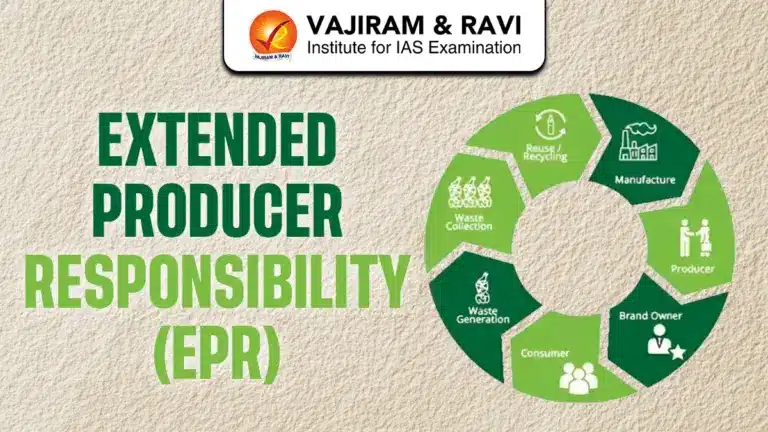
Extended Producer Responsibility (EPR) has emerged as one of the world’s most transformative environmental policy tools. Designed to make manufacturers, importers, and brand owners accountable for the environmental footprint of their products throughout the entire lifecycle, including waste management, EPR is reshaping how industries and governments tackle pollution, resource scarcity, and circularity.
This comprehensive article explains EPR’s objectives, legal framework, real-world implementation (especially in India), challenges, and its role in advancing sustainable development.
What Is Extended Producer Responsibility (EPR)?
Extended Producer Responsibility (EPR) is a policy concept that holds producers legally responsible for the collection, recycling, recovery, and disposal of products once they have reached the end of their useful life. Rather than placing the burden of waste management solely on municipalities or consumers, EPR shifts accountability upstream to producers, encouraging them to design products that are easier to reuse, recycle, or safely dispose of.
Extended Producer Responsibility (EPR) Objectives
Extended Producer Responsibility (EPR) is based on several key environmental and economic goals:
- Pollution Reduction: By making producers responsible for waste, EPR reduces uncontrolled disposal and pollution.
- Resource Efficiency: Encourages reuse, recycling, and recovery of valuable materials reducing extraction of virgin resources.
- Eco-Design Innovation: Products are designed with recyclability and end-of-life management in mind.
- Cost Shift: Shifts the financial responsibility of waste management from taxpayers to producers.
- Circular Economy: Facilitates a move from a linear “take-make-dispose” economy to a circular one where waste becomes a resource.





Extended Producer Responsibility (EPR) Legal Framework
In India, EPR is codified through a combination of environmental rules and regulations enforced by the Ministry of Environment, Forest and Climate Change (MoEFCC) and regulatory bodies such as the Central Pollution Control Board (CPCB). Key legal frameworks include:
1. Plastic Waste Management Rules (PWM Rules)
- Requires producers, importers, and brand owners to collect and recycle plastic packaging waste.
- Sets annual EPR recycling targets that increase over time, for example, targets range from 30–50% in 2024-25 to 60–80% by 2027-28 and beyond.
- There are mandates on recycled content (e.g., rigid plastics: 30% by 2025–26, aiming for 60% by 2028–29).
Also Read: Water (Prevention and Control of Pollution) Act, 1974
2. E-Waste (Management) Rules 2022
- Producers must collect and recycle a growing percentage of e-waste generated from the products they place in the market.
- Targets include 60% recycling initially, rising to 70% by 2025–26 and 80% by 2027–28 onwards.
3. Battery Waste Management Rules 2022
- Applies to all types of batteries (portable, automotive, industrial, and EV).
- Recovery targets range from 70–90% depending on the type of battery and year, with 90% by 2027 onwards for many categories.
Other Rules
- Hazardous & Other Wastes (Management) Rules – includes tyres and other hazardous waste categories.
- Used Oil Management Rules – added in 2024 to cover used and waste lubricating oil.
- Each of these rules sets specific compliance, reporting, and registration requirements under centralized digital EPR portals.
EPR in E-Waste Management
E-waste, or electronic waste, includes discarded electrical and electronic equipment such as mobiles, laptops, TVs, refrigerators, and other consumer electronics. In FY 2024–25, India generated approximately 1.39 million tonnes of e-waste, but only around 70% was formally collected and processed, leaving the rest to informal and unsafe recycling channels.
Under the E-Waste (Management) Rules, 2022, producers, importers, and brand owners (PIBOs) must:
- Producer Responsibility: Producers, importers, and brand owners (PIBOs) must manage e-waste from collection to recycling.
- Registration: PIBOs are required to register on the Central EPR Portal for tracking compliance.
- Collection & Take-Back: Producers must establish collection centers or partner with PROs to take back end-of-life electronics.
- Recycling Targets: Phased targets include 60% by 2024–25, 70% by 2025–26, and 80% by 2027–28.
- Authorized Recycling: E-waste must be sent to CPCB-approved recyclers for safe processing and material recovery.
- Record-Keeping & Reporting: PIBOs must maintain digital records and submit annual compliance reports to regulators.
EPR and Circular Economy
EPR directly supports a circular economy, where products and materials are continually reused, remanufactured, or recycled rather than discarded. Key contributions include:
- Design for recyclability: Manufacturers are incentivized to use materials that are easy to recycle or reuse.
- Material recovery: Valuable resources like metals, plastics, and rare elements are reclaimed, reducing environmental impacts and import dependency.
- Recycled content mandates: Producers must incorporate a minimum share of recycled materials, linking production back to recycling systems.
Government Initiatives to Strengthen EPR
The Government of India has actively strengthened the Extended Producer Responsibility (EPR) framework to improve waste management, promote a circular economy, and reduce environmental pollution
- Expansion of Waste Coverage: EPR now applies to plastic, e‑waste, batteries, used oil, metals, packaging, and sanitary products, with phased recycling and recycled content targets.
- Digital Compliance & Traceability: Centralized EPR portals, mandatory QR codes/unique IDs, and online reporting ensure transparency, real‑time monitoring, and prevention of fake recycling claims.
- Market-Based Incentives: Introduction of EPR certificates and tradable credits encourages producers to exceed recycling targets and supports investment in formal recycling infrastructure.
- Enforcement & Awareness: Strict penalties for non-compliance, environmental compensation, and state-level awareness programs strengthen accountability and improve on-ground collection and segregation.
Advantages of Extended Producer Responsibility
- Environmental Protection: Ensures proper collection, recycling, and disposal, reducing pollution.
- Resource Conservation: Promotes recycling and reuse, reducing the need for virgin raw materials.
- Eco-Design Promotion: Encourages producers to design durable, recyclable, and less polluting products.
- Reduces Municipal Burden: Shifts waste management responsibility from local authorities to producers.
- Economic & Employment Benefits: Generates jobs in recycling, collection, and waste-processing sectors.
- Accountability & Compliance: Holds producers responsible, ensuring adherence to environmental laws and sustainability goals.
Criticism and Limitations of EPR
- High Compliance Costs: Small and medium producers may struggle with the financial and operational burden of meeting EPR obligations.
- Informal Sector Dominance: A large portion of waste, especially e-waste and plastic, is still processed by informal recyclers, reducing environmental effectiveness.
- Infrastructure Gaps: Inadequate collection, recycling, and processing facilities, particularly in rural and semi-urban areas.
- Low Consumer Awareness: Limited public knowledge about segregation, take-back systems, and recycling reduces collection efficiency.
- Enforcement Challenges: Weak monitoring and reporting systems can lead to fake recycling claims or non-compliance.
- Limited Incentives for Over-Compliance: Without strong financial or policy incentives, producers may only aim to meet minimum targets, slowing innovation.
Way Forward
- Strengthen Digital Monitoring: Expand and enhance centralized EPR portals, digital tracking, and QR code systems for transparency and compliance.
- Integrate Informal Recyclers: Formalize and train informal sector workers to improve safe and efficient waste processing.
- Expand Recycling Infrastructure: Develop more collection centers, recycling facilities, and PROs (Producer Responsibility Organizations) nationwide.
- Promote Eco-Design and Innovation: Encourage producers to design products that are durable, recyclable, and resource-efficient.
- Increase Awareness: Conduct consumer education campaigns on segregation, take-back systems, and responsible consumption.
- Incentivize Compliance: Provide financial incentives, tax benefits, or EPR tradable credits to reward over-compliance and innovation.
- Enforce Penalties Strictly: Strengthen enforcement mechanisms to penalize non-compliance and prevent fraudulent reporting.

 Last updated on March, 2026
→ UPSC Final Result 2025 is now out.
→ UPSC has released UPSC Toppers List 2025 with the Civil Services final result on its official website.
→ Anuj Agnihotri secured AIR 1 in the UPSC Civil Services Examination 2025.
→ UPSC Marksheet 2025 is now out.
→ UPSC Notification 2026 & UPSC IFoS Notification 2026 is now out on the official website at upsconline.nic.in.
→ UPSC Calendar 2026 has been released.
→ Check out the latest UPSC Syllabus 2026 here.
→ UPSC Prelims 2026 will be conducted on 24th May, 2026 & UPSC Mains 2026 will be conducted on 21st August 2026.
→ The UPSC Selection Process is of 3 stages-Prelims, Mains and Interview.
→ Prepare effectively with Vajiram & Ravi’s UPSC Prelims Test Series 2026 featuring full-length mock tests, detailed solutions, and performance analysis.
→ Enroll in Vajiram & Ravi’s UPSC Mains Test Series 2026 for structured answer writing practice, expert evaluation, and exam-oriented feedback.
→ Join Vajiram & Ravi’s Best UPSC Mentorship Program for personalized guidance, strategy planning, and one-to-one support from experienced mentors.
→ Shakti Dubey secures AIR 1 in UPSC CSE Exam 2024.
→ Also check Best UPSC Coaching in India
Extended Producer Responsibility (EPR) FAQs
Q1. What is Extended Producer Responsibility (EPR)?+
Q2. Which waste streams fall under EPR in India?+
Q3. Who must comply with EPR regulations?+
Q4. How does EPR benefit the environment?+
Q5. What are the consequences of non-compliance with EPR?+
Tags: Extended Producer Responsibility (EPR)