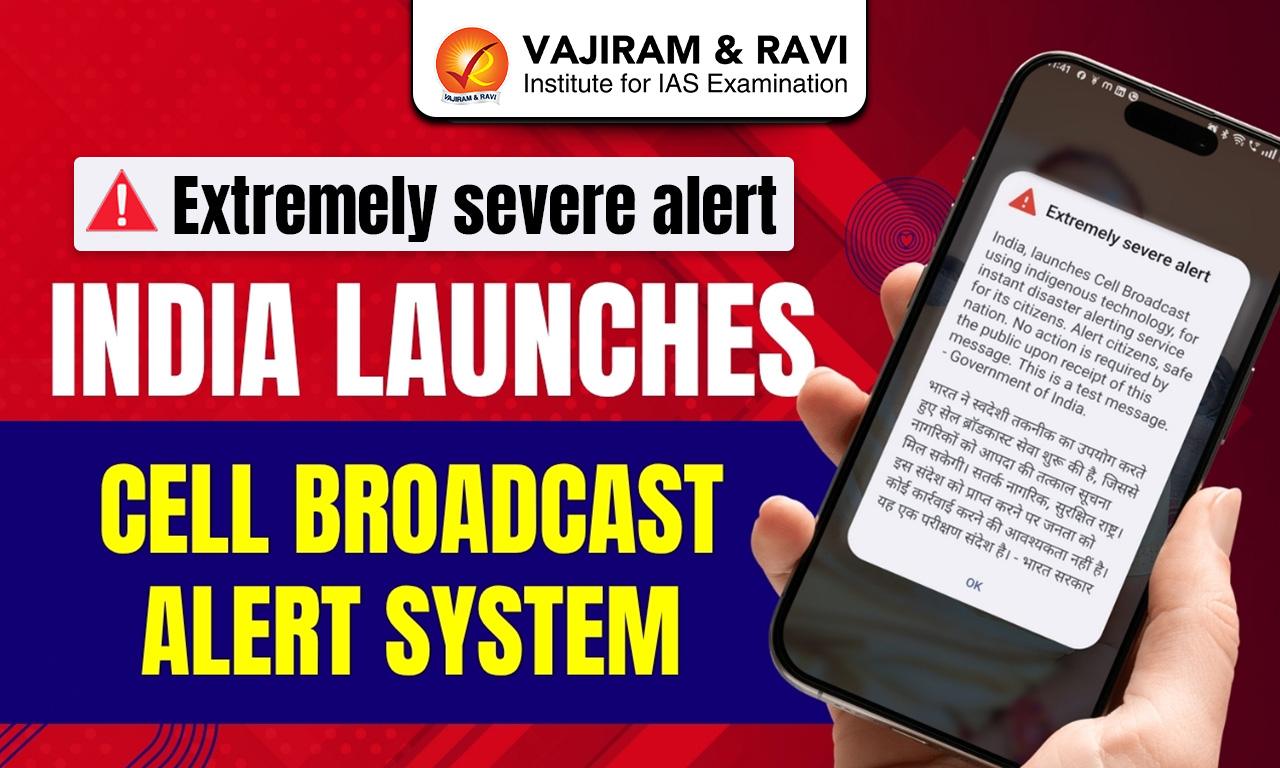
The recent “Extremely Severe Alert” notification seen on mobile devices across India marks a major upgrade in the country’s disaster preparedness framework. This Emergency Alert on Mobile Phone is part of the government’s initiative to build a robust NDMA Alert system capable of delivering real-time warnings during critical situations like floods, earthquakes, and industrial hazards.
Institutional Framework Behind the NDMA “Extremely Severe Alert”
The Department of Telecommunications (DoT), Ministry of Communications, in collaboration with the National Disaster Management Authority (NDMA), is actively enhancing mobile-based disaster communication systems to ensure timely dissemination of life-saving information.
At the core of this initiative is the Integrated Alert System (SACHET), developed by the Centre for Development of Telematics (C-DOT), the premier telecom R&D institution under DoT.
- Built on the International Telecommunication Union recommended Common Alerting Protocol (CAP)
- Operational across all 36 States and Union Territories
- Enables geo-targeted alerts via SMS
So far, the NDMA Alert system has successfully delivered over 134 billion SMS alerts in 19+ Indian languages, covering disasters like cyclones, heavy rainfall, and extreme weather events.
What is SACHET?
SACHET (System for Advanced Communication and Holistic Emergency Transmission) is India’s Integrated Alert System that enables authorities to send geo-targeted disaster warnings directly to mobile users through SMS and Cell Broadcast. It has been developed by Centre for Development of Telematics under the Department of Telecommunications in collaboration with the National Disaster Management Authority to strengthen real-time emergency communication.


Importance in Disaster Management
The Emergency Alert on Mobile Phone under the NDMA Alert system plays a critical role in minimizing disaster risks by ensuring timely, accurate, and wide-reaching communication to citizens during emergencies.
- Early Warning for Floods and Cyclones: The system enables authorities to send advance alerts about heavy rainfall, rising river levels, and approaching cyclones, allowing people in vulnerable areas to evacuate safely and protect essential belongings.
- Rapid Response During Earthquakes: In seismically active regions of India, even a few seconds of warning through mobile alerts can help individuals take cover, halt transport systems, and reduce casualties during earthquakes.
- Effective Management of Nuclear and Industrial Hazards: In case of emergencies like gas leaks, chemical spills, or nuclear incidents, the NDMA Alert system provides instant instructions such as evacuation routes or shelter-in-place guidelines, preventing panic and confusion.
- Real-Time Alerts for Lightning and Extreme Weather: The system delivers immediate warnings for lightning strikes, heatwaves, and sudden weather changes, helping farmers, outdoor workers, and the general public take preventive measures.
- Tsunami and Coastal Disaster Preparedness: For coastal regions, geo-targeted alerts ensure that people receive timely warnings about tsunamis or storm surges, enabling quick evacuation to safer zones.
- Wide Reach and Inclusivity: Since alerts are sent in multiple languages and do not require internet access, the system ensures that even remote and rural populations receive critical information.
- Reduction in Loss of Life and Property: Timely dissemination of alerts allows authorities and citizens to act quickly, significantly reducing casualties and economic losses during disasters.
- Strengthening Disaster Governance: The integration of agencies like the National Disaster Management Authority and the Department of Telecommunications ensures coordinated and efficient disaster response across the country.
Advantages of the NDMA Alert System
The Extremely Severe Alert on Mobile Phone under the NDMA Alert system offers several key advantages that strengthen disaster preparedness and response in India:
- Instant and Real-Time Communication: Alerts are delivered within seconds, ensuring timely warnings during critical situations like floods, earthquakes, and cyclones.
- Wide Geographic Coverage: Through Cell Broadcast technology, messages reach all mobile devices within a specific area, including remote and rural regions.
- No Internet Requirement: The system works on basic mobile networks, making it accessible even in areas with poor or no internet connectivity.
- Multilingual Alerts: Messages are sent in multiple Indian languages, ensuring better understanding across diverse populations.
- Reliable During Network Congestion: Unlike SMS or calls, Cell Broadcast is not affected by network traffic, making it highly dependable during emergencies.
- Geo-Targeted Messaging: Alerts are sent only to affected regions, reducing panic and ensuring relevance of information.
- Supports Multiple Disaster Types: Covers natural disasters (floods, earthquakes, cyclones) as well as man-made emergencies (industrial accidents, chemical leaks).
- Reduces Loss of Life and Property: Early warnings enable timely evacuation and preparedness, significantly minimizing damage.

 Last updated on Oct, 2026
→ UPSC 2027 Notification will be released on 13 January 2027 at upsconline.nic.in.
→ Check Nobel Prize 2026 Winners List here.
→ Download PIB PRiSM Monthly Magazine 2026 here.
→ Check UPSC Monthly Current Affairs Magazine The Recitals here.
→ Check out the latest UPSC Syllabus here.
→ Download UPSC Model Answers for Mains 2026
→ UPSC Mains Question Paper 2026 is out now for Essay & GS Paper 1, 2, 3 & 4.
→ UPSC Calendar 2027 has been released.
→ Enroll in Vajiram & Ravi’s UPSC Mains Test Series 2027 for structured answer writing practice, expert evaluation, and exam-oriented feedback.
→ Join Vajiram & Ravi’s UPSC Mentorship Program 2027 for personalized guidance, strategy planning, and one-to-one support from experienced mentors.
→ Go through the UPSC Mains Previous Year Papers to enhance your preparation.
→ UPSC has released UPSC Toppers List 2025 with the Civil Services final result on its official website.
→ Also check Best UPSC Coaching in India
Extremely Severe Alert FAQs
Q1. What is the Extremely Severe Alert on Mobile Phone system?+
Q2. What is the NDMA Alert system?+
Q3. What is the Integrated Alert System (SACHET)?+
Q4. Why did I receive an “Extremely Severe Alert” on my phone?+
Q5. Do I need to take action when I receive such alerts?+
Tags: cell broadcast cell broadcast alert emergency alert emergency alert message today emergency message extremely severe alert india launches cell broadcast alert system