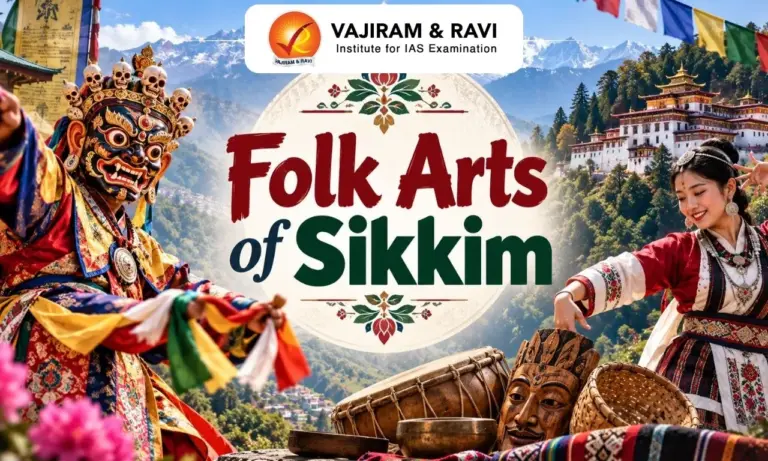
Folk Arts of Sikkim reflect the state’s rich cultural diversity and the traditions of its Lepcha, Bhutia and Nepali communities. These art forms include traditional weaving, painting, wood and stone carving, mask-making, jewellery, handicrafts and folk dances. Many of them are closely connected with nature, religion, festivals and everyday community life. Together, they preserve Sikkim’s cultural identity and showcase the skills and traditions passed down through generations.
Major Folk Arts of Sikkim
The folk arts of Sikkim reflect the diverse cultural traditions of the Lepcha, Bhutia and Nepali communities. These traditions include paintings, weaving, wood and stone carving, mask-making, jewellery, carpets and traditional dances. They combine religious beliefs, community life, nature and local craftsmanship.
- Lepcha Weaving: Lepcha weaving is one of the important traditional handloom arts of Sikkim. It is traditionally practised by Lepcha women using natural fibres such as sisnu (nettle fibre) and coarse silk. The fabrics are known for their colourful motifs and distinctive vertical stripe patterns. Traditional weaving is closely connected with Lepcha identity and dress.
- Thangka Painting: Thangka is a traditional Buddhist religious painting made on fabric. These paintings depict Buddha, Bodhisattvas, Buddhist masters, mandalas, the Wheel of Life and other sacred symbols. Thangkas follow detailed rules of composition, proportion and iconography and are used for meditation, teaching and religious ceremonies.
- Cham Dance: Cham is a masked monastic dance performed during Buddhist religious festivals. Dancers wear elaborate costumes and masks and enact stories connected with the triumph of good over evil. The dance combines music, ritual, movement and religious symbolism.
- Zo-Mal-Lok: Zo-Mal-Lok is a traditional Lepcha folk dance associated with agricultural activities. Its movements represent activities such as sowing and harvesting, reflecting the close relationship between the Lepcha community and nature.
- Maruni and Tamang Selo: These are popular folk traditions associated with the Nepali communities of Sikkim. They are performed during festivals, celebrations and community gatherings and are accompanied by traditional music and instruments.
Also Read : Folk Dances of Sikkim
Traditional Crafts and Artistic Practices of Sikkim
Sikkim has a wide range of traditional crafts that use locally available materials such as wood, bamboo, cane, wool, natural fibres, clay and stone. Many of these crafts have been passed down through generations and continue to support local artisans and handloom traditions.
- Choktse Tables: Choktse tables are small, portable and foldable wooden tables, particularly associated with Gangtok. They are decorated with flowers, Buddhist symbols and other designs using paper stencils. The tables are painted, polished and traditionally used in Sikkimese households.
- Carpet Weaving: Sikkim is known for its hand-knotted woollen carpets, traditionally woven by Bhutia women on vertical frame looms. Common designs include flowers, geometric patterns, mythical birds, snow lions, dragons and Buddhist symbols. Traditional vegetable dyes have also been used in carpet production.
- Blanket Weaving: Blanket weaving is another traditional textile practice of Sikkim. Nepali women traditionally weave woollen blankets using sheep wool, with patterns and techniques that differ from Lepcha weaving.
- Nepali Stone Carving: Stone carving developed in Sikkim with the settlement of Nepali artisans and masons. The availability of slate supported the growth of this craft. Traditional carvings include Hindu deities, mythological figures, temple scenes and religious motifs, along with Buddhist prayer wheels and other designs.
- Wood Carving: Wood carving has long been associated with Sikkimese monasteries and traditional architecture. Artisans create wooden plaques, furniture, utensils, decorative objects and Buddhist symbols. Choktse tables are among the best-known examples of this craft.
- Mask Making: Traditional masks are made using materials such as softwood, clay and paper pulp. They commonly represent gods, goddesses, animals and mythical figures. These colourful masks are used in festivals, religious ceremonies and especially in Cham dances, and are also made as decorative handicrafts.
- Cane and Bamboo Crafts: Cane and bamboo are important materials in Sikkimese handicrafts. Artisans use them to make baskets, mats, hats, furniture, wall decorations and other household items. These crafts are practised by different communities, including the Lepchas and Bhutias.
- Traditional Jewellery: Sikkim’s traditional jewellery reflects the influence of its Lepcha, Bhutia and Nepali communities. Jewellery may feature floral and natural motifs as well as religious symbols. Traditional ornaments include Rani Haar, Khao, Kantha and Naugedi, along with earrings, rings and bracelets. Turquoise, lapis lazuli and red coral are also used in some traditional pieces.
- Paper Mache Crafts: Paper mache is another craft found in Sikkim. Artisans use paper pulp and moulds to create lampshades, vases, figurines and animal forms. The finished products are often painted and decorated, giving the lightweight objects a distinctive appearance.


Importance of Folk Arts in Sikkim’s Culture and Heritage
- Preserves Community Identity: Folk arts help preserve the distinctive traditions of the Lepcha, Bhutia and Nepali communities and express their cultural identity through clothing, crafts, rituals and performances.
- Connects Art with Religion: Forms such as Thangka painting, mask-making, wood carving and Cham dance are closely connected with Buddhist beliefs, religious ceremonies and monastery traditions.
- Reflects Local Life and Nature: Many traditional designs are inspired by mountains, plants, animals, agriculture and local religious symbols, showing the close relationship between Sikkimese communities and their natural surroundings.
- Supports Traditional Livelihoods: Handloom and handicrafts provide livelihood opportunities for local artisans, particularly women involved in weaving and other cottage industries. Government institutions also support training, production, exhibitions and market opportunities for traditional crafts.
- Promotes Intergenerational Knowledge: Traditional skills such as weaving, carving and mask-making are passed from one generation to another, helping preserve techniques that may otherwise decline with modernisation. The state has also undertaken training and documentation initiatives to support these skills.
- Encourages Cultural Tourism: Traditional crafts, monasteries, dances, handloom products and cultural festivals add to Sikkim’s appeal as a destination for visitors interested in its cultural heritage.
- Strengthens Heritage Conservation: Sikkim’s cultural institutions support the preservation and promotion of its tangible and intangible heritage through training programmes, cultural events, exhibitions and craft development initiatives. Recent government initiatives have also focused on documenting and promoting traditional products and cultural assets.

 Last updated on Oct, 2026
→ UPSC 2027 Notification will be released on 13 January 2027 at upsconline.nic.in.
→ Asian Games 2026 are being held in Aichi-Nagoya, Japan, from 19 September to 4 October.
→ Check Nobel Prize 2026 Winners List here.
→ Download PIB PRiSM Monthly Magazine 2026 here.
→ Check UPSC Monthly Current Affairs Magazine The Recitals here.
→ Check out the latest UPSC Syllabus here.
→ Download UPSC Model Answers for Mains 2026
→ UPSC Mains Question Paper 2026 is out now for Essay & GS Paper 1, 2, 3 & 4.
→ UPSC Calendar 2027 has been released.
→ Enroll in Vajiram & Ravi’s UPSC Mains Test Series 2027 for structured answer writing practice, expert evaluation, and exam-oriented feedback.
→ Join Vajiram & Ravi’s UPSC Mentorship Program 2027 for personalized guidance, strategy planning, and one-to-one support from experienced mentors.
→ Go through the UPSC Mains Previous Year Papers to enhance your preparation.
→ UPSC has released UPSC Toppers List 2025 with the Civil Services final result on its official website.
→ Also check Best UPSC Coaching in India
Folk Arts of Sikkim FAQs
Q1. What are the major folk arts of Sikkim?+
Q2. Which communities are associated with the folk arts of Sikkim?+
Q3. What is Lepcha weaving?+
Q4. What is Thangka painting of Sikkim?+
Q5. What are Choktse tables?+
Q6. What are the traditional crafts of Sikkim?+
Q7. Why are folk arts important in Sikkim?+
Tags: art and culture art and culture notes folk arts of sikkim