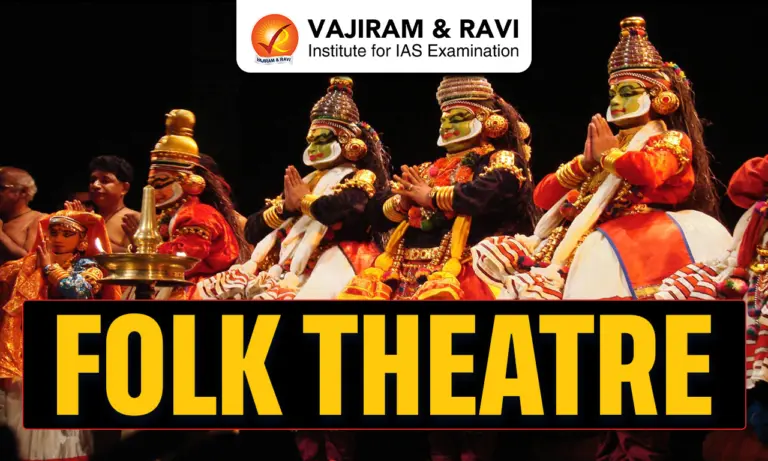
Folk theatre is one of the oldest and most vibrant expressions of India’s cultural heritage. Rooted in local traditions, myths, legends, and social realities, it serves as an important medium of communication, entertainment, and community bonding in rural and semi-urban India.
Key Defining Features of Folk Theatre
Folk theatre in India is characterized by certain distinctive features that set it apart from classical theatre traditions and reflect its deep connection with community life and cultural practices.
- Performed in open-air spaces, temple courtyards, or village grounds
- Draws themes from mythology (Ramayana, Mahabharata), epics, local legends, and social issues
- Combines multiple art forms: music, dance, drama, mime, and acrobatics
- Uses local dialects and is deeply rooted in regional identity
- Participatory in nature, audience actively engages with performers
- Serves ritual, religious, and entertainment purposes simultaneously
Folk Theatre Historical Background
The origins of Indian folk theatre can be traced to Vedic rituals and sacrificial ceremonies. Over time, these evolved into more elaborate dramatic presentations. Key milestones include:
- Natyashastra by Bharata Muni (200 BCE – 200 CE): Foundational treatise on performing arts that laid the grammar for Indian theatrical traditions.
- Medieval Period: Bhakti and Sufi movements gave rise to new regional theatre forms centred on devotion. Saints like Shankaradeva (Ankia Nat, Assam) and Chaitanya Mahaprabhu influenced eastern India’s theatre.
- Mughal Era: Court patronage led to synthesis of Persian, Central Asian, and Indian theatrical elements.
- Colonial Period: British administration disrupted traditional patronage but also triggered social reform theatre addressing caste, gender, and colonial rule.
- Post-Independence: The Sangeet Natak Akademi (established in 1952) began systematic documentation and preservation of folk theatre forms.
Also Read: Fairs and Festivals of India





Major Folk Theatre Traditions in India
India’s folk theatre traditions represent diverse regional expressions of storytelling, performance, and cultural memory, blending mythology, social realities, music, and dance into living performance traditions.
- Yakshagana (Karnataka) is a highly stylized dance-drama tradition based on Puranic stories, characterized by elaborate costumes, heavy makeup, expressive gestures, and live percussion-based music, usually performed overnight.
- Therukoothu (Tamil Nadu) is a street theatre form performed during village and temple festivals, primarily depicting episodes from the Mahabharata through loud, expressive dialogue, music, and dance.
- Jatra (West Bengal and Odisha) is an open-air theatrical form known for its emotionally intense acting, loud music, exaggerated expressions, and strong narrative storytelling, often blending mythology with social and political themes.
- Tamasha (Maharashtra) is a vibrant folk theatre combining dance, music, humour, and satire, prominently featuring Lavani dance and reflecting both romantic and social themes.
- Nautanki (Uttar Pradesh and Rajasthan) is a popular musical folk drama based on heroic legends, romance, and social narratives, using instruments like sarangi, harmonium, and dholak with strong improvisational elements.
- Bhavai (Gujarat and Rajasthan) is a satirical folk theatre form that critiques social issues such as caste and inequality through humour, irony, and devotional storytelling, often performed with balancing acts.
- Ramlila (Uttar Pradesh and across India) is a dramatic enactment of the Ramayana based on the Ramcharitmanas, performed during Dussehra with strong community participation and devotional atmosphere. It was recognised by UNESCO as Intangible Cultural Heritage in 2008.
- Krishnattam (Kerala) is a temple-based theatrical tradition depicting the life of Lord Krishna, considered a precursor to Kathakali, and performed as a ritual offering at Guruvayur Temple.
- Ankia Nat (Assam) is a Vaishnavite theatre tradition developed by Srimanta Shankaradeva, performed in Namghars, combining devotion, music, and dramatic storytelling.
- Maach (Madhya Pradesh) is a folk theatre form combining prose, verse, and song, narrating stories from mythology and folklore with a strong poetic tradition.
- Swang (Haryana and Punjab) is a traditional folk theatre form based on devotional, mythological, and moral themes, relying heavily on oral narration and musical accompaniment.
- Mudiyettu (Kerala) is a ritual theatre form depicting the battle between Goddess Bhadrakali and the demon Darika, performed in temples and recognised by UNESCO as Intangible Cultural Heritage.
- Dashavatar (Goa and Konkan coast) is a mythological theatre form depicting the ten incarnations of Lord Vishnu using masks, costumes, music, and narrative storytelling.
- Ojapali (Assam) is a narrative performance tradition combining dance, music, and storytelling led by a principal performer, focusing on mythological and devotional themes.
- Bhand Pather (Kashmir) is a satirical folk theatre blending humour, music, and drama, reflecting social realities and offering sharp criticism of authority and society.
- Veedhi Natakam (Andhra Pradesh) is a street theatre form performed in rural public spaces, dealing with mythological stories as well as contemporary social issues.
- Cavittu Natakam (Kerala) is a Christian folk theatre introduced during Portuguese influence, portraying biblical and European historical themes with music and dance elements.
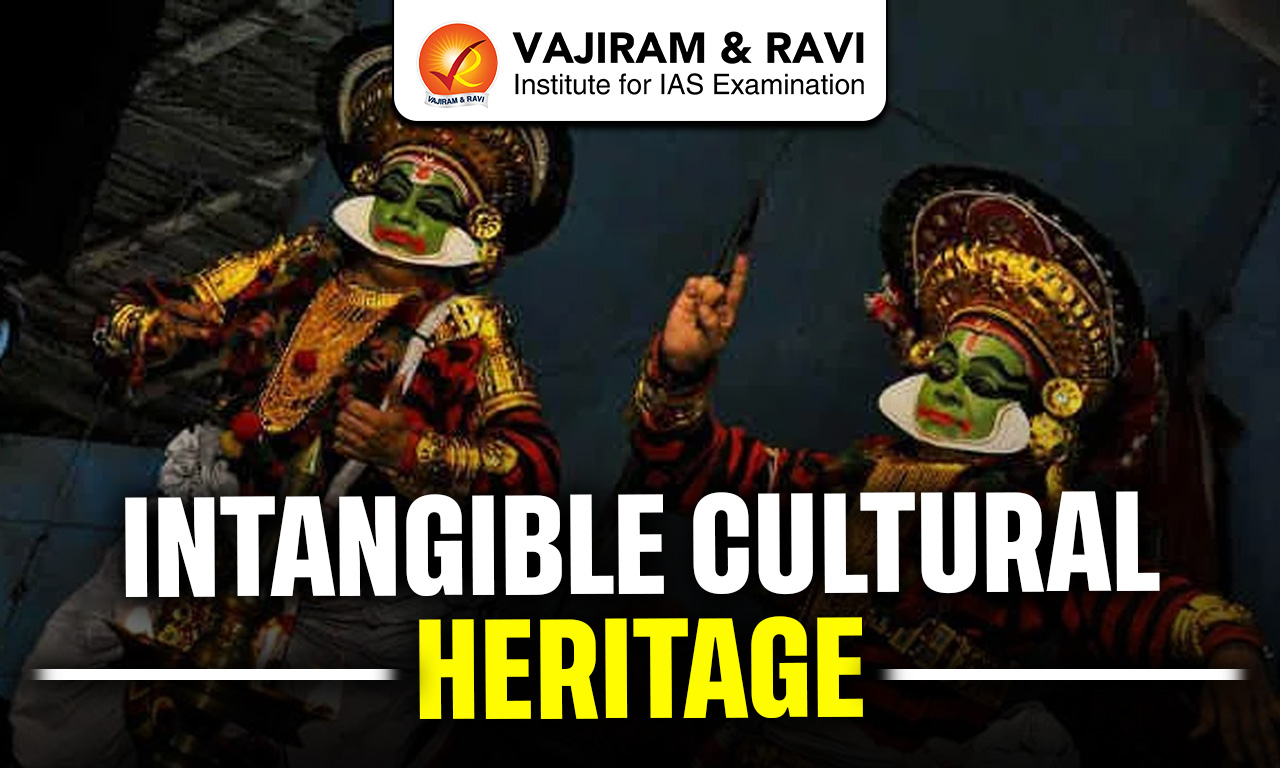
- Koodiyattam (Kerala) is the oldest surviving Sanskrit theatre tradition, highly codified in performance style, and recognised by UNESCO as Intangible Cultural Heritage.
- Sattriya is a Vaishnavite performance tradition from Assam developed by Srimanta Shankaradeva, originally performed in monastic institutions (Satras), blending dance, music, and theatrical expression.

 Last updated on April, 2026
→ UPSC Final Result 2025 is now out.
→ UPSC has released UPSC Toppers List 2025 with the Civil Services final result on its official website.
→ Anuj Agnihotri secured AIR 1 in the UPSC Civil Services Examination 2025.
→ UPSC Marksheet 2025 is now out.
→ UPSC Notification 2026 & UPSC IFoS Notification 2026 is now out on the official website at upsconline.nic.in.
→ UPSC Calendar 2026 has been released.
→ Check out the latest UPSC Syllabus 2026 here.
→ UPSC Prelims 2026 will be conducted on 24th May, 2026 & UPSC Mains 2026 will be conducted on 21st August 2026.
→ The UPSC Selection Process is of 3 stages-Prelims, Mains and Interview.
→ Prepare effectively with Vajiram & Ravi’s UPSC Prelims Test Series 2026 featuring full-length mock tests, detailed solutions, and performance analysis.
→ Enroll in Vajiram & Ravi’s UPSC Mains Test Series 2026 for structured answer writing practice, expert evaluation, and exam-oriented feedback.
→ Join Vajiram & Ravi’s Best UPSC Mentorship Program for personalized guidance, strategy planning, and one-to-one support from experienced mentors.
→ Shakti Dubey secures AIR 1 in UPSC CSE Exam 2024.
→ Also check Best UPSC Coaching in India
Folk Theatre FAQs
Q1. Mudiyettu ritual theatre belongs to which state?+
Q2. Dashavatar folk theatre belongs to which region?+
Q3. Therukoothu folk theatre belongs to which state?+
Q4. Which state is associated with Maach folk theatre?+
Q5. Which states are associated with Nautanki folk theatre?+
Tags: art and culture art and culture notes folk theatre indian art and culture