What’s in today’s article?
- Why in the News?
- Food Safety and Standards in India
- Food Safety and Standards Authority of India (FSSAI)
- About Food Safety and Standards (Foods for Infant Nutrition) Regulations, 2020
- Need & Significance of Food Safety Regulations
- News Summary
Why in the News?
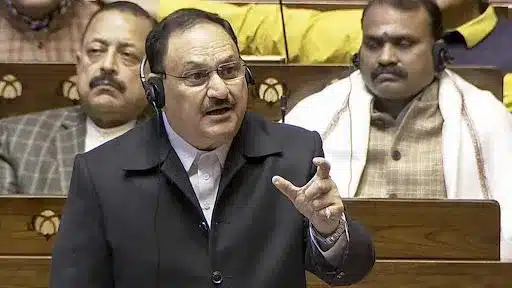
- Added sugar per serving was found to be in compliance with the provisions under Food Safety and Standards (Foods for Infant Nutrition) Regulations, 2020 in baby product of Nestle, Union Health Minister J P Nadda informed the Lok Sabha recently.


Food Safety and Standards in India
- Legal Framework:
- The Food Safety and Standards Act, 2006 (FSS Act) is the overarching legislation regulating food safety and standards in India.
- It consolidated multiple acts like the Prevention of Food Adulteration Act, 1954, and others to create a unified food law.
- Objectives:
- Ensure food safety and consumer protection.
- Regulate the manufacture, storage, distribution, sale, and import of food.
- Establish science-based standards for food articles.
- The Act covers the entire food value chain, from production to consumption, emphasizing hygiene, safety, and quality.
Food Safety and Standards Authority of India (FSSAI)
- The FSSAI was established under the FSS Act, 2006. It functions under the Ministry of Health and Family Welfare.
- Role of FSSAI:
- Formulate food safety standards
- License and regulate food businesses
- Conduct inspections and audits
- Educate stakeholders about food safety
- Monitor food recalls, testing, and labelling
- State-Level Authorities:
- Food Safety Commissioners operate at the state level to implement FSSAI guidelines.
- Food Safety Officers (FSOs) and Designated Officers enforce compliance.
- Checks and Balances:
- Licensing and Registration:
- All food business operators (FBOs) must obtain an FSSAI license or registration, depending on the size and nature of operations.
- Inspections and Monitoring:
- Routine and surprise inspections by FSOs ensure compliance with standards.
- Sampling and testing of food products are conducted to check adulteration or contamination.
- Standards and Regulations:
- Prescribed standards for different categories of food items.
- Mandatory labelling requirements, including nutritional information, expiry dates, and allergen warnings.
- Penalties and Adjudication:
- Offenders face penalties ranging from fines to imprisonment for violations like food adulteration, misleading advertisements, or operating without a license.
- Consumer Redressal:
- Grievance mechanisms for consumers to report unsafe or substandard food.
About Food Safety and Standards (Foods for Infant Nutrition) Regulations, 2020
- Purpose:
- Regulate the manufacture, marketing, and sale of foods intended for infants.
- Ensure nutritional adequacy and safety for children up to 2 years of age.
- Key Provisions:
- Nutritional Standards:
- Set limits for protein, carbohydrates, fats, vitamins, and minerals.
Specific requirements for infant milk substitutes and complementary foods.
- Set limits for protein, carbohydrates, fats, vitamins, and minerals.
- Labelling Norms:
- Prohibit any misleading claims or advertisements about infant foods.
Must display clear instructions for preparation and warnings about improper use.
- Prohibit any misleading claims or advertisements about infant foods.
- Prohibition of Additives:
- Ban on artificial flavours, sweeteners, and certain preservatives in infant foods.
- Breastfeeding Promotion:
- Mandatory message on packaging emphasizing breastfeeding as the best source of nutrition.
- Compliance Requirements:
- Manufacturers must obtain FSSAI approval for infant food products.
- Strict monitoring of quality through batch-wise sampling.
Need & Significance of Food Safety Regulations
- Public Health Protection: Prevents foodborne illnesses and ensures nutritious diets.
- Consumer Confidence: Transparent checks and labelling build trust in the food industry.
- Global Standards Compliance: Aligns Indian food safety practices with international benchmarks, aiding exports.
- Infant Nutrition: Ensures safe and adequate nutrition for infants, reducing malnutrition and health risks.
News Summary
- Union Health Minister J.P. Nadda informed the Lok Sabha that the added sugar in Nestlé baby products complies with the Food Safety and Standards (Foods for Infant Nutrition) Regulations, 2020.
- These standards align with global norms set by the Codex Alimentarius Commission, which incorporates World Health Organization (WHO) recommendations.
- The statement came after a Swiss NGO report raised concerns over added sugar in wheat-based baby products.
- The Food Safety and Standards Authority of India (FSSAI) took suo motu action and conducted inspections at manufacturing facilities earlier this year.
- The inspections confirmed adherence to Indian and global food safety regulations, ensuring compliance in the production of infant food products.
Q1. What are Artificial Sweeteners?
Artificial sweeteners are a type of sugar substitutes which means any sweetener used instead of normal table sugar. These are synthetic substitutes but can also be made from some natural herbs. Some examples are aspartame, saccharin, sucralose etc.
Q2. What do you mean by Shelf Life of food?
Shelf life of foods can be defined as the time needed to reach a change in its overall quality which makes it unfit for consumption.
News: Food Safety and Standards in India

 Last updated on Oct, 2026
→ UPSC 2027 Notification will be released on 13 January 2027 at upsconline.nic.in.
→ Asian Games 2026 are being held in Aichi-Nagoya, Japan, from 19 September to 4 October.
→ Check Nobel Prize 2026 Winners List here.
→ Download PIB PRiSM Monthly Magazine 2026 here.
→ Check UPSC Monthly Current Affairs Magazine The Recitals here.
→ Check out the latest UPSC Syllabus here.
→ Download UPSC Model Answers for Mains 2026
→ UPSC Mains Question Paper 2026 is out now for Essay & GS Paper 1, 2, 3 & 4.
→ UPSC Calendar 2027 has been released.
→ Enroll in Vajiram & Ravi’s UPSC Mains Test Series 2027 for structured answer writing practice, expert evaluation, and exam-oriented feedback.
→ Join Vajiram & Ravi’s UPSC Mentorship Program 2027 for personalized guidance, strategy planning, and one-to-one support from experienced mentors.
→ Go through the UPSC Mains Previous Year Papers to enhance your preparation.
→ UPSC has released UPSC Toppers List 2025 with the Civil Services final result on its official website.
→ Also check Best UPSC Coaching in India