Why in news?
- The findings highlight the role of four genes — GHSR, IGFBP7, NCAPG, and PLAG1 — and suggest that they promote large body sizes.
- The researchers performed molecular evolutionary analysis on nine candidate genes: five genes from the growth hormone, and four genes associated with increased body size in hoofed animals. They assessed these genes in 19 species of whale.
The role of four genes:
- GHSR is a gene involved in releasing growth hormone through the pituitary gland, body weight, energy metabolism, appetite and fat accumulation. It also is associated with controlling cell proliferation and programmed cell death. Tumors essentially are formed by runaway cell growth.
- IGFBP7 is a gene involved in promoting cell growth and division. There is evidence it acts as a cancer suppressor in prostate, breast, lung and colorectal tumors.
- NCAPG, a gene associated with growth in people, horses, donkeys, cattle, pigs and chickens, is linked to increased body size, weight gain, cell proliferation and cell life cycles.
- PLAG1, a gene associated with body growth in cattle, pigs, and sheep, is involved in embryo growth and cell survival.
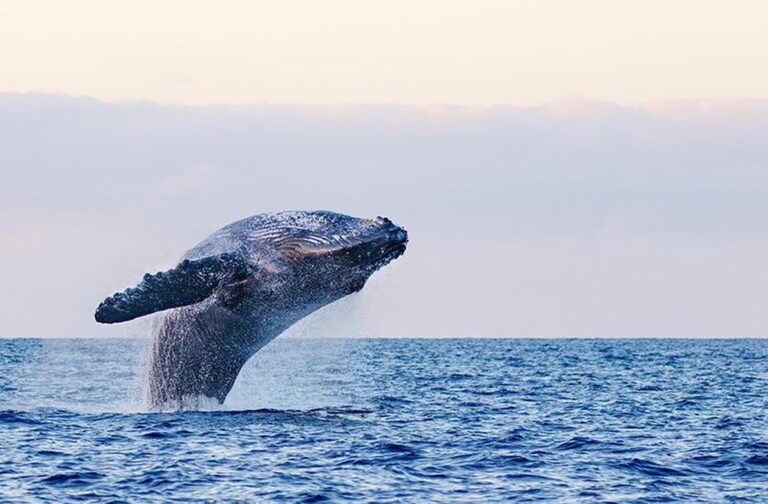
Whales:
- Cetaceans, the marine mammal group encompassing whales, dolphins and porpoises, evolved around 50 million years ago from vaguely wolf-like land-based ancestors that belonged to a mammalian assemblage called artiodactyls that includes today’s cows, pigs, sheep and many others.
- Basilosaurus, a toothed apex predator from about 40 million years ago, was the largest-known early whale. The baleen whale lineage dates to roughly 36 million years ago, starting modest in size.
- Blue whales can reach about 100 feet (30 meters) long, fin whales about 80 feet (24 meters), sperm and bowhead whales about 60 feet (18 meters), humpback and right whales about 50 feet (15 meters) and gray whales about 45 feet (13.5 meters).
Q1) What is a gene?
A gene is the basic physical and functional unit of heredity. Genes are made up of DNA. Some genes act as instructions to make molecules called proteins. However, many genes do not code for proteins. In humans, genes vary in size from a few hundred DNA bases to more than 2 million bases.






 Last updated on March, 2026
→ UPSC Final Result 2025 is now out.
→ UPSC has released UPSC Toppers List 2025 with the Civil Services final result on its official website.
→ Anuj Agnihotri secured AIR 1 in the UPSC Civil Services Examination 2025.
→ UPSC Marksheet 2025 is now out.
→ UPSC Notification 2026 & UPSC IFoS Notification 2026 is now out on the official website at upsconline.nic.in.
→ UPSC Calendar 2026 has been released.
→ Check out the latest UPSC Syllabus 2026 here.
→ UPSC Prelims 2026 will be conducted on 24th May, 2026 & UPSC Mains 2026 will be conducted on 21st August 2026.
→ The UPSC Selection Process is of 3 stages-Prelims, Mains and Interview.
→ Prepare effectively with Vajiram & Ravi’s UPSC Prelims Test Series 2026 featuring full-length mock tests, detailed solutions, and performance analysis.
→ Enroll in Vajiram & Ravi’s UPSC Mains Test Series 2026 for structured answer writing practice, expert evaluation, and exam-oriented feedback.
→ Join Vajiram & Ravi’s Best UPSC Mentorship Program for personalized guidance, strategy planning, and one-to-one support from experienced mentors.
→ Shakti Dubey secures AIR 1 in UPSC CSE Exam 2024.
→ Also check Best UPSC Coaching in India