About Glycaemic Index
- It ranks carbohydrate-containing foods based on the blood glucose response, post-prandial or after a meal. The higher the blood sugar reading, the higher will be the GI.
- It shows how quickly each food affects your blood sugar (glucose) level when that food is eaten on its own.
- Foods are ranked on a scale of 0 to 100, with pure glucose (sugar) given a value of 100.
- The lower a food’s glycemic index, the slower blood sugar rises after eating that food. In general, the more processed a food is, the higher its GI, and the more fiber or fat in a food, the lower it’s GI.
What is Glycaemic load?
- It is both the quality and quantity of carbohydrate in a specific food, and is the product of the GI and the amount of carbohydrate available in a serving.
Key facts about Diabetes
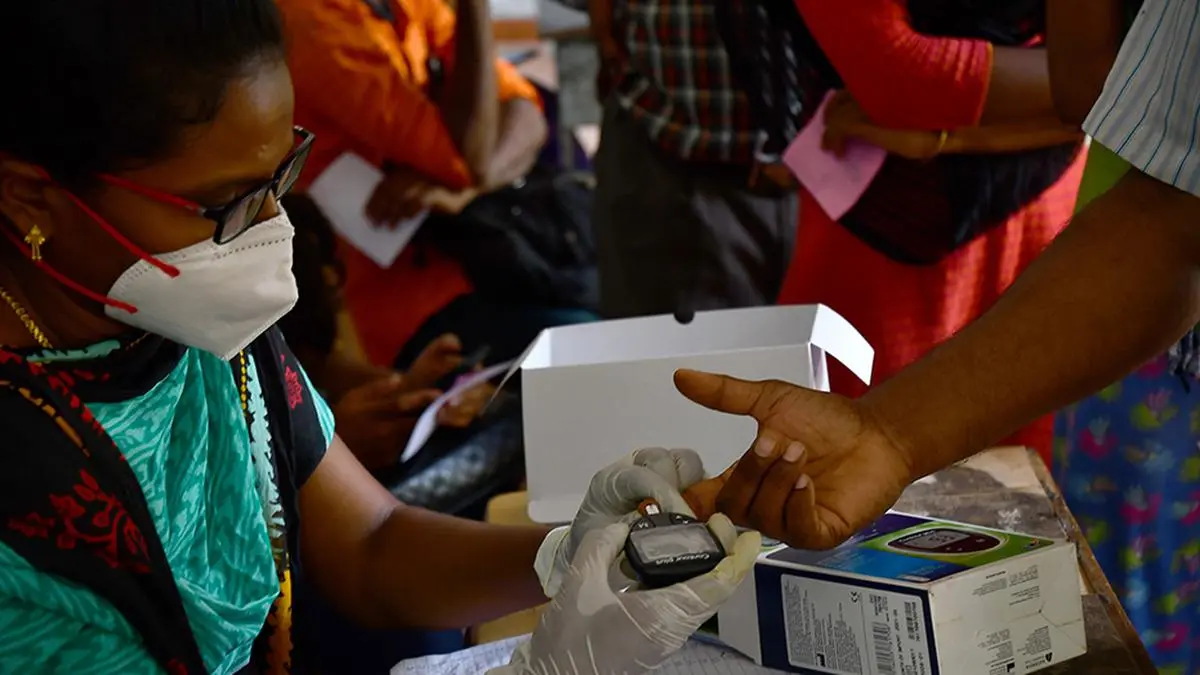
- It is a chronic disease that occurs when the pancreas can no longer make insulin, or the body cannot make good use of the insulin it produces.
- Insulin is a hormone that regulates blood glucose.
- Not being able to produce or use insulin effectively leads to raised glucose levels in the blood, known as hyperglycaemia.
- Over the long-term high glucose levels are associated with damage to the body and failure of various organs and tissues.
- Type of Diabetes
- Type 1 diabetes: It is a condition in which your immune system destroys insulin-making cells in your pancreas. These are called beta cells.
- When you have type 1 diabetes, your body produces very little or no insulin.
- It requires daily administration of insulin to maintain blood glucose levels under control. It is usually diagnosed in children and young people, so it used to be called juvenile diabetes.
- Type 2 diabetes: It results from the body’s ineffective use of insulin that it produces. This type of diabetes is largely the result of excess body weight and physical inactivity.
Q1: What is a carbohydrate?
It is a naturally occurring compound, or a derivative of such a compound, with the general chemical formula Cx(H2O)y, made up of molecules of carbon (C), hydrogen (H), and oxygen (O). Carbohydrates are the most widespread organic substances and play a vital role in all life.
Source: Lancet paper provides proof for undeniable link between high glycaemic index and diabetes


 Last updated on Oct, 2026
→ UPSC 2027 Notification will be released on 13 January 2027 at upsconline.nic.in.
→ Check Nobel Prize 2026 Winners List here.
→ Download PIB PRiSM Monthly Magazine 2026 here.
→ Check UPSC Monthly Current Affairs Magazine The Recitals here.
→ Check out the latest UPSC Syllabus here.
→ Download UPSC Model Answers for Mains 2026
→ UPSC Mains Question Paper 2026 is out now for Essay & GS Paper 1, 2, 3 & 4.
→ UPSC Calendar 2027 has been released.
→ Enroll in Vajiram & Ravi’s UPSC Mains Test Series 2027 for structured answer writing practice, expert evaluation, and exam-oriented feedback.
→ Join Vajiram & Ravi’s UPSC Mentorship Program 2027 for personalized guidance, strategy planning, and one-to-one support from experienced mentors.
→ Go through the UPSC Mains Previous Year Papers to enhance your preparation.
→ UPSC has released UPSC Toppers List 2025 with the Civil Services final result on its official website.
→ Also check Best UPSC Coaching in India