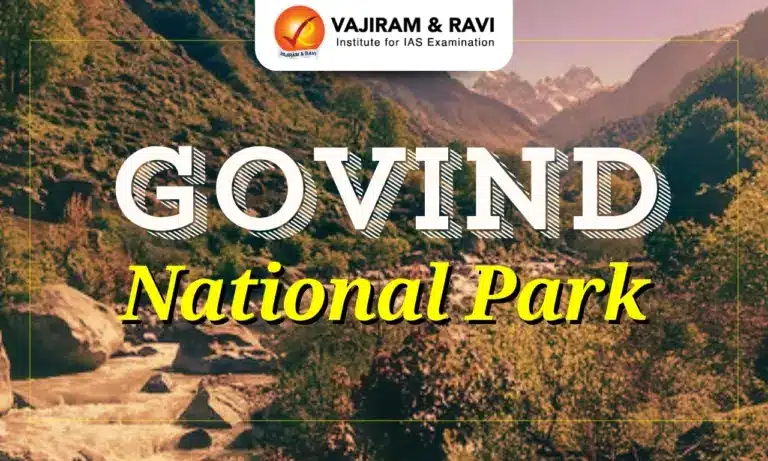
Govind National Park is a beautiful protected area located in Uttarakhand, surrounded by the Himalayan mountains. It is part of the Govind Pashu Vihar National Park and Sanctuary and is known for its rich biodiversity and peaceful environment. The park features forests, alpine meadows, rivers, and snow-covered peaks, creating a perfect natural habitat. It is home to rare wildlife like the Snow Leopard and Himalayan Monal, making it important for wildlife conservation and eco-tourism.
Govind National Park
- Govind National Park (GNP) is located in Uttarakhand, mainly in the Uttarkashi district, and forms an important part of the Govind Pashu Vihar National Park and Sanctuary. It is one of the major protected areas in the Western Himalayan region, known for its remote and untouched natural beauty.
- The total protected area covers around 958 sq. km, including both the national park and wildlife sanctuary, making it a large and ecologically significant landscape with diverse habitats.
- Historically, the region was first declared a wildlife sanctuary in 1955, and later upgraded to a national park in 1991 to strengthen conservation efforts and protect its fragile ecosystem.
- The park includes important valleys such as Rupin and Supin, which together form the catchment of the Tons River, the largest tributary of the Yamuna River, highlighting its hydrological importance.
- It is widely known for its rich biodiversity, trekking routes, alpine landscapes, and cultural significance, attracting nature lovers, researchers, and adventure enthusiasts.
Also Read : National Parks in Uttarakhand
Govind National Park Location and Physical Features
- The park lies in the high-altitude Western Himalayas, featuring rugged terrain with snow-covered peaks, deep valleys, glaciers, and river systems, which create a dramatic and diverse landscape.
- The altitude ranges from about 1200 meters to above 3500 meters, leading to sharp variations in temperature, vegetation, and wildlife across different elevations.
- The region experiences heavy monsoon rainfall in lower areas, while higher altitudes receive snowfall during winter, making the climate extreme and varied.
- The presence of rivers like the Tons and its tributaries makes the park an important water catchment zone, supporting both wildlife and nearby human settlements.


Govind National Park Climate and Vegetation
- Govind National Park shows clear variation in climate with sub-tropical, temperate, and alpine zones, each supporting different types of vegetation and wildlife.
- In the lower altitudes, forests are dominated by species like Chir Pine, Alder, and Toon, which are adapted to warmer conditions.
- The middle elevations have dense forests of Oak, Deodar, Walnut, and Rhododendron, creating rich habitats for many animals and birds.
- At higher elevations, vegetation includes fir, spruce, yew, and alpine grasses, along with several important medicinal plants.
- The alpine region is rich in shrubs, grasses, and flowering plants, especially during summer months when snow melts.
- Seasonal changes, especially during spring and early summer, bring flowering plants and greenery, enhancing the ecological richness of the region.
- The diversity of plant life supports a wide range of wildlife and helps in maintaining the overall ecosystem stability.
Govind National Park Wildlife Diversity
- The park is an important habitat for high-altitude wildlife, especially the Snow Leopard, making it a significant area for conservation in India.
- Other mammals include Himalayan Black Bear, Brown Bear, Musk Deer, Bharal (Blue Sheep), Himalayan Tahr, and Leopard, which are adapted to mountainous conditions.
- These animals play an important role in maintaining the food chain and ecological balance within the ecosystem.
- The park provides a relatively undisturbed environment, which helps in the survival of rare and endangered species.
- Wildlife movement is influenced by seasonal changes, with animals shifting between altitudes depending on weather and food availability.
- Bird and Butterfly Diversity
-
- Govind National Park supports around 100-150 species of birds.
- Key bird species include Western Tragopan, Himalayan Monal, Koklass Pheasant, and Golden Eagle, along with many smaller forest birds.
- Birds such as vultures, owls, finches, and warblers are also commonly found in different habitats within the park.
- The park is home to about 70 species of butterflies, which contribute to pollination and ecological balance.
Challenges and Threats Faced by Govind National Park
- Overgrazing by Livestock: Continuous grazing by domestic animals, especially in fragile alpine meadows, leads to loss of vegetation cover, soil compaction, and long-term habitat degradation, making it difficult for native plant species to regenerate.
- Deforestation and Resource Extraction: Activities such as fuelwood collection, illegal logging, and overuse of forest resources reduce forest density, disturb wildlife habitats, and weaken the overall ecological balance of the region.
- Forest Fires: Both natural and human-induced forest fires destroy large areas of vegetation, reduce biodiversity, and force wildlife to migrate, thereby disturbing the natural ecosystem.
- Climate Change Impacts: Changes in temperature and rainfall patterns are affecting snowfall cycles, water availability, and seasonal vegetation growth, which in turn influence the survival and movement of wildlife species.
- Unregulated Tourism and Trekking: Increasing tourist activities without proper management lead to waste generation, noise pollution, and disturbance to wildlife, especially in sensitive high-altitude zones.
- Habitat Fragmentation: Development of roads, trekking paths, and small infrastructure projects divides continuous forest areas into smaller patches, restricting wildlife movement and reducing genetic diversity among animal populations.
- Human-Wildlife Conflict: Expansion of human settlements and activities near forest boundaries leads to increased encounters between humans and animals, resulting in crop damage, livestock loss, and threats to both human and wildlife safety.
- Poaching and Illegal Hunting: Despite protection, illegal hunting of animals such as Musk Deer and other species for commercial purposes continues to pose a serious threat to wildlife populations.
- Invasive Plant Species: The spread of non-native plant species replaces native vegetation, reducing food availability for herbivores and altering the natural structure of the ecosystem.
- Unregulated Collection of Medicinal Plants: Overharvesting of valuable herbs and medicinal plants reduces their natural population and affects the ecological sustainability of the region.
- Soil Erosion and Land Degradation: Continuous grazing, deforestation, and trekking activities loosen soil on slopes, leading to erosion, landslides, and loss of fertile land.
Significance of Govind National Park
- Biodiversity Conservation: Govind Pashu Vihar National Park and Sanctuary plays a crucial role in protecting a wide variety of flora and fauna, including rare and endangered species like the Snow Leopard and Himalayan Monal, thereby maintaining ecological balance.
- Habitat Protection: The park preserves diverse ecosystems such as alpine meadows, temperate forests, and glacial regions, providing a safe and undisturbed habitat for numerous wildlife species.
- Ecological Balance: By maintaining natural food chains and ecosystems, the park helps regulate environmental processes like soil conservation, water cycles, and climate stability in the Himalayan region.
- Watershed Importance: The park acts as an important catchment area for rivers and streams, ensuring continuous water supply and supporting agriculture and livelihoods in surrounding regions.
- Scientific Research and Education: It serves as a natural laboratory for researchers and students to study Himalayan ecology, wildlife behavior, and climate change impacts, contributing to environmental knowledge.
- Promotion of Eco-Tourism: The park attracts trekkers and nature lovers to places like Har Ki Dun Valley, generating awareness about conservation while also supporting the local economy through sustainable tourism.
- Cultural and Livelihood Support: It supports traditional lifestyles of local communities by providing resources (in a regulated manner) and preserving the cultural connection between people and nature.
- Climate Regulation: Dense forests and high-altitude ecosystems help in carbon storage and play a role in mitigating the impacts of climate change at both regional and global levels.

 Last updated on Oct, 2026
→ UPSC 2027 Notification will be released on 13 January 2027 at upsconline.nic.in.
→ Check Nobel Prize 2026 Winners List here.
→ Download PIB PRiSM Monthly Magazine 2026 here.
→ Check UPSC Monthly Current Affairs Magazine The Recitals here.
→ Check out the latest UPSC Syllabus here.
→ Download UPSC Model Answers for Mains 2026
→ UPSC Mains Question Paper 2026 is out now for Essay & GS Paper 1, 2, 3 & 4.
→ UPSC Calendar 2027 has been released.
→ Enroll in Vajiram & Ravi’s UPSC Mains Test Series 2027 for structured answer writing practice, expert evaluation, and exam-oriented feedback.
→ Join Vajiram & Ravi’s UPSC Mentorship Program 2027 for personalized guidance, strategy planning, and one-to-one support from experienced mentors.
→ Go through the UPSC Mains Previous Year Papers to enhance your preparation.
→ UPSC has released UPSC Toppers List 2025 with the Civil Services final result on its official website.
→ Also check Best UPSC Coaching in India
Govind National Park FAQs
Q1. Where is Govind National Park located?+
Q2. What are the main physical features of Govind National Park?+
Q3. Which animals are found in Govind National Park?+
Q4. What type of vegetation is found in the park?+
Q5. What are the major threats to Govind National Park?+
Tags: environment environment notes govind national park