About Great Rift Valley:
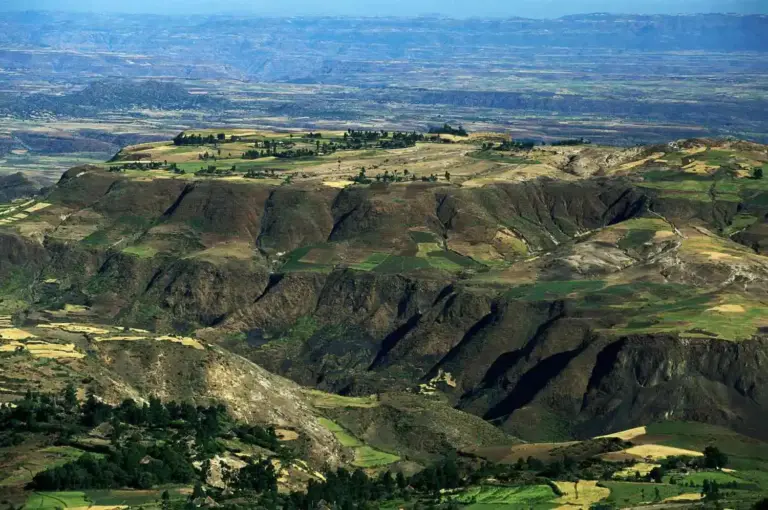
- It is one of the most extensive rifts on Earth’s surface that runs along part of East Africa.
- It runs for 4,000 miles (6,400 kilometers), from Jordan in southwestern Asia to the coast of the Indian Ocean in central Mozambique.
- It runs across many countries: Eritrea, Djibouti, Ethiopia, Kenya, Tanzania, Uganda, Rwanda, Burundi, the Democratic Republic of the Congo (DRC), Malawi, Zambia, and Mozambique.
- It is part of a larger feature called the East African Rift System (EARS).
- Formation:
- The valley is situated in a region where three tectonic plates meet.
- It was formed about 40 million years ago when tectonic plates split and gave rise to the East African Rift.
- The valley is 30 to 40 miles (48 to 64 kilometers) wide on average but reaches nearly 300 miles (480 kilometers) at its widest section in the Danakil Desert in northeastern Africa.
- The steep walls of the valley rise about 3,000 feet (900 meters) above the valley floor. In some places there are cliffs that reach 9,000 feet (2,700 meters) high.
- The area is geologically active and features volcanoes, hot springs, geysers, and frequent earthquakes.
- A series of some thirty lakes lies along its length; the three largest in Africa are known as the Great Lakes and include Lake Tanganyika, the second deepest lake in the world, and Lake Victoria, the second-largest freshwater lake by surface area in the world.
- Many of Africa’s highest mountains—including Mount Kilimanjaro, Mount Kenya, and Mount Margherita—are in ranges fronting the Rift Valley.
What is a Rift Valley?
- A rift valley is a lowland region that forms where Earth’s tectonic plates move apart, or rift.
- Rift valleys are found on land and at the bottom of the ocean, where they are created by the process of seafloor spreading.
Rift valleys differ from river valleys and glacial valleys in that they are created by tectonic activity and not the process of erosion.
Q1: What are Tectonic Plates?
Tectonic plates are pieces of Earth’s crust and uppermost mantle, together referred to as the lithosphere. The plates consist of two principal types of material: oceanic crust (sima) and continental crust (sial).These plates lie on top of a partially molten layer of rock called the asthenosphere. Due to the convection of the asthenosphere and lithosphere, the plates move relative to each other.
Source: 42 Dead As Dam Near Kenya’s Rift Valley Bursts






 Last updated on March, 2026
→ UPSC Final Result 2025 is now out.
→ UPSC has released UPSC Toppers List 2025 with the Civil Services final result on its official website.
→ Anuj Agnihotri secured AIR 1 in the UPSC Civil Services Examination 2025.
→ UPSC Marksheet 2025 is now out.
→ UPSC Notification 2026 & UPSC IFoS Notification 2026 is now out on the official website at upsconline.nic.in.
→ UPSC Calendar 2026 has been released.
→ Check out the latest UPSC Syllabus 2026 here.
→ UPSC Prelims 2026 will be conducted on 24th May, 2026 & UPSC Mains 2026 will be conducted on 21st August 2026.
→ The UPSC Selection Process is of 3 stages-Prelims, Mains and Interview.
→ Prepare effectively with Vajiram & Ravi’s UPSC Prelims Test Series 2026 featuring full-length mock tests, detailed solutions, and performance analysis.
→ Enroll in Vajiram & Ravi’s UPSC Mains Test Series 2026 for structured answer writing practice, expert evaluation, and exam-oriented feedback.
→ Join Vajiram & Ravi’s Best UPSC Mentorship Program for personalized guidance, strategy planning, and one-to-one support from experienced mentors.
→ Shakti Dubey secures AIR 1 in UPSC CSE Exam 2024.
→ Also check Best UPSC Coaching in India