Air Pollution Latest News
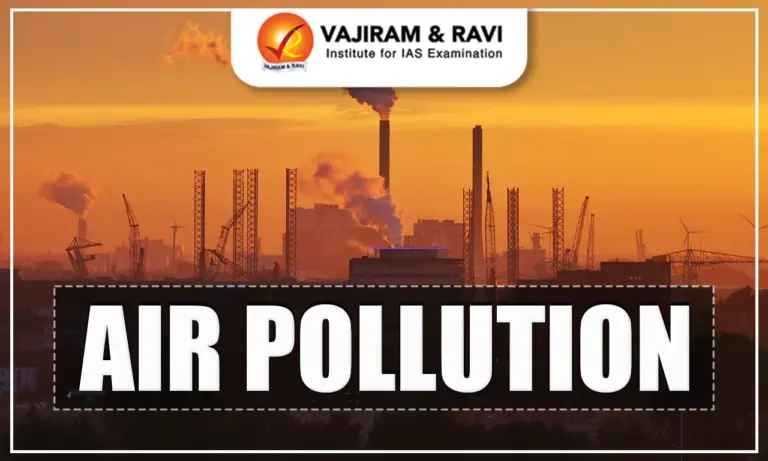
- Each winter, North India faces severe smog, worsened by low temperatures, stagnant winds, stubble burning, and firecrackers.
- Pollution remains high year-round due to industry and vehicle emissions, even in coastal cities like Mumbai.
- China, which once grappled with similar pollution crises, is often cited as a model. Its recent success in dramatically improving air quality has drawn attention, with Chinese officials expressing willingness to share their strategies.
- This raises key questions: What challenges did China face, how effectively did it tackle them, and which of its solutions could realistically work in India?
China’s ‘Airpocalypse’: How Rapid Growth Triggered a Pollution Crisis
- India’s current pollution levels mirror China’s late-2000s phase, when rapid industrialisation and urbanisation sharply increased particulate pollution and its health impacts.
- After China opened its economy in 1978, carbon emissions soared, leading to smog-filled skies, contaminated rivers, and rising public discontent.
- The situation gained global attention during the 2008 Beijing Olympics, pushing the government to act.
- China’s main pollutant was PM2.5, emitted from heavy industries, coal-based heating, power plants, vehicles, and crop burning. These particles penetrate deep into the lungs and bloodstream, causing severe health risks.
- Recognising the urgency, China launched aggressive measures from 2013 onward, resulting in air quality improvements across nearly 80% of the country.





China’s Policy Push: Strong Top-Down Governance
- By the late 2000s, air pollution became a major government priority. China’s 11th Five-Year Plan integrated environmental goals into the cadre evaluation system, where bureaucrats’ promotions depended on meeting pollution-control targets.
- This created strong top-down pressure for compliance across provinces and cities.
Industrial Shutdowns and Cleaner Technologies
- China invested heavily in pollution-control technologies and shut down thousands of outdated, highly polluting industrial units—including smelters, chemical factories, power plants, and paper mills.
- Simultaneously, the government pushed aggressively for Electric Vehicles (EVs), recognising their lower lifecycle emissions compared to traditional combustion engines.
Mass Electrification of Transport
- Cities like Shenzhen led the world by fully electrifying their massive bus fleets.
- By 2017, all 16,000+ buses in the city were electric, a move replicated by other cities such as Shanghai.
- These transitions greatly cut urban tailpipe emissions.
Key Measures That Improved Air Quality (2013–2017)
- Studies from Tsinghua University show that China’s biggest gains came from:
- Restrictions on coal boilers,
- Cleaner residential heating,
- Shutting local polluting industries, and
- Vehicle emission controls.
Caveats and Ongoing Challenges
- China’s model has pitfalls. Strict targets sometimes lead to fudged data or illegal reopening of factories.
- Recent commitments to increase coal capacity have raised concerns about reversing progress.
- Additionally, China’s air-quality standards remain less stringent than Western norms, leaving room for improvement.
India and China: Similar Laws, Different Outcomes
- Both countries introduced environmental laws in the 1980s and air-quality programmes in the 2010s, yet China’s results have been far more effective.
- China followed continuous, long-term action, while India relies on reactive mechanisms like GRAP, triggered only after pollution crosses dangerous thresholds and limited mainly to the NCR.
Key Determinants of Success: Political Will and Accountability
- A 2023 comparative study highlighted two crucial factors:
- Strong political will and financial capacity to prioritise clean air.
- Clear accountability systems linking national standards to facility-level pollution control.
- China had both; India struggles with fragmented governance and inconsistent enforcement.
Structural Differences: Energy Access and Household Emissions
- India faces unique challenges such as biomass burning in rural households, unlike China.
- While LPG subsidies have helped, affordable clean fuel access remains limited.
- China also tackled pollution after achieving near-universal electricity access, allowing it to close polluting plants without jeopardising basic needs.
Governance Constraints in India
- China’s unitary political structure enables swift, top-down implementation.
- India’s overlapping jurisdictions dilute responsibility and slow enforcement, though judicial interventions through PILs have helped fill gaps.
What India Can Learn
- Experts note India can adapt key Chinese strategies:
- Stricter industrial and vehicular emission norms
- Wider adoption of clean fuels
- Stronger public transport systems
- Robust environmental monitoring and scientific research
- While India cannot copy China’s model exactly, China’s experience demonstrates that comprehensive, science-based, and accountable action can significantly improve air quality.

 Last updated on March, 2026
→ UPSC Final Result 2025 is now out.
→ UPSC has released UPSC Toppers List 2025 with the Civil Services final result on its official website.
→ Anuj Agnihotri secured AIR 1 in the UPSC Civil Services Examination 2025.
→ UPSC Marksheet 2025 is now out.
→ UPSC Notification 2026 & UPSC IFoS Notification 2026 is now out on the official website at upsconline.nic.in.
→ UPSC Calendar 2026 has been released.
→ Check out the latest UPSC Syllabus 2026 here.
→ UPSC Prelims 2026 will be conducted on 24th May, 2026 & UPSC Mains 2026 will be conducted on 21st August 2026.
→ The UPSC Selection Process is of 3 stages-Prelims, Mains and Interview.
→ Prepare effectively with Vajiram & Ravi’s UPSC Prelims Test Series 2026 featuring full-length mock tests, detailed solutions, and performance analysis.
→ Enroll in Vajiram & Ravi’s UPSC Mains Test Series 2026 for structured answer writing practice, expert evaluation, and exam-oriented feedback.
→ Join Vajiram & Ravi’s Best UPSC Mentorship Program for personalized guidance, strategy planning, and one-to-one support from experienced mentors.
→ Shakti Dubey secures AIR 1 in UPSC CSE Exam 2024.
→ Also check Best UPSC Coaching in India
Air Pollution FAQs
Q1. Why is China seen as a model for air pollution control?+
Q2. What triggered China’s air pollution crisis in the 2000s?+
Q3. What were China’s most effective pollution-control measures?+
Q4. Why has India struggled compared to China?+
Q5. What can India realistically adopt from China’s strategy?+
Tags: air pollution mains articles upsc current affairs upsc mains current affairs