About Indian Army’s Skin Bank:
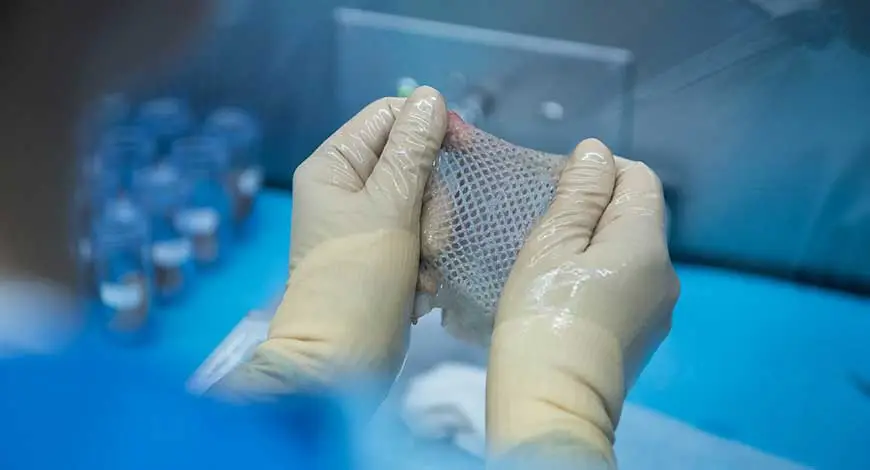
- It was launched to help treat severe skin burn injuries and other skin-related conditions for service personnel and their families.
- The first-of-its-kind facility established in the Armed Forces Medical Services is staffed with trained medical professionals, including plastic surgeons, tissue engineers, and specialised technicians.
- It will serve as a centralised hub for the collection, processing, storage, and distribution of skin grafts, providing a “critical resource” for military medical centres across the country.
- What is a Skin Bank?
- A skin bank is a facility where skin is taken from an eligible donor, and processed, and stored under appropriate temperature for up to five years.
- Skin from a deceased person can be donated within six hours after death.
- Anyone can donate skin, irrespective of sex and blood group. The donor’s minimum age should be 18 years.
- The skin of persons suffering from AIDS, Hepatitis B & C, Sexually Transmitted Diseases, Skin Cancer, Active skin Disease and Septicemia are considered unfit for donation.
- This donated skin is then collected and processed over five to six weeks and frozen until it’s needed.
- The skin is generally preserved in 85% glycerol solution. It is stored between 4-5 degrees Celsius for up to 5 years.
- When a burn victim requires skin for their injuries, a surgical procedure called skin grafting is conducted.
- What is Skin Grafting?
- It is a simple process when a piece of healthy skin is transplanted to a different area of the body where the skin is damaged or missing.
- There are two main types of skin grafts: autograft (skin is taken from another part of the patient’s own body) and allograft (skin is taken from a donor, often sourced from a skin bank).
- Any skin can be used on anybody, and within two to three weeks post-grafting, the doctors can determine whether the patient is accepting it or not.
Q1: What is glycerol?
Glycerol is a naturally occurring alcohol. It is an odorless liquid that is used as a solvent, sweetening agent, and also as medicine. When glycerol is in the intestines, it attracts water into the gut, softening stools and relieving constipation. When glycerol is in the blood, it attracts water so that the water stays in the body longer. This might help an athlete exercise for longer. People use glycerol for constipation, improving athletic performance, and for certain skin conditions.
Source: Indian Army launches skin bank for burn victims: All you need to know


 Last updated on Oct, 2026
→ UPSC 2027 Notification will be released on 13 January 2027 at upsconline.nic.in.
→ Check Nobel Prize 2026 Winners List here.
→ Download PIB PRiSM Monthly Magazine 2026 here.
→ Check UPSC Monthly Current Affairs Magazine The Recitals here.
→ Check out the latest UPSC Syllabus here.
→ Download UPSC Model Answers for Mains 2026
→ UPSC Mains Question Paper 2026 is out now for Essay & GS Paper 1, 2, 3 & 4.
→ UPSC Calendar 2027 has been released.
→ Enroll in Vajiram & Ravi’s UPSC Mains Test Series 2027 for structured answer writing practice, expert evaluation, and exam-oriented feedback.
→ Join Vajiram & Ravi’s UPSC Mentorship Program 2027 for personalized guidance, strategy planning, and one-to-one support from experienced mentors.
→ Go through the UPSC Mains Previous Year Papers to enhance your preparation.
→ UPSC has released UPSC Toppers List 2025 with the Civil Services final result on its official website.
→ Also check Best UPSC Coaching in India