Informal Sector Latest News
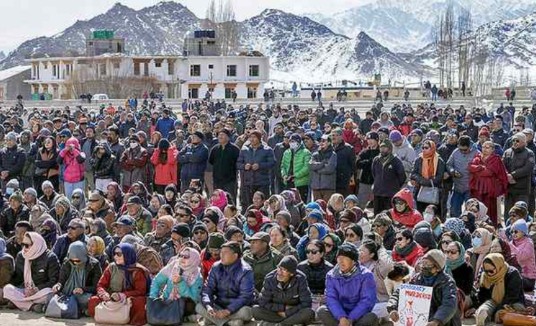
- Recent worker protests in Noida have highlighted growing vulnerabilities in India’s urban informal workforce.
Informal Sector in India: Definition and Scope
- The informal sector refers to economic activities that operate outside formal regulatory and institutional frameworks.
- It includes self-employed workers, daily wage labourers, small vendors, and unregistered enterprises.
- These workers lack job security, written contracts, and social protection, making them highly vulnerable to economic shocks.


Size and Economic Significance
- The informal sector employs nearly 90% of India’s workforce, making it the dominant source of livelihood.
- Even in urban areas, formal salaried jobs remain limited, and a large share of workers depend on informal employment.
- Despite its scale, the sector remains under-recognised due to a lack of formal data and institutional coverage.
Key Issues in the Informal Sector
- Employment is largely unstable and low-paying, with no long-term security.
- There is limited access to social security, including health insurance and pensions.
- Workers also suffer from low bargaining power, particularly in urban labour markets.
- Additionally, financial exclusion forces many workers to rely on informal credit systems, leading to debt cycles.
Government Initiatives
- The government has introduced several measures to support informal workers.
- The Code on Social Security, 2020, aims to extend benefits to unorganised workers.
- The e-Shram portal seeks to create a national database for better policy targeting.
- Schemes like PM SVANidhi provide credit support to street vendors.
- However, coverage gaps and implementation challenges persist.
News Summary: Challenges of India’s Urban Informal Workforce
- Recent protests by workers in Noida reflect the increasing precariousness of urban labour.
- Shift in Urban Economic Structure
- Urban centres have undergone a transformation from industrial production hubs to spaces of survival-oriented activities.
- The decline of formal industries, such as textile mills in cities like Mumbai and Ahmedabad, has reduced organised employment. This has led to fragmented labour markets dominated by informal work.
- Urbanisation of Survival Economy
- Cities are increasingly focused on social reproduction activities such as housing, food, and basic services rather than industrial output.
- This shift has made urban life more about survival, especially for informal workers managing daily necessities.
- Poor Living Conditions and Housing Stress
- A significant portion of the urban poor live in slums and informal settlements. Around 40% reside in such areas, often lacking sanitation and legal protection.
- Workers spend a large share of their income on rent, sometimes up to half their earnings. Many settlements are located in hazard-prone areas, increasing vulnerability.
- Impact of Policy and Economic Reforms
- Economic reforms influenced by liberalisation have shifted the state’s role from a service provider to a facilitator of markets.
- This has led to the privatisation of essential services like water and electricity, increasing costs for informal workers.
- Urban policies have also promoted gentrification and eviction, reducing access to affordable housing.
- Financial Vulnerability and Debt
- Due to a lack of collateral, informal workers often depend on local moneylenders instead of formal banking systems.
- This results in chronic indebtedness and financial instability.
- Need for Inclusive Urban Governance
- There is a growing need to integrate informal workers into governance structures.
- Initiatives such as workers’ councils can help improve participation and representation in urban decision-making.
Source: TH

 Last updated on Oct, 2026
→ UPSC 2027 Notification will be released on 13 January 2027 at upsconline.nic.in.
→ Check Nobel Prize 2026 Winners List here.
→ Download PIB PRiSM Monthly Magazine 2026 here.
→ Check UPSC Monthly Current Affairs Magazine The Recitals here.
→ Check out the latest UPSC Syllabus here.
→ Download UPSC Model Answers for Mains 2026
→ UPSC Mains Question Paper 2026 is out now for Essay & GS Paper 1, 2, 3 & 4.
→ UPSC Calendar 2027 has been released.
→ Enroll in Vajiram & Ravi’s UPSC Mains Test Series 2027 for structured answer writing practice, expert evaluation, and exam-oriented feedback.
→ Join Vajiram & Ravi’s UPSC Mentorship Program 2027 for personalized guidance, strategy planning, and one-to-one support from experienced mentors.
→ Go through the UPSC Mains Previous Year Papers to enhance your preparation.
→ UPSC has released UPSC Toppers List 2025 with the Civil Services final result on its official website.
→ Also check Best UPSC Coaching in India
Informal Sector FAQs
Q1. What is the informal sector in India?+
Q2. What share of India’s workforce is informal?+
Q3. What triggered the recent concern about urban informal workers?+
Q4. What are the major urban challenges faced by informal workers?+
Q5. What reforms are needed for the informal sector?+
Tags: Informal Sector mains articles upsc current affairs upsc mains current affairs