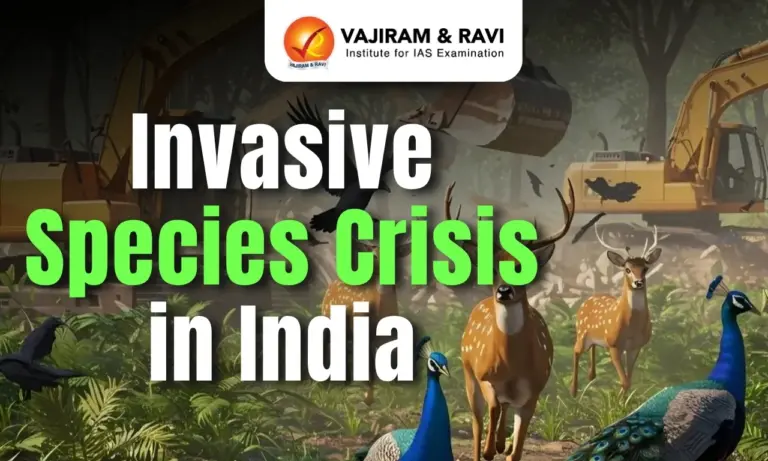
Invasive Species Crisis in India refers to the rapid spread of non-native plants, animals, and microorganisms that threaten the country’s biodiversity and ecosystems. Species such as Lantana camara, Congress Grass (Parthenium), and Water Hyacinth are causing significant damage to forests, wetlands, agricultural lands, and water bodies. Their spread leads to habitat degradation, loss of native species, and economic losses for farmers and local communities.
Major Invasive Species in India
India is home to several invasive species that have spread beyond their native regions and now pose serious threats to biodiversity, agriculture, water resources, forests, and local ecosystems.
1. Lantana Camara
- Native to Central and South America, and introduced in India as an ornamental plant.
- Has spread extensively across forests, grasslands, and protected areas.
- Forms dense thickets that prevent the growth of native plants.
- Reduces grazing land available for livestock and wild herbivores.
- Increases the risk of forest fires due to its highly combustible nature.
- Negatively affects wildlife habitats and forest regeneration.
2. Water Hyacinth (Eichhornia crassipes)
- One of the world’s most invasive aquatic plants.
- Covers lakes, ponds, rivers, and wetlands with dense floating mats.
- Blocks sunlight from reaching underwater plants.
- Reduces dissolved oxygen levels in water bodies.
- Harms fish populations and aquatic biodiversity.
- Obstructs fishing, irrigation, and navigation activities.
3. Parthenium Hysterophorus (Congress Grass)
- Accidentally introduced into India through imported food grains.
- Spreads rapidly in agricultural fields, roadsides, and wastelands.
- Causes severe allergies, skin irritation, and respiratory problems in humans.
- Reduces crop productivity by competing with agricultural crops.
- Toxic to livestock and affects fodder quality.
- Difficult to eradicate due to its high seed production.
4. Prosopis Juliflora (Vilayati Kikar)
- Introduced to combat desertification and provide fuelwood.
- Has invaded grasslands and dry ecosystems across India.
- Outcompetes native vegetation and reduces biodiversity.
- Consumes large amounts of groundwater.
- Alters soil properties and ecosystem functions.
- Impacts traditional grazing lands used by pastoral communities.
5. African Catfish (Clarias gariepinus)
- Introduced for commercial aquaculture due to its rapid growth.
- Highly predatory and adaptable in various aquatic habitats.
- Feeds on native fish, amphibians, and aquatic organisms.
- Threatens indigenous fish diversity.
- Disturbs aquatic food chains and ecosystem balance.
- Considered a major threat to freshwater biodiversity.
6. Giant African Snail (Achatina fulica)
- One of the most destructive invasive land snails.
- Damages vegetables, fruits, and plantation crops.
- Reproduces rapidly and spreads easily.
- Competes with native snail species for resources.
- Acts as a carrier of parasites and diseases.
- Causes significant agricultural losses.
7. Common Carp (Cyprinus carpio)
- Introduced to enhance fish production in reservoirs and ponds.
- Disturbs aquatic ecosystems by stirring up sediments.
- Reduces water quality and increases turbidity.
- Competes with native fish species for food and habitat.
- Alters wetland ecosystems and aquatic vegetation.
8. Siam Weed (Chromolaena odorata)
- Aggressive invasive shrub found in forests and agricultural lands.
- Forms dense vegetation that suppresses native plant growth.
- Reduces biodiversity and forest regeneration.
- Increases fire hazards in affected areas.
- Difficult to control due to rapid growth and seed dispersal.
9. Ipomoea (Morning Glory Species)
- Invades wetlands, riverbanks, and agricultural fields.
- Grows rapidly and covers large areas.
- Chokes native vegetation and aquatic ecosystems.
- Interferes with water flow in canals and drainage systems.
- Creates challenges for wetland conservation.
10. Tilapia (Oreochromis mossambicus)
- Introduced for fisheries development and aquaculture.
- Highly adaptable and reproduces quickly.
- Competes with native fish species for food and breeding space.
- Alters freshwater ecosystem dynamics.
- Threatens local fish diversity in rivers, lakes, and reservoirs.
Causes of Invasive Species Spread in India
The spread of invasive species in India is driven by a combination of human activities, environmental changes, and increasing global connectivity.
- International Trade and Globalization: Increased movement of goods, cargo, plants, and animals across countries leads to accidental introductions of invasive species. For example, Parthenium hysterophorus (Congress Grass) is believed to have entered India through imported food grains from the United States during the 1950s.
- Ornamental Plant Introductions: Many invasive plants were intentionally introduced for gardening and landscaping purposes. Lantana camara and Water Hyacinth (Eichhornia crassipes) were brought as ornamental plants but later spread aggressively across forests and water bodies.
- Agriculture and Aquaculture Activities: Non-native species introduced to improve agricultural or fish production often escape into natural ecosystems. African Catfish (Clarias gariepinus) and Tilapia are examples of fish species introduced for aquaculture that now threaten native aquatic biodiversity.
- Climate Change: Rising temperatures and changing rainfall patterns create favorable conditions for invasive species. Species such as Lantana camara and Prosopis juliflora (Vilayati Kikar) have expanded their range due to changing climatic conditions.
- Deforestation and Habitat Degradation: Disturbed ecosystems provide opportunities for invasive species to establish themselves. Siam Weed (Chromolaena odorata) and Lantana camara often invade degraded forests and open lands.
- Expansion of Transportation Networks: Roads, railways, and waterways help invasive species spread over large distances. Seeds of Congress Grass and Lantana are often dispersed through vehicles, machinery, and transported materials.
- Lack of Natural Predators: Many invasive species flourish because they have few or no natural enemies in their new environment. Giant African Snail (Achatina fulica) multiplied rapidly in India due to the absence of effective predators.
- Weak Biosecurity and Quarantine Measures: Inadequate monitoring at ports and borders can allow invasive species to enter the country. Several invasive insects and plant species have spread due to insufficient quarantine controls.
- Natural Dispersal Mechanisms: Wind, water, birds, and animals can transport invasive species to new regions. Water Hyacinth spreads through river systems, while Parthenium seeds are dispersed by wind and water.
- Disturbed Agricultural Landscapes: Overgrazing and improper land management create favorable conditions for invasive weeds.


Impacts of Invasive Species
Invasive Species have far-reaching consequences on biodiversity, ecosystems, agriculture, water resources, human health, and the economy.
- Loss of Biodiversity: Invasive species compete with native plants and animals for food, water, sunlight, and habitat, leading to a decline in native biodiversity. For example, Lantana camara suppresses the growth of indigenous plant species in forests.
- Threat to Native Species: Many invasive species outcompete or prey upon native organisms, pushing them towards population decline and even local extinction. African Catfish preys on indigenous fish and amphibian species.
- Habitat Degradation: Dense growth of invasive plants alters natural habitats and reduces their suitability for native wildlife. Prosopis juliflora has transformed many grasslands into dense thorny thickets.
- Disruption of Ecosystem Functions: Invasive species can alter nutrient cycling, pollination processes, soil composition, and natural food chains, affecting overall ecosystem stability.
- Reduction in Agricultural Productivity: Invasive weeds compete with crops for nutrients, water, and sunlight, resulting in lower crop yields. Parthenium hysterophorus (Congress Grass) is a major agricultural weed affecting farmlands across India.
- Economic Losses: Farmers, fishermen, and forest-dependent communities suffer financial losses due to reduced productivity, management costs, and damage caused by invasive species.
- Damage to Water Bodies: Aquatic invasive species such as Water Hyacinth cover lakes, ponds, and rivers, reducing oxygen levels and affecting fish populations and water quality.
- Increased Risk of Forest Fires: Certain invasive plants, particularly Lantana camara, increase the intensity and frequency of forest fires by creating large amounts of dry combustible biomass.
- Threat to Livestock: Some invasive plants are toxic to animals and reduce the availability of nutritious grazing land. Parthenium can cause health problems in cattle and other livestock.
- Human Health Hazards: Invasive species can trigger allergies, skin diseases, respiratory disorders, and other health issues. Congress Grass is known to cause dermatitis, asthma, and allergic reactions.
- Spread of Diseases and Parasites: Certain invasive animals act as carriers of harmful pathogens and parasites. The Giant African Snail can transmit parasites that affect both humans and animals.
- Decline in Fisheries: Invasive fish species such as Tilapia and African Catfish compete with native fish populations, affecting fisheries and aquatic biodiversity.
Invasive Species and Climate Change
Invasive species and climate change are closely interconnected, with each amplifying the impacts of the other. Climate change creates favorable conditions for invasive species to spread, while invasive species can further weaken ecosystems and reduce their ability to cope with climate change.
- Rising Temperatures Promote Spread: Higher temperatures allow invasive species to survive and expand into new regions that were previously unsuitable for them. For example, Lantana camara is spreading into higher altitudes in the Himalayan region.
- Changes in Rainfall Patterns: Altered rainfall and prolonged droughts can weaken native vegetation, creating opportunities for invasive species such as Prosopis juliflora and Parthenium hysterophorus (Congress Grass) to establish themselves.
- Extreme Weather Events Aid Dispersal: Floods, cyclones, storms, and droughts help transport invasive species to new areas. For instance, Water Hyacinth can rapidly spread through rivers and wetlands during floods.
- Stress on Native Species: Climate change places additional pressure on native plants and animals, making them less capable of competing with invasive species for resources.
- Expansion into New Habitats: Warmer climates allow invasive species to colonize forests, wetlands, grasslands, and mountainous regions where they previously could not survive.
- Increased Forest Fire Risks: Invasive plants such as Lantana camara produce large amounts of dry biomass, increasing the frequency and intensity of forest fires, which are already becoming more common due to climate change.
- Reduction in Carbon Sequestration: Invasive species can replace native forests and vegetation that store large amounts of carbon, reducing the ecosystem’s ability to absorb atmospheric carbon dioxide.
Government Initiatives to Address Invasive Species
The Government of India has undertaken several policy, legal, institutional, and conservation measures to prevent, control, and manage invasive species.
- Biological Diversity Act, 2002: Provides a legal framework for the conservation of biodiversity, sustainable use of biological resources, and regulation of the introduction of alien species that may threaten ecosystems.
- National Biodiversity Authority (NBA): Established under the Biological Diversity Act, the NBA coordinates biodiversity conservation efforts, advises the government on invasive species management, and promotes ecosystem protection.
- National Biodiversity Action Plan (NBAP): Identifies invasive alien species as a major threat to biodiversity and recommends measures such as monitoring, early detection, risk assessment, and habitat restoration.
- Wildlife (Protection) Act, 1972: Supports the protection of native wildlife and ecosystems within protected areas where invasive species are monitored and controlled to safeguard biodiversity.
- Forest Conservation and Restoration Programmes: Various afforestation and ecological restoration projects focus on removing invasive plants such as Lantana camara and restoring native vegetation in degraded forest landscapes.
- Wetland Conservation Programmes: Initiatives under the National Plan for Conservation of Aquatic Ecosystems (NPCA) include the management of invasive aquatic species such as Water Hyacinth in lakes, ponds, and wetlands.
- Mangrove and Coastal Ecosystem Conservation: Coastal management programmes monitor invasive species that threaten mangrove forests and coastal biodiversity.
- Research and Monitoring by Scientific Institutions: Organizations such as the Indian Council of Forestry Research and Education (ICFRE), Botanical Survey of India (BSI), Zoological Survey of India (ZSI), and Wildlife Institute of India (WII) conduct research on invasive species and develop management strategies.
International Efforts
Since invasive species can easily cross national borders through trade, travel, and transportation, international cooperation is essential for their prevention, control, and management.
- Convention on Biological Diversity (CBD), 1992: One of the most important international agreements addressing invasive alien species. Article 8(h) of the Convention calls upon countries to prevent the introduction of, control, or eradicate invasive species that threaten ecosystems, habitats, or native species.
- Kunming-Montreal Global Biodiversity Framework (2022): Adopted under the CBD, it includes a target to significantly reduce the introduction and establishment of invasive alien species and minimize their impacts on biodiversity and ecosystem services by 2030.
- International Plant Protection Convention (IPPC): Facilitates international cooperation to prevent the spread of plant pests and invasive species through global trade and agricultural activities. It develops international standards for plant health and quarantine measures.
- World Organisation for Animal Health (WOAH): Formerly known as OIE, it works to prevent the international spread of animal diseases and invasive animal species through improved surveillance and biosecurity measures.
- Food and Agriculture Organization (FAO): Assists countries in managing invasive pests, weeds, and diseases that threaten agriculture, forestry, fisheries, and food security.
- International Maritime Organization (IMO): Addresses the spread of invasive aquatic species through ships’ ballast water. The Ballast Water Management Convention requires ships to manage ballast water to prevent the introduction of harmful aquatic organisms.
- Ramsar Convention on Wetlands: Encourages member countries to control invasive species that threaten wetlands and wetland biodiversity.
- Convention on International Trade in Endangered Species (CITES): Regulates international trade in wildlife and helps reduce the risk of introducing potentially invasive species through legal and illegal wildlife trade.
- Global Invasive Species Programme (GISP): Promotes international collaboration, research, awareness, and policy development related to invasive species management.
Difference Between Alien Species and Invasive Species
Alien species are organisms introduced outside their natural range, whereas invasive species are alien species that establish themselves, spread rapidly, and cause ecological, economic, or social harm.
| Difference Between Alien Species and Invasive Species | ||
|
Parameter |
Alien Species |
Invasive Species |
|
Meaning |
A species introduced outside its natural habitat or geographical range. |
An alien species that spreads aggressively and causes harm. |
|
Native Status |
Non-native to the introduced region. |
Non-native to the introduced region. |
|
Establishment |
May or may not establish a self-sustaining population. |
Successfully establishes and reproduces in the new environment. |
|
Rate of Spread |
Usually limited or controlled. |
Rapid and uncontrolled spread. |
|
Impact on Biodiversity |
Generally neutral or minimal impact. |
Causes decline of native species and biodiversity loss. |
|
Competition with Native Species |
Limited competition. |
Strongly competes for food, water, space, and other resources. |
|
Impact on Ecosystems |
May not significantly alter ecosystem functions. |
Alters ecosystem structure, nutrient cycles, food chains, and habitats. |
|
Relationship |
Broad category of non-native species. |
Subset of alien species that become harmful. |
|
Example in India |
Eucalyptus, Australian Acacia, and many ornamental plants. |
Lantana camara, Water Hyacinth (Eichhornia crassipes), Congress Grass (Parthenium hysterophorus), Prosopis juliflora, African Catfish. |

 Last updated on Oct, 2026
→ UPSC 2027 Notification will be released on 13 January 2027 at upsconline.nic.in.
→ Check Nobel Prize 2026 Winners List here.
→ Download PIB PRiSM Monthly Magazine 2026 here.
→ Check UPSC Monthly Current Affairs Magazine The Recitals here.
→ Check out the latest UPSC Syllabus here.
→ Download UPSC Model Answers for Mains 2026
→ UPSC Mains Question Paper 2026 is out now for Essay & GS Paper 1, 2, 3 & 4.
→ UPSC Calendar 2027 has been released.
→ Enroll in Vajiram & Ravi’s UPSC Mains Test Series 2027 for structured answer writing practice, expert evaluation, and exam-oriented feedback.
→ Join Vajiram & Ravi’s UPSC Mentorship Program 2027 for personalized guidance, strategy planning, and one-to-one support from experienced mentors.
→ Go through the UPSC Mains Previous Year Papers to enhance your preparation.
→ UPSC has released UPSC Toppers List 2025 with the Civil Services final result on its official website.
→ Also check Best UPSC Coaching in India
Invasive Species Crisis in India FAQs
Q1. What are invasive species?+
Q2. Which is the most common invasive plant species in India?+
Q3. How do invasive species affect biodiversity?+
Q4. What causes the spread of invasive species?+
Q5. Why is managing invasive species important?+
Tags: environment and ecology invasive species crisis in india