What’s in today’s article?
- Nuclear Power in India – About, nuclear energy generation in India
- News Summary
Why in News?
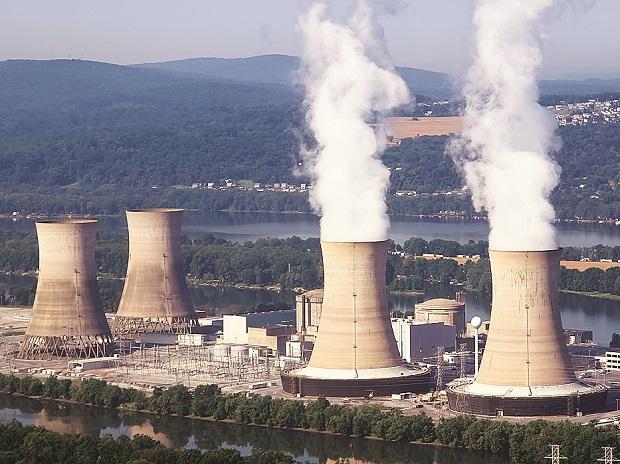
- Recently, Japan adopted a new policy promoting greater use of nuclear energy to ensure a stable power supply amid global fuel shortages and to reduce carbon emissions.
- This is a major reversal of its phase-out plan following the Fukushima nuclear disaster.
- It was a nuclear accident in 2011 at the Fukushima Daiichi Nuclear Power Plant in Ōkuma, Fukushima, Japan.
- Following a major earthquake, a 15-metre tsunami disabled the power supply and cooling of three Fukushima Daiichi reactors, causing a nuclear accident beginning on 11 March 2011.
About Nuclear Power in India
- Nuclear power is a clean and environment friendly base load source of electricity generation, which is available 24X7.
- It also has a huge potential and can provide the country long term energy security in a sustainable manner.
- Keeping these in mind, India has a largely indigenous nuclear power programme.





What is the nuclear energy generation capacity of India?
- India currently operates 22 nuclear reactors, with a total capacity of more than 6.7GW.
- Besides these 22 reactors, the Indian government is currently building 8 reactors with 3 proposed (total 11), with a total capacity of 8.7GW.
- The public sector entity, Nuclear Power Corporation of India (NPCIL), is responsible for designing, building, commissioning and operating nuclear power reactors in the country.
- NPCIL operates under the Indian government’s Department of Atomic Energy (DAE).
- In 2021, about 3.2 percent of the domestic production of electricity in India was derived from nuclear energy.
- Following thermal, hydroelectric and renewable sources and gas, nuclear is the fifth-largest production source of electricity in India.
- India has planned to increase the nuclear power capacity to 22,480 MW by 2031.

Image Caption: Location of nuclear plants in India
News Summary
- Japan adopted a plan to extend the lifespan of nuclear reactors, replace the old and even build new ones.
- The new policy says Japan must maximise the use of existing nuclear reactors:
- by restarting as many of them as possible and prolonging the operating life of old reactors beyond their 60-year limit, and
- by developing next-generation reactors to replace them.
- This is a major shift in a country scarred by the Fukushima disaster that once planned to phase out atomic power.
Why Japan is reversing its nuclear phaseout plan?
- The Fukushima disaster supercharged anti-nuclear sentiment in Japan and at one point led the government to promise to phase out the energy by around 2030.
- But since then, the government has recommitted to the technology, including setting a target for nuclear to make up 20-22% of the country’s energy mix by the end of the decade.
- At present, nuclear energy accounts for less than 7% of Japan’s energy supply.
- In the face of global fuel shortages, rising prices and pressure to reduce carbon emissions, Japan’s leaders have begun to turn back toward nuclear energy.
- Japan seeks to achieve carbon neutrality by 2050.
Q1) What is nuclear energy?
Nuclear energy is a form of energy released from the nucleus, the core of atoms, made up of protons and neutrons. This source of energy can be produced in two ways: fission – when nuclei of atoms split into several parts – or fusion – when nuclei fuse together.
Q2) What is the fuel for nuclear energy?
Uranium is the most widely used fuel by nuclear power plants for nuclear fission. Nuclear power plants use a certain type of uranium—U-235—as fuel because its atoms are easily split apart.
Source: Japan reverses nuclear phaseout plan adopted after Fukushima

 Last updated on March, 2026
→ UPSC Final Result 2025 is now out.
→ UPSC has released UPSC Toppers List 2025 with the Civil Services final result on its official website.
→ Anuj Agnihotri secured AIR 1 in the UPSC Civil Services Examination 2025.
→ UPSC Marksheet 2025 is now out.
→ UPSC Notification 2026 & UPSC IFoS Notification 2026 is now out on the official website at upsconline.nic.in.
→ UPSC Calendar 2026 has been released.
→ Check out the latest UPSC Syllabus 2026 here.
→ UPSC Prelims 2026 will be conducted on 24th May, 2026 & UPSC Mains 2026 will be conducted on 21st August 2026.
→ The UPSC Selection Process is of 3 stages-Prelims, Mains and Interview.
→ Prepare effectively with Vajiram & Ravi’s UPSC Prelims Test Series 2026 featuring full-length mock tests, detailed solutions, and performance analysis.
→ Enroll in Vajiram & Ravi’s UPSC Mains Test Series 2026 for structured answer writing practice, expert evaluation, and exam-oriented feedback.
→ Join Vajiram & Ravi’s Best UPSC Mentorship Program for personalized guidance, strategy planning, and one-to-one support from experienced mentors.
→ Shakti Dubey secures AIR 1 in UPSC CSE Exam 2024.
→ Also check Best UPSC Coaching in India