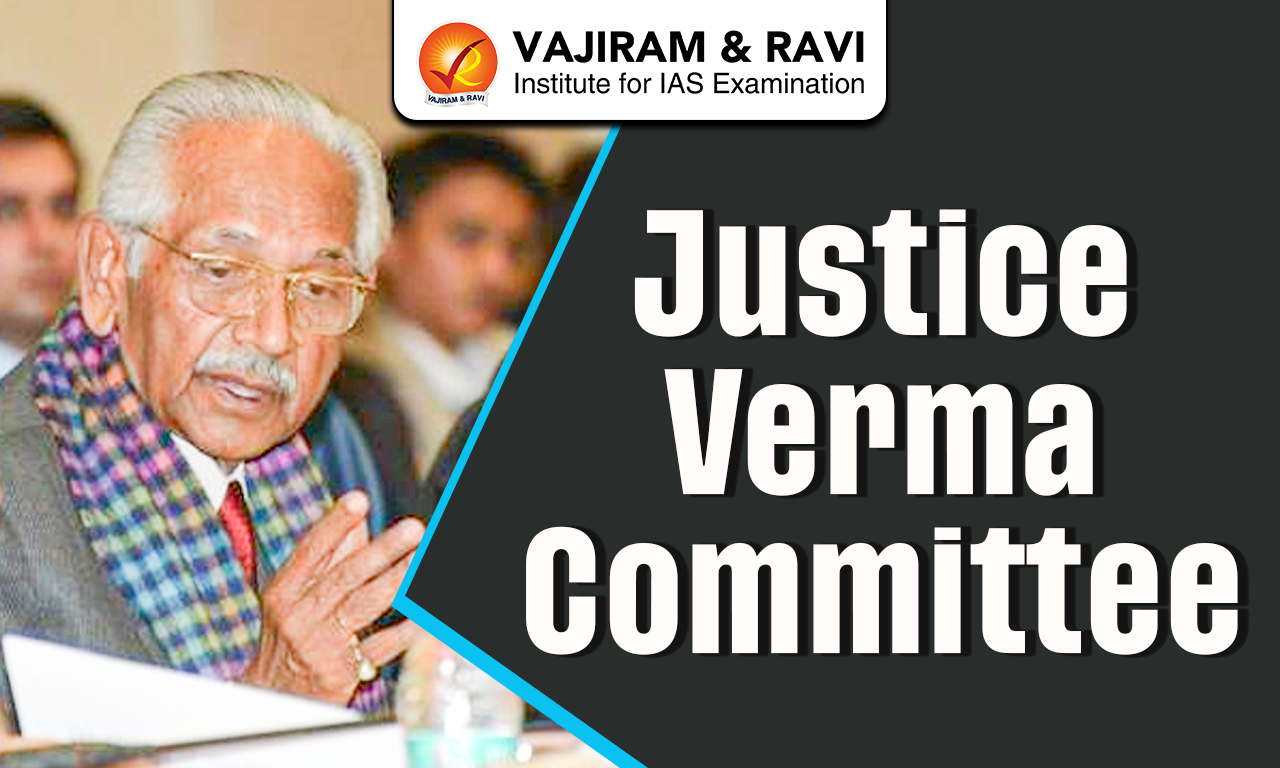
The Justice Verma Committee was a landmark initiative in India’s legal history aimed at reforming laws related to crimes against women. It was constituted on December 23, 2012 by the serving Prime Minister Manmohan Singh. The committee was chaired by Justice J.S. Verma and the report of the committee was submitted on January 23, 2013. The committee adopted a rights based, constitutional approach to gender justice and emphasized equality, dignity and accountability in addressing sexual violence.
Justice Verma Committee Background
The Justice Verma Committee was set up after the December 2012 Delhi gang rape to address urgent gaps in laws and ensure stronger protection for women.
- Need for committee: The brutal incident exposed serious deficiencies in criminal law, policing and justice delivery, creating an immediate need for comprehensive legal reforms to prevent sexual violence and ensure swift punishment.
- Objectives: It was tasked with reviewing existing criminal laws and suggesting amendments to strengthen provisions related to sexual offences, victim protection and institutional accountability.
- Formation: Appointed on December 23, 2012, by Prime Minister Manmohan Singh, the committee was chaired by Justice J.S. Verma (former Chief Justice of India) with members Justice Leila Seth (former Judge of the Delhi High Court and Gopal Subramaniam (Senior Advocate and former Solicitor General of India).
- Public Participation: It received more than 80,000 suggestions from civil society, including contributions by students, advocates, etc. reflecting wide public involvement.
- Approach and Scope: The committee adopted a broad, constitutional approach, addressing not only legal reforms but also social norms, gender justice and systemic barriers affecting women’s safety and dignity.
- Report Timeline: The 630 page report was completed within 29 days, demonstrating urgency and efficiency in addressing systemic gaps in laws related to sexual offences.
Justice Verma Committee Recommendations
The Justice Verma Committee proposed extensive reforms covering legal definitions, punishments, institutional accountability and victim protection mechanisms.
- Rape: Defined rape as a crime of power, expanded to include all non consensual penetration and recommended removing the marital rape exception, asserting marriage cannot imply permanent consent.
- Sexual Assault: Broadened definition to include all non consensual, non penetrative acts with penalties up to five years imprisonment or fines, addressing gaps in earlier legal provisions.
- Verbal Sexual Assault: Proposed criminalizing unwelcome sexual words, gestures, or threats, making such acts punishable by up to one year imprisonment or fines.
- Medical Examination: Recommended banning the Two Finger Test and stated that a victim’s past sexual history should not influence investigation or trial outcomes.
- Sexual Harassment at Workplace: Proposed replacing Internal Complaints Committees with Employment Tribunals, including domestic workers, holding employers liable and ensuring compensation to victims.
- Acid Attack: Recommended a minimum punishment of ten years imprisonment and creation of a dedicated compensation fund, treating acid attacks as distinct crimes.
- Child Sexual Abuse: Suggested redefining “harm” and “health” under the Juvenile Justice Act to include both physical and mental aspects for stronger child protection.
- Trafficking: Called for comprehensive anti trafficking laws beyond prostitution, covering coercion and exploitation, along with protective homes monitored by High Courts.
- Women in Conflict Zones: Recommended reviewing AFSPA provisions, removing prior sanction for prosecuting armed forces in sexual offences and appointing special commissioners for monitoring cases.
- Death Penalty: Opposed death penalty and chemical castration for rape, advocating life imprisonment as a more effective and reform oriented punishment approach.
- Police Reforms: Suggested greater police accountability, increased personnel, gender sensitive training and enabling online FIR registration to improve reporting and responsiveness.
- Judiciary Reforms: Emphasized speedy trials, victim support systems and witness protection mechanisms to ensure fair and efficient justice delivery.
- Case Management: Recommended setting up Rape Crisis Cells, improving coordination among agencies and ensuring community policing for better prevention and response.
- Workplace Law Criticism: Termed existing Sexual Harassment Act “unsatisfactory,” stating it failed to reflect Vishakha guidelines and discouraged complaints due to in house mechanisms.


Justice Verma Committee Impact
The report of Justice Verma Committee significantly influenced legal reforms and public discourse on gender justice, though not all recommendations were fully implemented.
- Criminal Law (Amendment) Act, 2013: Many recommendations led to expanded definitions of rape and sexual offences, stricter punishments and improved victim protection mechanisms in law.
- Death Penalty Debate: Despite committee opposition, the government introduced death penalty provisions under Sections 376A and 376E and later expanded them in 2018 amendments.
- Institutional Changes: Recommendations led to increased focus on police reforms, victim support systems and establishment of mechanisms like crisis centers and better reporting processes.
- Continuing Challenges: While widely praised nationally and internationally, gaps remain in full implementation, particularly regarding marital rape, AFSPA reforms and systemic accountability.

 Last updated on Oct, 2026
→ UPSC 2027 Notification will be released on 13 January 2027 at upsconline.nic.in.
→ Check Nobel Prize 2026 Winners List here.
→ Download PIB PRiSM Monthly Magazine 2026 here.
→ Check UPSC Monthly Current Affairs Magazine The Recitals here.
→ Check out the latest UPSC Syllabus here.
→ Download UPSC Model Answers for Mains 2026
→ UPSC Mains Question Paper 2026 is out now for Essay & GS Paper 1, 2, 3 & 4.
→ UPSC Calendar 2027 has been released.
→ Enroll in Vajiram & Ravi’s UPSC Mains Test Series 2027 for structured answer writing practice, expert evaluation, and exam-oriented feedback.
→ Join Vajiram & Ravi’s UPSC Mentorship Program 2027 for personalized guidance, strategy planning, and one-to-one support from experienced mentors.
→ Go through the UPSC Mains Previous Year Papers to enhance your preparation.
→ UPSC has released UPSC Toppers List 2025 with the Civil Services final result on its official website.
→ Also check Best UPSC Coaching in India
Justice Verma Committee FAQs
Q1. What is the Justice Verma Committee?+
Q2. Who were the members of the Justice Verma Committee?+
Q3. What was the recommendations of Justice Verma Committee on Rape Laws?+
Q4. What was Justice Verma Committee’s opinion on Death Penalty for Rape?+
Q5. What was the impact of the recommendations laid by the Justice Verma Committee?+
Tags: justice verma committee sexual assault against women