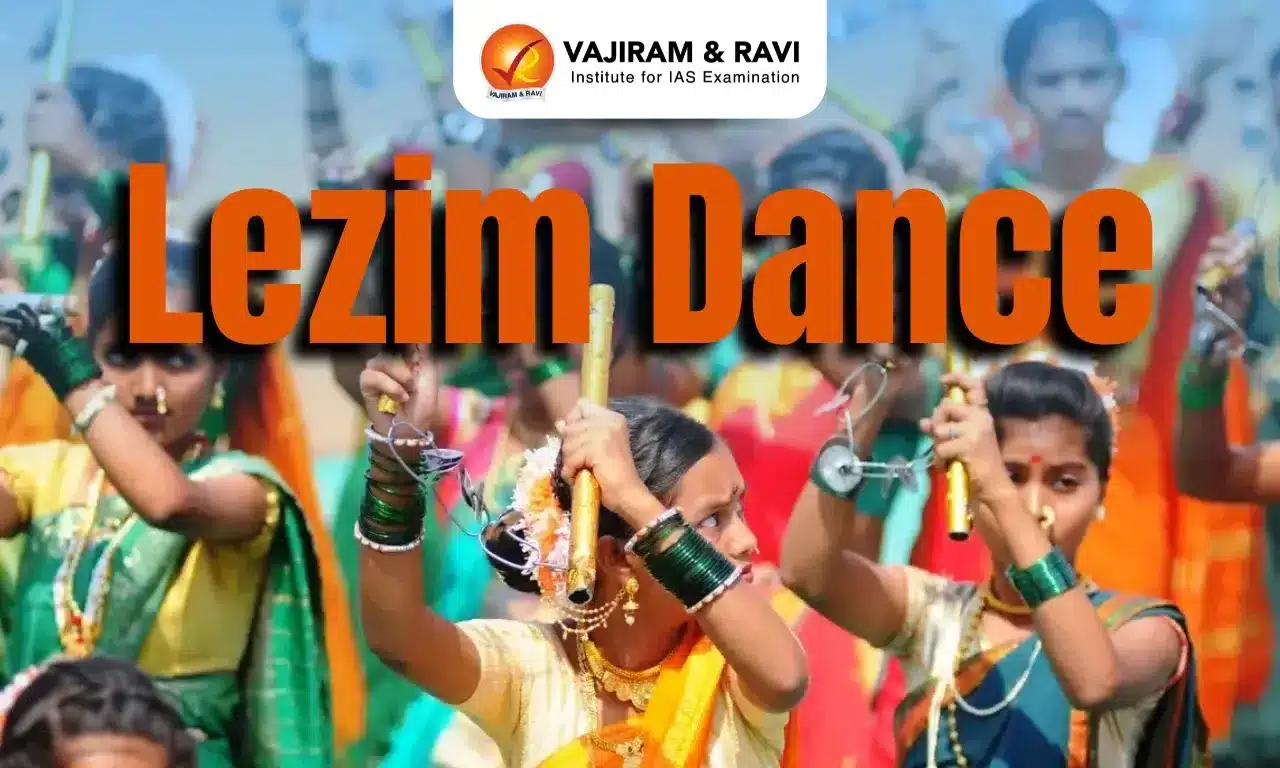
Lezim Dance or Lazium is a traditional folk dance of Maharashtra. It is known for its energetic movements and strong rhythmic coordination. The dance derives its name from the handheld musical instrument called Lezim, fitted with jingling metal discs. It combines elements of physical exercise and cultural performance, making it both a recreational and training activity. It is widely performed during festivals, processions and institutional drills across Maharashtra.
Lezim Dance Features
Lezim Dance is a vigorous group dance blending rhythm, coordination and physical drill, performed using instruments, formations and traditional attire in Maharashtra. It is one of the major folk dances of India. The key features of the dance form are:
- History and Origin: Lezim Dance originated in Maharashtra and is believed to have evolved from akhadas where physical drills were practiced.
- Musical Instrument: The dance is named after the Lezim instrument, a wooden stick fitted with metal discs and chains.
- When struck, it produces a jingling cymbal like sound, forming the rhythmic base of the performance.
- Dholki acts as the primary percussion instrument, supported by halagi and drums.
- These instruments maintain tempo and synchronize group movements without using wind or string instruments.
- Costumes: Dancers wear traditional attire consisting of a white kurta, pajama, colourful belt and turban. These costumes enhance visual uniformity and reflect regional cultural identity during performances.
- Movements: Performances involve at least 20 dancers arranged in rows, circles or concentric formations. Movements include stepping, squatting and jumping, with step changes signaled by a leader using a whistle.
- Types of Lezim Dance: The three main types include military lezim, talathekya and samanyajananna. Military lezim is prominent in Baroda and emphasizes martial training and defense techniques.
- Cultural Significance: Lezim is popular during Ganesh festival, village jatras and school drills. It symbolizes community unity and is also practiced as a fitness exercise in institutions.
Also Check: Classical Dances of India


 Last updated on Oct, 2026
→ UPSC 2027 Notification will be released on 13 January 2027 at upsconline.nic.in.
→ Check Nobel Prize 2026 Winners List here.
→ Download PIB PRiSM Monthly Magazine 2026 here.
→ Check UPSC Monthly Current Affairs Magazine The Recitals here.
→ Check out the latest UPSC Syllabus here.
→ Download UPSC Model Answers for Mains 2026
→ UPSC Mains Question Paper 2026 is out now for Essay & GS Paper 1, 2, 3 & 4.
→ UPSC Calendar 2027 has been released.
→ Enroll in Vajiram & Ravi’s UPSC Mains Test Series 2027 for structured answer writing practice, expert evaluation, and exam-oriented feedback.
→ Join Vajiram & Ravi’s UPSC Mentorship Program 2027 for personalized guidance, strategy planning, and one-to-one support from experienced mentors.
→ Go through the UPSC Mains Previous Year Papers to enhance your preparation.
→ UPSC has released UPSC Toppers List 2025 with the Civil Services final result on its official website.
→ Also check Best UPSC Coaching in India
Lezim Dance FAQs
Q1. What is Lezim Dance? +
Q2. Which instrument is used in Lezim Dance? +
Q3. Where is Lezim Dance commonly performed? +
Q4. What are the main types of Lezim? +
Q5. Why is Lezim considered a physical exercise? +
Tags: folk dances of india geography geography notes lezim dance