Maharashtra vs FSSAI Latest News
- The Maharashtra Government has approached the Bombay High Court against the Union Health Ministry and the Food Safety and Standards Authority of India (FSSAI).
- The State government alleges that the central regulator has created a parallel food-safety enforcement mechanism that encroaches upon the statutory powers of State authorities.
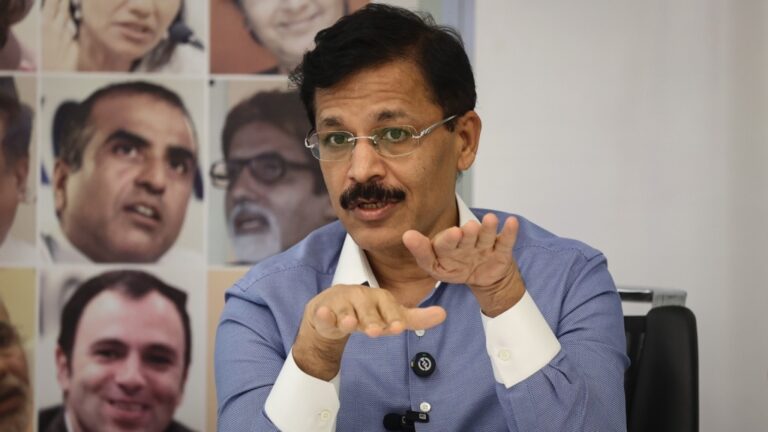
- The petition, filed through Maharashtra’s Food Safety Commissioner Tukaram Mundhe, challenges the manner in which centrally licensed food businesses are regulated and inspected.
Core Issue – Centralisation vs Decentralisation
- The dispute centres on the interpretation and implementation of the Food Safety and Standards Act (FSS Act), 2006.
- Maharashtra argues that the legislation was intended to decentralise food-safety administration, with implementation primarily involving –
- State Commissioners of Food Safety;
- Designated Officers and Food Safety Officers;
- Food Analysts; and
- Panchayati Raj Institutions and Urban Local Bodies.
- According to the State, subsequent orders and regulations have gradually shifted enforcement towards FSSAI and its central officials, weakening the role of State authorities.


Major Point of Contention
- Maharashtra alleges that the FSSAI order (dated May 12, 2023) restricted State Food Safety Commissioners and their officers from independently enforcing the FSS Act in establishments holding a Central Licence.
- The State claims that FSSAI subsequently created or deployed positions such as Central Licensing Authorities, Central Food Safety Officers and Central Food Analysts, thereby establishing a parallel enforcement structure.
- The petition argues that such arrangements effectively “usurp” the powers of State Commissioners of Food Safety.
- However, FSSAI’s own enforcement framework recognises both central and state structures.
- Therefore, the precise division of enforcement jurisdiction is a key legal issue before the Court.
Licensing Thresholds and FoSCoS
- Maharashtra has also challenged FSSAI’s revision of the turnover thresholds determining whether a food business requires a State Licence or a Central Licence.
- Under the Food Safety and Standards (Licensing and Registration of Food Businesses) Amendment Regulations, 2026, the revised thresholds are –
- Registration: Turnover up to ₹1.5 crore
- State licence: Above ₹1.5 crore and up to ₹50 crore
- Central licence: Above ₹50 crore
- These revised thresholds became applicable from April 1, 2026 for new applications, with migration arrangements for existing businesses.
- FSSAI states that the amendments did not change the jurisdiction of licensing authorities.
- Maharashtra, however, alleges that the changes were introduced without adequate prior public consultation and has challenged the relevant regulatory provisions.
- The State has also questioned the mandatory use of the Food Safety Compliance System (FoSCoS).
- It argued that centralised digital licensing and databases could weaken the ability of State authorities to independently monitor and inspect food businesses.
FSSAI and its Role
- The FSSAI is India’s apex statutory food-safety regulator established under the FSS Act, 2006.
- Key functions of FSSAI:
- Lays down science-based standards for food articles.
- Regulates the manufacture, storage, distribution, sale and import of food.
- Provides a unified legal framework for food safety by replacing multiple earlier food-related laws.
- Regulates licensing and registration of Food Business Operators (FBOs).
- Coordinates food-safety enforcement with State and Union Territory authorities.
- Prescribes standards for food testing and facilitates a network of food laboratories.
- Undertakes risk assessment, surveillance and food-safety monitoring.
- Regulates imported food articles at ports of entry.
- Promotes food-safety awareness and capacity building.
- Every FBO is required to obtain the applicable FSSAI registration or licence under Section 31 of the FSS Act.
FSSAI-State Relationship and Relief Sought by State
- Enforcement structure:
- The FSS Act envisages that State enforcement is carried out through the Commissioner of Food Safety, Designated Officers, Food Safety Officers, Food Analysts and local bodies.
- FSSAI exercises its statutory functions at the national level.
- Thus, the present dispute is essentially about where the line between central standard-setting/licensing and State-level enforcement should be drawn.
- Maharashtra’s main grievances: The State has argued that –
- FSSAI has progressively centralised food-safety enforcement.
- State officers have been restricted from inspecting centrally licensed establishments.
- Creation of central enforcement posts allegedly goes beyond the statutory framework.
- Revised licensing thresholds were allegedly introduced without adequate public consultation.
- FoSCoS may result in excessive central control over food-business databases and licensing.
- Relief sought: Maharashtra has sought –
- Quashing of the challenged provisions of the 2011 Licensing and Registration Regulations, 2018 Recruitment Regulations and 2026 Amendment Regulations;
- An interim stay on the May 2023 order;
- Restoration of State authorities’ inspection powers over centrally licensed businesses; and
- Transfer of relevant FoSCoS database records back to State authorities.
Conclusion
- The case raises broader questions of cooperative federalism, administrative decentralisation and regulatory federalism.
- Food safety requires uniform national standards because food supply chains frequently cross State boundaries.
- At the same time, enforcement often depends on local knowledge, field inspections and State administrative machinery. The challenge, therefore, is to maintain a balance.
Source: IE

 Last updated on Oct, 2026
→ UPSC 2027 Notification will be released on 13 January 2027 at upsconline.nic.in.
→ Check Nobel Prize 2026 Winners List here.
→ Download PIB PRiSM Monthly Magazine 2026 here.
→ Check UPSC Monthly Current Affairs Magazine The Recitals here.
→ Check out the latest UPSC Syllabus here.
→ Download UPSC Model Answers for Mains 2026
→ UPSC Mains Question Paper 2026 is out now for Essay & GS Paper 1, 2, 3 & 4.
→ UPSC Calendar 2027 has been released.
→ Enroll in Vajiram & Ravi’s UPSC Mains Test Series 2027 for structured answer writing practice, expert evaluation, and exam-oriented feedback.
→ Join Vajiram & Ravi’s UPSC Mentorship Program 2027 for personalized guidance, strategy planning, and one-to-one support from experienced mentors.
→ Go through the UPSC Mains Previous Year Papers to enhance your preparation.
→ UPSC has released UPSC Toppers List 2025 with the Civil Services final result on its official website.
→ Also check Best UPSC Coaching in India
Maharashtra vs FSSAI FAQs
Q1. What is the core dispute between Maharashtra and FSSAI?+
Q2. What is the role of FSSAI under the FSS Act, 2006?+
Q3. What is FoSCoS and why has Maharashtra challenged it?+
Q4. How does the Maharashtra-FSSAI dispute reflect cooperative federalism?+
Q5. What is the significance of the FSS Act, 2006 for food governance?+
Tags: maharashtra vs fssai mains articles upsc current affairs upsc mains current affairs