Judicial Restraint Latest News
- Supreme Court Judge Ujjal Bhuyan’s recent remarks on voter deletions and the right to vote have revived debate over the limits of judicial speech, judicial propriety and comments on matters pending before courts.
Meaning and Importance of Judicial Restraint
- Judicial restraint refers to the exercise of caution by judges in interpreting laws, reviewing the actions of other branches of government and making public statements that may affect judicial proceedings.
- It does not require judges to remain silent on every public issue. Rather, it seeks to preserve judicial independence, impartiality and public confidence in the administration of justice.
- Judges occupy a unique constitutional position: they must protect fundamental rights and examine governmental actions while ensuring that their conduct does not create an impression of political alignment or prejudgment.
- Judicial restraint is therefore important in maintaining the balance between judicial accountability, freedom of expression and the impartial administration of justice.


The Debate over Justice Ujjal Bhuyan’s Remarks
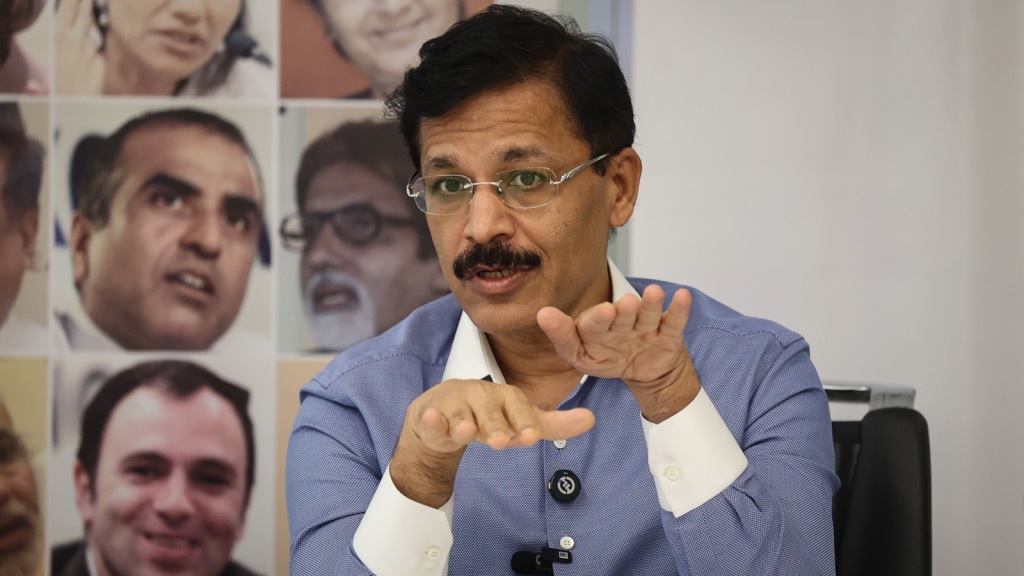
- On October 4, 2026, Justice Ujjal Bhuyan, speaking at a moot court competition at NALSAR University of Law, stated that the right to vote is constitutional and integral to the basic structure of the Constitution.
- He argued that a process disenfranchising millions would be arbitrary and violate Articles 14 and 326.
- He also emphasised that voters should receive notice and an opportunity to be heard before their names are deleted, except in cases of death.
- His remarks came while litigation concerning the Special Intensive Revision (SIR) of electoral rolls in West Bengal remained pending before the Supreme Court.
- Former Chief Justice of India B.R. Gavai and other retired judges questioned whether commenting on an ongoing controversy was consistent with judicial propriety.
Indian Standards of Judicial Conduct
- The Restatement of Values of Judicial Life, adopted by the Supreme Court’s Full Court on May 7, 1997, establishes ethical expectations for judges.
- Clause 8 states that judges should not enter public debate or express views on political matters or matters pending, or likely to arise, for judicial determination. Clause 1 requires judicial conduct that sustains public confidence in impartiality.
- Although the Restatement does not prescribe a separate sanction of its own, it has been referred to in judicial decisions and remains an important ethical framework.
- The central concern is not whether judges can discuss constitutional law, but whether a public statement could reasonably create an impression that a judge has prejudged a dispute that may come before them.
Constitutional Principles Governing the Right to Vote
- The controversy also highlights the constitutional and statutory framework governing electoral participation.
- Article 14: Guarantees equality before the law and equal protection of the laws, prohibiting arbitrary State action.
- Article 326: Provides for elections to the Lok Sabha and State Legislative Assemblies on the basis of adult suffrage, subject to constitutional and statutory qualifications.
- Articles 325 and 326: Support an inclusive electoral framework by prohibiting specified forms of exclusion and establishing adult suffrage.
- Representation of the People Act, 1950: Provides the statutory framework for preparing and revising electoral rolls.
- Rule 21A of the Registration of Electors Rules, 1960: Provides procedural requirements relating to notice, inquiry, hearing and reasoned determination before deletion of names in applicable circumstances.
- In its May 27, 2026 decision in Association for Democratic Reforms v. Election Commission of India, the Supreme Court upheld the Bihar SIR while reiterating that eligible electors must be included and ineligible persons excluded through lawful procedures.
- The ruling provides important context for Justice Bhuyan’s remarks: the constitutional right to vote is protected, but electoral rolls must also be maintained according to the law.
Comparative Standards of Judicial Speech
- International standards recognise that judicial independence does not require complete silence on matters of law and public importance.
- Bangalore Principles of Judicial Conduct
- The Bangalore Principles recognise judicial freedom to write, lecture and teach on legal issues, judicial independence and the administration of justice.
- At the same time, judges should avoid comments that could reasonably affect proceedings before them or matters likely to come before them.
- United States
- The US Supreme Court’s 2023 Code of Conduct allows judges to speak, write, lecture and teach, while cautioning against comments on the merits of pending or impending cases.
- United Kingdom
- During the 2016 Brexit litigation, Lady Hale outlined competing legal arguments but stopped short of expressing a conclusion because the case was expected to come before the Supreme Court.
Judicial Independence and Public Engagement
- The debate over Justice Bhuyan also raises a broader question about the public role of judges.
- Judges have addressed issues such as judicial appointments, executive influence, civil liberties, restrictive bail conditions and the criminalisation of dissent. Such interventions can contribute to public understanding of constitutional governance.
- However, public visibility can also create concerns when remarks become closely connected to pending litigation. A judge’s earlier decisions or public speeches should not automatically be treated as predictors of how they would decide a future case.
- The appropriate assessment depends on the subject of the speech, the specificity of its conclusions and its proximity to judicial proceedings.
- Where a judge’s remarks raise a reasonable concern about impartiality in a particular case, recusal may need to be considered.
Source: TH

 Last updated on Oct, 2026
→ UPSC 2027 Notification will be released on 13 January 2027 at upsconline.nic.in.
→ Check Nobel Prize 2026 Winners List here.
→ Download PIB PRiSM Monthly Magazine 2026 here.
→ Check UPSC Monthly Current Affairs Magazine The Recitals here.
→ Check out the latest UPSC Syllabus here.
→ Download UPSC Model Answers for Mains 2026
→ UPSC Mains Question Paper 2026 is out now for Essay & GS Paper 1, 2, 3 & 4.
→ UPSC Calendar 2027 has been released.
→ Enroll in Vajiram & Ravi’s UPSC Mains Test Series 2027 for structured answer writing practice, expert evaluation, and exam-oriented feedback.
→ Join Vajiram & Ravi’s UPSC Mentorship Program 2027 for personalized guidance, strategy planning, and one-to-one support from experienced mentors.
→ Go through the UPSC Mains Previous Year Papers to enhance your preparation.
→ UPSC has released UPSC Toppers List 2025 with the Civil Services final result on its official website.
→ Also check Best UPSC Coaching in India
Judicial Restraint FAQs
Q1. What is judicial restraint?+
Q2. What is the Restatement of Values of Judicial Life?+
Q3. Why were Justice Ujjal Bhuyan’s remarks controversial?+
Q4. Can judges publicly discuss constitutional issues?+
Q5. What is the central principle governing judicial speech?+
Tags: judicial restraint mains articles upsc current affairs upsc mains current affairs