Cement Latest News
- India aims to become a developed country by 2047 and achieve net-zero emissions by 2070.
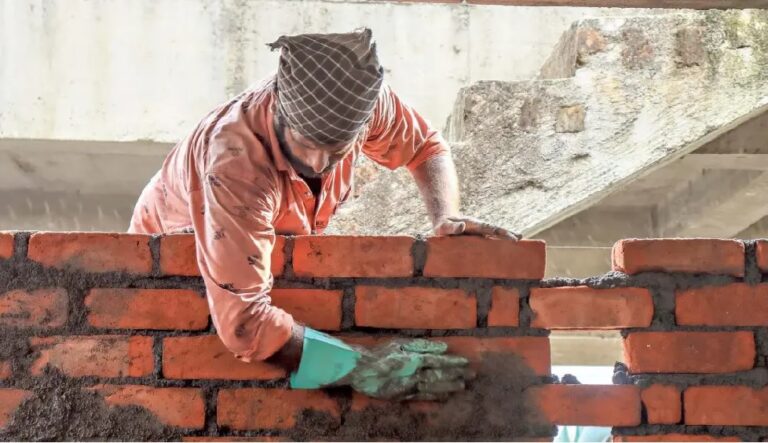
- Decarbonising the construction sector is essential to meeting both objectives, as construction depends heavily on energy-intensive materials such as cement and steel.
- The construction sector accounts for an estimated 35–40% of global greenhouse gas (GHG) emissions, considering the broader built environment and its supply chains.
- Cement alone contributes approximately 7–11% of global CO₂ emissions, making it one of the hardest sectors to decarbonise.
India’s Cement Industry
- Overview:
- India is the 2nd-largest cement producer in the world, with an installed capacity of roughly 668 to 700 million tonnes per annum (MTPA).
- Cement became the dominant construction binder following the development of Portland cement in Britain in the 1820s.
- Its popularity stems from its versatility, availability, ease of use and relatively rapid strength development.
- Key facts:
- Production volume: Reached ~490 million metric tonnes in FY26, showing an 8.6% year-on-year growth.
- Demand drivers: Housing (accounting for about 65% of demand), commercial real estate, and large-scale public infrastructure projects like PM Gati Shakti.
- Per capita consumption: Roughly 280 to 290 kg per year, which is lower than the global average.
- Core industry: It is designated as one of India’s eight core industries, carrying a weight of 5.37% in the Index of Industrial Production (IIP).
- Regional distribution: South India holds the largest share of installed capacity at approximately 32%.
- Key limestone-rich states: Rajasthan, Andhra Pradesh, Tamil Nadu, and Chhattisgarh.
- Major cement companies: UltraTech Cement (largest player in India with a market share of around 22%–28%); Adani Cement (Ambuja Cements & ACC); Shree Cement, etc.


Understanding Cement’s Environmental Footprint
- Energy-intensive manufacturing:
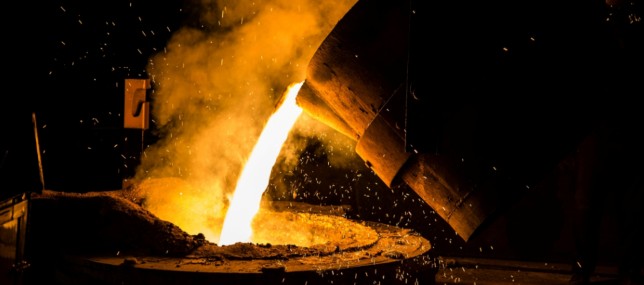
- Limestone is extracted through mining, often involving the removal of vegetation and topsoil. It is then mixed with clay and heated in kilns to approximately 1,450°C.
- Traditionally, coal, petroleum coke and natural gas have supplied the required heat. The high energy demand generates substantial emissions.
- Process emissions:
- During calcination, limestone (calcium carbonate) decomposes into lime (calcium oxide) and carbon dioxide. This chemical reaction releases CO₂ independently of the fuel used.
- The resulting material is processed into clinker, which is ground with gypsum and, depending on the cement type, other supplementary materials.
- Wider environmental impacts:
- Cement’s environmental footprint extends beyond factory emissions and includes –
- Land degradation: Limestone mining can destroy vegetation, disturb habitats and alter landscapes.
- Air pollution: Manufacturing releases nitrogen oxides, sulphur dioxide and particulate matter, affecting air quality and human health.
- Transportation emissions: Moving raw materials and finished cement over long distances adds to the carbon footprint.
- Loss of carbon sinks: Deforestation and vegetation loss reduce natural carbon sequestration.
- Resource depletion: Intensive extraction places pressure on mineral resources and local ecosystems.
- Therefore, a life-cycle approach is necessary to assess the environmental costs of cement production, transportation, construction and subsequent building use.
- Cement’s environmental footprint extends beyond factory emissions and includes –
India’s Cement Decarbonisation Challenge
- India’s cement industry emits approximately 0.62 tonnes of CO₂ per tonne of cement. A decarbonisation roadmap must identify the following targets –
- Reduce emissions intensity to 0.56 tonnes of CO₂ per tonne of cement by 2030.
- Further reduce it to 0.51 tonnes by 2047.
- At the same time, cement production is projected to increase to 1,546 million tonnes by 2070, reflecting India’s expanding infrastructure and urbanisation needs.
- This creates a major policy challenge – reducing emissions intensity while preventing rising production volumes from undermining absolute emission reductions.
Existing and Proposed Solutions
- Cleaner fuels and energy:
- Electrification, renewable energy and alternative fuels can reduce dependence on fossil fuels in cement manufacturing.
- Refuse-derived fuel (RDF), produced by processing combustible fractions of municipal solid waste, can partially replace coal and petroleum coke in cement kilns.
- NITI Aayog’s roadmap recommends achieving a 20% thermal substitution rate using RDF by 2030, potentially reducing cumulative emissions by approximately 80 million tonnes of CO₂-equivalent.
- However, this requires effective waste segregation at source, reliable waste-processing infrastructure and quality control.
- Reducing clinker content:
- India’s clinker-to-cement ratio is around 67.5%, already below the global average of 77%, but further reductions remain possible.
- Builders often prefer Ordinary Portland Cement (OPC contains more than 95% clinker), because of its established performance and faster early-strength development.
- Replacing a portion of clinker with supplementary cementitious (gypsum and fly ash) materials can substantially reduce emissions (Replacing one tonne of clinker can avoid approximately 0.83 tonnes of CO₂ emissions – IEA).
- Green cement adoption can be encouraged through government procurement, revised construction specifications, performance-based standards and awareness among developers.
- Carbon capture, utilisation and storage (CCUS):
- Cement cannot be fully decarbonised through fuel substitution alone because calcination generates process emissions. CCUS may therefore be necessary to address residual emissions.
- However, its large-scale deployment will require technological improvements, investment, suitable transport and storage infrastructure, and effective monitoring.
- Sustainable building design:
- Reducing cement demand through better architectural planning can complement cleaner manufacturing.
- Climate-responsive buildings that minimise heat gain and heat storage can reduce cooling requirements and operational energy consumption.
Traditional Material and Indigenous Construction
- India’s diverse climatic and geographical conditions have produced construction techniques that can reduce dependence on conventional cement-based systems.
- For example,
- Compressed earth blocks and rammed earth: Used in parts of southern India, often with small quantities of cement or lime.
- Lime-surkhi mortar: Combines lime with finely powdered burnt clay or brick material.
- Natural binders: Cactus-derived mucilage, lime and mud, and certain industrial by-products such as marble powder can be explored in suitable applications.
- Kath Kuni architecture: Traditional Himachal Pradesh construction uses alternating timber and dry-stone masonry, often supported by a raised stone plinth.
- Elevated timber and bamboo houses: Found in flood-prone and earthquake-prone regions, particularly parts of northeastern India.
- These methods can offer locally appropriate, resource-efficient solutions. However, they are not universally suitable and may require adaptation to meet modern requirements.
- The objective should be to reduce cement use wherever technically appropriate, rather than eliminate it indiscriminately.
Way Forward
- Strengthen circular economy practices: Improve waste segregation and utilise suitable industrial by-products, including fly ash and slag (Example, PPC and PSC).
- Improve regulatory and market incentives: Encourage low-carbon building codes, green public infrastructure and transparent disclosure of embodied carbon.
- Balance sustainability with affordability: Ensuring that low-carbon materials remain accessible and using cement more efficiently.
Source: TH

 Last updated on Oct, 2026
→ UPSC 2027 Notification will be released on 13 January 2027 at upsconline.nic.in.
→ Check Nobel Prize 2026 Winners List here.
→ Download PIB PRiSM Monthly Magazine 2026 here.
→ Check UPSC Monthly Current Affairs Magazine The Recitals here.
→ Check out the latest UPSC Syllabus here.
→ Download UPSC Model Answers for Mains 2026
→ UPSC Mains Question Paper 2026 is out now for Essay & GS Paper 1, 2, 3 & 4.
→ UPSC Calendar 2027 has been released.
→ Enroll in Vajiram & Ravi’s UPSC Mains Test Series 2027 for structured answer writing practice, expert evaluation, and exam-oriented feedback.
→ Join Vajiram & Ravi’s UPSC Mentorship Program 2027 for personalized guidance, strategy planning, and one-to-one support from experienced mentors.
→ Go through the UPSC Mains Previous Year Papers to enhance your preparation.
→ UPSC has released UPSC Toppers List 2025 with the Civil Services final result on its official website.
→ Also check Best UPSC Coaching in India
Cement FAQs
Q1. Why is decarbonisation of the construction sector essential?+
Q2. Why is cement considered a hard-to-abate sector?+
Q3. How can clinker substitution help reduce emissions from cement manufacturing?+
Q4. What is the role of refuse-derived fuel (RDF)?+
Q5. How can traditional Indian construction practices contribute to sustainable urbanisation?+
Tags: cement mains articles upsc current affairs upsc mains current affairs