Why in news?
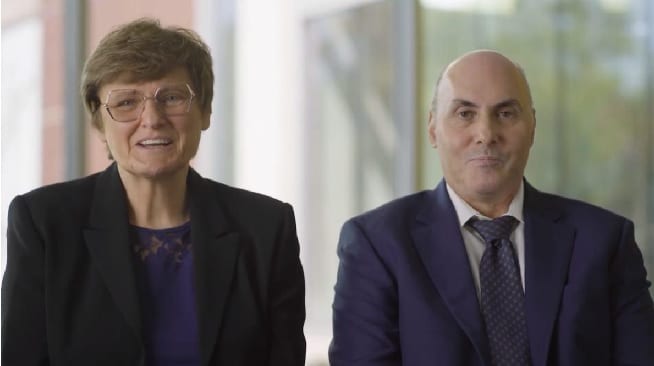
- The 2023 Nobel Prize in Physiology or Medicine has gone to scientists Katalin Kariko and Drew Weissman.
- Their work enabled the development of mRNA vaccines against Covid-19.
- Their groundbreaking findings fundamentally changed the understanding of how mRNA interacts with immune system of humans.
- These findings contributed to the unprecedented rate of vaccine development during one of the greatest threats to human health in modern times.
What’s in today’s article?
- mRNA
- News Summary
mRNA
- Messenger RNA (abbreviated mRNA) is a type of single-stranded RNA involved in protein synthesis.
- Ribonucleic acid (abbreviated RNA) is a nucleic acid present in all living cells that has structural similarities to DNA.
- RNA has three main roles in the cell:
- It carries the instructions from the DNA in the nucleus to the ribosomes where proteins are made in the cytoplasm of the cell.
- RNA picks up specific amino acids from the cytoplasm of the cell and delivers them to the ribosomes where protein synthesis takes place.
- It makes up around 50% of the structure of the ribosomes.
- The role of mRNA is to carry protein information from the DNA in a cell’s nucleus to the cell’s cytoplasm (watery interior).
- At this point, the protein-making machinery reads the mRNA sequence and translates each three-base codon into its corresponding amino acid in a growing protein chain.





mRNA Vaccine
- Background
- Traditionally, vaccines have depended on introducing dead or weakened viruses into the human body, so it can develop antibodies against them.
- Thus, when the actual virus infects someone, their body is prepared to fight it.
- As technology evolved, instead of the whole virus, just a part of the viral genetic code, began to be introduced through vaccines.
- But the large-scale development of such vaccines requires cell culture (growing of cells under controlled conditions) and takes time.
- Traditionally, vaccines have depended on introducing dead or weakened viruses into the human body, so it can develop antibodies against them.
- Challenge during Covid-19 pandemic
- During the Covid-19 outbreak, time was of the essence in finding a weapon against the deadly and fast-spreading virus.
- This is where mRNA technology proved crucial.
- mRNA vaccine
- Instead of putting an inactivated virus in the body to activate an immune response, vaccines using this technology use messenger Ribonucleic Acid, or mRNA, to deliver a message to the immune system.
- Genetically engineered mRNA can instruct cells to make the protein needed to fight a particular virus.
- Basically, the mRNA vaccines carry the genetic code for the proteins that make up the non-lethal but key parts of a virus.
- Since RNA is already present in cells, this method does away with the need for cell culture.
mRNA Covid-19 Vaccine
- The COVID-19 vaccines used the codes for the spike protein used by Sars-CoV-2 to enter the body.
- Once injected, the vaccine uses the body’s own protein manufacturing centre to produce these viral proteins.
- The immune system then responds by creating antibodies against the viral protein and learns to fight the actual infection.
Q1) What is DNA?
Deoxyribonucleic acid (DNA) is a complex molecule that contains the information necessary to build and maintain an organism. DNA is found in most cells of every organism. It is a key part of reproduction, as genetic heredity occurs through the passing down of DNA from parent or parents to offspring.
Q2) What is RNA?
Ribonucleic acid (RNA) is a molecule that is essential for most biological functions. It is present in all living cells and viruses. RNA is made up of nucleotides, which are ribose sugars attached to nitrogenous bases and phosphate groups. The nitrogenous bases include adenine, guanine, uracil, and cytosine.
Source: Nobel Prize in Medicine 2023: How Katalin Kariko and Drew Weissman’s work helped develop Covid vaccines | National Human Genome Research Institute | Indian Express | The Hindu

 Last updated on March, 2026
→ UPSC Final Result 2025 is now out.
→ UPSC has released UPSC Toppers List 2025 with the Civil Services final result on its official website.
→ Anuj Agnihotri secured AIR 1 in the UPSC Civil Services Examination 2025.
→ UPSC Marksheet 2025 is now out.
→ UPSC Notification 2026 & UPSC IFoS Notification 2026 is now out on the official website at upsconline.nic.in.
→ UPSC Calendar 2026 has been released.
→ Check out the latest UPSC Syllabus 2026 here.
→ UPSC Prelims 2026 will be conducted on 24th May, 2026 & UPSC Mains 2026 will be conducted on 21st August 2026.
→ The UPSC Selection Process is of 3 stages-Prelims, Mains and Interview.
→ Prepare effectively with Vajiram & Ravi’s UPSC Prelims Test Series 2026 featuring full-length mock tests, detailed solutions, and performance analysis.
→ Enroll in Vajiram & Ravi’s UPSC Mains Test Series 2026 for structured answer writing practice, expert evaluation, and exam-oriented feedback.
→ Join Vajiram & Ravi’s Best UPSC Mentorship Program for personalized guidance, strategy planning, and one-to-one support from experienced mentors.
→ Shakti Dubey secures AIR 1 in UPSC CSE Exam 2024.
→ Also check Best UPSC Coaching in India