About Mother Tongue Survey of India:
- According to the report, the Mother Tongue Survey of India is a project that “surveys the mother tongues, which are returned consistently across two and more Census decades”.
- It also documents the linguistic features of the selected languages.
- The report states that the NIC and the National Film Development Corporation (NFDC) will be documenting and preserving the linguistic data of the surveyed mother tongues in audio-video files.
- Video-graphed speech data of Mother Tongues will also be uploaded on the NIC survey for archiving purposes.
- Linguistic Survey of India (LSI) is a regular research activity in the country since the 6th Five Year Plan.
How many “mother tongues” does India have, and what is spoken the most?
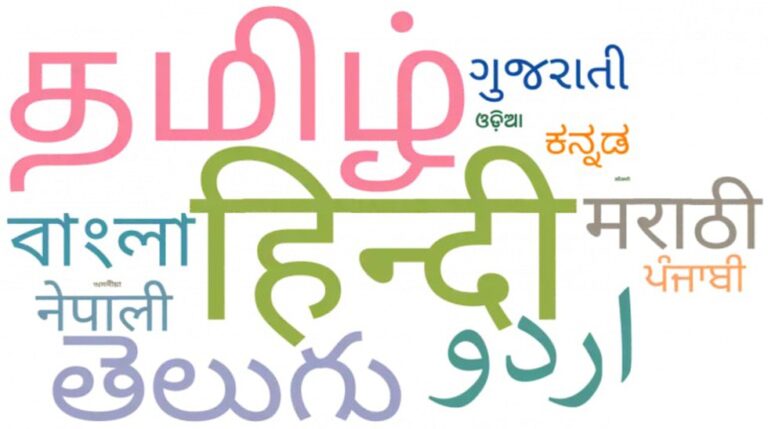
- As per an analysis of 2011 linguistic census data in 2018, more than 19,500 languages or dialects are spoken in India as mother tongues.
- The category “mother tongue” is a designation provided by the respondent, but it need not be identical with the actual linguistic medium.
- After subjecting the 19,569 returns to linguistic scrutiny, edit and rationalisation, they were grouped into 121 mother tongues.
- According to the 2011 linguistic census, Hindi is the most widely spoken mother tongue, with 52.8 crore people or 43.6 per cent of the population declaring it as the mother tongue.
- The next highest is Bengali, mother tongue for 9.7 crore individuals, and accounting for 8 per cent of the population.
Mother tongue in the education of children:
- The new National Curriculum Framework (NCF) for the foundational stages of education, has recommended that mother tongue should be the primary medium of instruction in schools for children up to eight years of age.
- The focus on mother tongue as the medium of instruction, especially for primary schooling, has been a feature of education policies for years.
- The new NCF, which deals with pre-school and classes I-II, emphasises the virtues of the mother tongue as the primary medium of instruction, saying that by the time children join pre-school, they acquire significant competence in the “home language”.
- According to the NCF, evidence from research confirms the importance of teaching children in their mother tongue during the foundational years and beyond.
- NCF also states that since children learn concepts most rapidly and deeply in their home language, the primary medium of instruction would optimally be the child’s home language/ mother tongue/ familiar language in the Foundational Stage.
Source : Indian Express






 Last updated on April, 2026
→ UPSC Final Result 2025 is now out.
→ UPSC has released UPSC Toppers List 2025 with the Civil Services final result on its official website.
→ Anuj Agnihotri secured AIR 1 in the UPSC Civil Services Examination 2025.
→ UPSC Marksheet 2025 is now out.
→ UPSC Notification 2026 & UPSC IFoS Notification 2026 is now out on the official website at upsconline.nic.in.
→ UPSC Calendar 2026 has been released.
→ Check out the latest UPSC Syllabus 2026 here.
→ UPSC Prelims 2026 will be conducted on 24th May, 2026 & UPSC Mains 2026 will be conducted on 21st August 2026.
→ The UPSC Selection Process is of 3 stages-Prelims, Mains and Interview.
→ Prepare effectively with Vajiram & Ravi’s UPSC Prelims Test Series 2026 featuring full-length mock tests, detailed solutions, and performance analysis.
→ Enroll in Vajiram & Ravi’s UPSC Mains Test Series 2026 for structured answer writing practice, expert evaluation, and exam-oriented feedback.
→ Join Vajiram & Ravi’s Best UPSC Mentorship Program for personalized guidance, strategy planning, and one-to-one support from experienced mentors.
→ Shakti Dubey secures AIR 1 in UPSC CSE Exam 2024.
→ Also check Best UPSC Coaching in India