What’s in today’s article?
- Why in news?
- National Commission for Safai Karamcharis (NCSK)
- What is National Commission for Safai Karamcharis (NCSK)?
- Background of NCSK
- What are the functions of NCSK?
- What is the need for NCSK?
- What are the challenges faced by NCSK?
- News Summary
Why in news?
- The National Commission for Safai Karamcharis (NCSK), after being headless for close to a year, has finally got a chairperson, vice-chairperson and member on board.





What is National Commission for Safai Karamcharis (NCSK)?
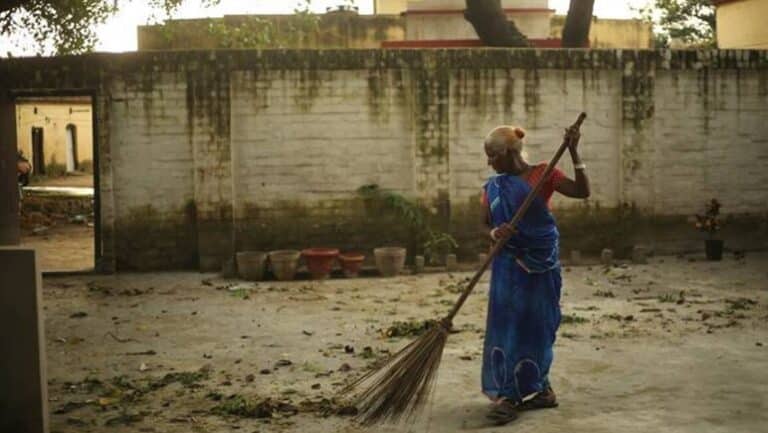
- NCSK was established as an institution to investigate the conditions of Safai Karamcharis (waste collectors) in India and make recommendations to the Government.
- It is currently a non-statutory body under the Ministry of Social Justice and Empowerment.
Background of NCSK
- The NCSK was established in the year 1993 as per the provisions of the NCSK Act 1993 initially for the period upto 31.3.1997.
- Hence, initially NCSK was established as a statutory body.
- Later the validity of the Act was initially extended up to 2002 and thereafter up to 2004.
- The NCSK Act ceased to have effect from 29.2.2004.
- After that the tenure of the NCSK has been extended as a non-statutory body from time to time through resolutions.
- The tenure of the present Commission was up to March 2022. However, it was extended further for a period of three years.
What are the functions of NCSK?
- The NCSK has been giving its recommendations to the Government regarding
- specific programmes for welfare of Safai Karamcharis,
- study and evaluate the existing welfare programmes for Safai Karamcharis,
- investigate cases of specific grievances etc.
- The NCSK has been assigned the work to monitor the implementation of the Prohibition of Employment as Manual Scavengers and their Rehabilitation Act, 2013.
- It is the only body keeping track of sewer deaths in the entire country.
What is the need for NCSK?
- Deprivation among Safai Karamcharis
- The Government has taken many steps for the upliftment of the Safai Karamcharis.
- However, the deprivation suffered by them in socio-economic and educational terms is still far from being eliminated.
- Sporadic instances of manual scavenging
- As per the NCSK (2020 data), a total of 631 people have died in the country while cleaning sewers and septic tanks in the last 10 years.
- Although manual scavenging has been almost eradicated, sporadic instances do occur.
- In 2018, 29,923 people were engaged in manual scavenging in Uttar Pradesh, making it the highest in any State in India.
What are the challenges faced by NCSK?
- NCSK does not have any powers and works as a non-statutory body on government resolution.
- Recently, the govt mentioned in the Parliament that there is no such proposal for converting the commission into a statutory body.
- The chairperson and members are political appointees, so they don’t question the government or speak against their schemes.
- The commission remains understaffed and many posts remain vacant.
News Summary: National Commission for Safai Karamcharis (NCSK)
- According to an office order by the Ministry of Social Justice and Empowerment, the president approved the appointment of M Venkatesan as chairperson, Anjana Panwar as vice-chairperson, and Dr P P Vava as member.
- After the current appointments, posts for four members remain vacant.
- Due to vacancies over the past year, one consultant was looking after the works relating to sewer deaths in India.
Q1) What is National Safai Karamcharis Finance & Development Corporation(NSKFDC)?
National Safai Karamcharis Finance & Development Corporation (NSKFDC) is an Apex Corporation for the all round socio-economic upliftment of the Safai Karamcharis, Scavengers and their dependants throughout India,through various loan and non-loan based schemes.
Q2) What is self-employment scheme for manual scavengers?
The Self-Employment Scheme for Rehabilitation of Manual Scavengers (SRMS) was introduced in January, 2007, with the objective to rehabilitate the remaining manual scavengers and their dependents in alternative occupations by March, 2009.
Source: Headless for a year, Safai Karamchari commission gets some vacancies filled | PIB | The Hindu

 Last updated on April, 2026
→ UPSC Final Result 2025 is now out.
→ UPSC has released UPSC Toppers List 2025 with the Civil Services final result on its official website.
→ Anuj Agnihotri secured AIR 1 in the UPSC Civil Services Examination 2025.
→ UPSC Marksheet 2025 is now out.
→ UPSC Notification 2026 & UPSC IFoS Notification 2026 is now out on the official website at upsconline.nic.in.
→ UPSC Calendar 2026 has been released.
→ Check out the latest UPSC Syllabus 2026 here.
→ UPSC Prelims 2026 will be conducted on 24th May, 2026 & UPSC Mains 2026 will be conducted on 21st August 2026.
→ The UPSC Selection Process is of 3 stages-Prelims, Mains and Interview.
→ Prepare effectively with Vajiram & Ravi’s UPSC Prelims Test Series 2026 featuring full-length mock tests, detailed solutions, and performance analysis.
→ Enroll in Vajiram & Ravi’s UPSC Mains Test Series 2026 for structured answer writing practice, expert evaluation, and exam-oriented feedback.
→ Join Vajiram & Ravi’s Best UPSC Mentorship Program for personalized guidance, strategy planning, and one-to-one support from experienced mentors.
→ Shakti Dubey secures AIR 1 in UPSC CSE Exam 2024.
→ Also check Best UPSC Coaching in India