What’s in today’s article?
- Why in News?
- Performance of the Indian Economy
- Policy Responses and Future Outlook of the Indian Economy
- Conclusion
Why in News?
- The Finance Ministry’s latest monthly economic review points to evidence of a slowdown in urban demand as reflected in the performance of various indicators during the first half of FY25.
It summarises key factors contributing to the shifting economic landscape in India, highlighting challenges and potential growth avenues.


Performance of the Indian Economy:
- Overview:
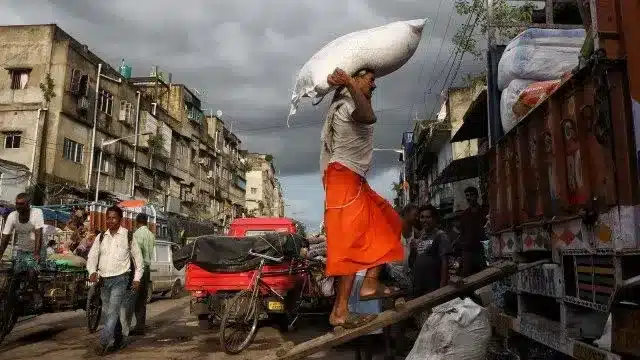
- India’s economic growth faces a slowdown in urban demand, with rural resilience offering partial balance.
- While rural areas show increasing consumption, urban centres experience demand softness due to high food inflation, weakened credit growth, and increased household expenses.
- Urban demand challenges:
- Softening demand in consumer goods:
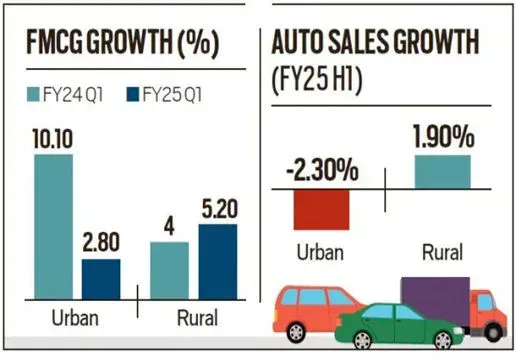
- Major fast-moving consumer goods (FMCG) companies, such as Tata Consumer Products and Nestle India, signal a decline in urban demand due to high food inflation, especially in metropolitan regions.
- Auto companies also report demand slowdown, exacerbated by seasonal factors like monsoon rains and election-related spending restrictions.
- Decline in economic indicators:
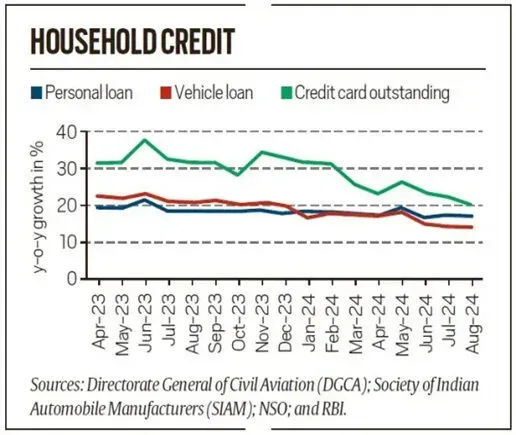
- GDP: India’s Q1 FY25 GDP growth moderated to 6.7%, with projections for further decline in Q2 due to weakened urban investment and consumption.
- Corporate profits: A review of listed companies’ Q2 results shows slowing profit growth, largely due to rising input costs. Crisil noted this as the slowest growth in the last 16 quarters.
- Real wages and spending: Urban wages have also stagnated, with growth in salary outlays falling from 1.2% in Q1 to 0.8% in Q2 FY25, indicating reduced consumer spending capacity.
- Inflationary pressures:
- Persistent food inflation has made the Reserve Bank of India (RBI) cautious about rate cuts.
- RBI Governor emphasises a flexible approach to inflation management, avoiding premature easing of monetary policy.
- Rural demand resilience:
- FMCG and auto sales:
- Rural consumption shows positive momentum, reflected in FMCG volume sales growth and rising tractor and three-wheeler sales.
- Nielsen IQ data shows rural FMCG sales rose by 5.2% in Q1 FY25, compared to 4% the previous year.
- Agriculture and wage growth: Real wage growth for agricultural and non-agricultural rural workers supports rising consumption, bolstered by a favourable monsoon season.
- FMCG and auto sales:
Policy Responses and Future Outlook of the Indian Economy:
- Government and RBI initiatives:
- Government expenditure:
- Increased government spending post-election season could stabilise growth, with a strong capital expenditure plan expected from September to March.
- Central government expenditure in the first five months of FY25 reached Rs 16.52 lakh crore, down 1.2% from the previous year, indicating room for expansion.
- RBI’s monetary stance: The RBI remains flexible, cautiously monitoring inflation before adjusting rates. RBI continues to support growth by balancing inflation concerns with strategic policy measures.
- Government expenditure:
- Festive demand and external stimuli:
- Festive season: With upcoming festivals, consumer discounts and demand are anticipated to lift sales. This boost may partially offset the urban slowdown.
- Global influences: Potential monetary easing by the US Federal Reserve may encourage capital inflows to India, supporting investment and growth in the coming quarters.
Conclusion:
- India’s economic outlook is mixed, with rural resilience and government spending likely to stabilise growth despite urban demand challenges.
- High inflation and global uncertainties remain key concerns, but fiscal policies and a strategic monetary stance from the RBI provide a foundation for sustainable recovery.
- The evolving economic environment will require continued data-driven adjustments to maintain growth momentum.
Q.1. Why are car sales declining in India?
Car sales in India are slowing due to high inflation and rising interest rates, which have increased costs for consumers. Seasonal factors like heavy monsoon rains and shifting preferences toward used cars and electric vehicles are also contributing to the decline.
Q.2. How are high inflation and global uncertainties affecting the Indian economy?
High inflation is straining household budgets and reducing consumer spending, which slows down domestic demand in key sectors. Global uncertainties are weakening export demand and deterring foreign investments, which further hampers economic growth and stability.
News: Finance Ministry flags softer urban demand, factory output | IE

 Last updated on Oct, 2026
→ UPSC 2027 Notification will be released on 13 January 2027 at upsconline.nic.in.
→ Check Nobel Prize 2026 Winners List here.
→ Download PIB PRiSM Monthly Magazine 2026 here.
→ Check UPSC Monthly Current Affairs Magazine The Recitals here.
→ Check out the latest UPSC Syllabus here.
→ Download UPSC Model Answers for Mains 2026
→ UPSC Mains Question Paper 2026 is out now for Essay & GS Paper 1, 2, 3 & 4.
→ UPSC Calendar 2027 has been released.
→ Enroll in Vajiram & Ravi’s UPSC Mains Test Series 2027 for structured answer writing practice, expert evaluation, and exam-oriented feedback.
→ Join Vajiram & Ravi’s UPSC Mentorship Program 2027 for personalized guidance, strategy planning, and one-to-one support from experienced mentors.
→ Go through the UPSC Mains Previous Year Papers to enhance your preparation.
→ UPSC has released UPSC Toppers List 2025 with the Civil Services final result on its official website.
→ Also check Best UPSC Coaching in India